Short answer
Tamper-evident food containers are packages designed to show visible evidence if they have been opened after filling. The evidence can come from a band or tab that breaks, a heat-sealed film that must be peeled or pierced, or a rim and lid design that shows a first opening. Tamper-evident packaging does not prevent opening; it makes opening visible.
Key points
- A tamper-evident container makes a first opening visible; it does not make the package impossible to open.
- Common tamper-evident features include tamper bands, break tabs and tear strips, heat-sealed lidding film, shrink bands and seal labels.
- In Canada, section 7 of the Safe Food for Canadians Act prohibits tampering with a food commodity, its label or its package with intent to make it harmful or to cause fear that it is harmful.
- The right tamper-evident format depends on your product, your filling and closing equipment, and whether consumers need to reclose the container.
- Plastiques Horizon molds three tamper-evident lines in Québec: Round Tamper-Evident, Square Tamper-Evident and Tamper-Evident Buckets.
What does tamper-evident mean?
A tamper-evident package is one that shows a clear, visible sign once it has been opened or interfered with. The sign can be a broken band, a missing tab, a torn strip, a peeled film or a lid that no longer sits the way it did when it left the filling line. Anyone who handles the package, from a store clerk to the final shopper, can check it without tools.
A widely quoted definition comes from US drug rules. Under 21 CFR 211.132, a tamper-evident package has "one or more indicators or barriers to entry" which, if breached or missing, can be expected to give consumers visible evidence of tampering. That regulation covers over-the-counter drugs, not food, but the idea is the same one food packagers use.
Three terms are often confused. Tamper-evident means opening leaves a visible trace. Tamper-resistant means the package is harder to open. Tamper-proof suggests a package that cannot be opened without permission, which no practical food container achieves. Most food containers sold for retail are tamper-evident.
Why do food processors use tamper-evident containers?
The first reason is consumer confidence. A shopper who sees an intact band or an unbroken rim knows the product has not been opened since it was packed. Many grocery, deli and food service buyers write tamper evidence into their packaging specifications for exactly that reason.
The second reason is protection against deliberate tampering. In Canada, section 7 of the Safe Food for Canadians Act prohibits tampering with any food commodity, its label or its package with intent to make it injurious to human health or to cause a reasonable apprehension that it is. The Canadian Food Inspection Agency (CFIA) has listed damaged or missing tamper-evident seals among the signs consumers should watch for in its food tampering fact sheet.
Whether a specific product must use tamper-evident packaging depends on the product, the customer and the rules that apply to it. This article is general information, not legal or regulatory advice; confirm your obligations with your regulatory adviser and your customers’ specifications.
What are the main types of tamper-evident features?
The packaging industry uses several families of tamper-evident features. Some are molded into the container or lid, some are added on the filling line, and some combine both.
| Feature | How opening shows | Typical packages | Added on the line? |
|---|---|---|---|
| Tamper band | A molded band or ring separates or breaks when the lid is first removed | Pails, buckets, screw caps | No, molded with the lid or container |
| Break tab or tear strip | A tab or strip must be torn to open; the missing or raised tab stays visible | Deli tubs, clamshells, takeout containers | No, molded or formed in |
| Heat-sealed lidding film | The film is peeled or pierced and cannot be put back | Yogurt cups, dips, portion cups | Yes, needs a sealing machine |
| Shrink band | A printed film band around the lid must be torn off | Jars, tubs, bottles | Yes, needs a shrink tunnel |
| Seal label or tape | A label across lid and body tears or shows a void pattern | Tubs, boxes, bakery packs | Yes, applied by hand or labeller |
| Integrated rim and lid design | The rim and lid show at a glance whether the container has been opened | Molded round and square tubs | No, built into the mold |
For a closer look at tab-style designs, see what break-tab containers are. For heat-sealed cups, see what a film seal container is.
How do you choose a tamper-evident format?
Start from the product and the line, not from the closure. These questions narrow the choice quickly:
- How is the container closed today? Lids pressed on by hand or by a lidder suit molded tamper-evident designs; a heat sealer on the line opens the door to film seal.
- Does the consumer need to reclose it? Multi-serve products such as spreads, salads and dips usually need a reclosable lid after the first opening.
- How much does it weigh? Bulk food service products in litre formats generally move to pails with a tamper band and a handle.
- Where is it sold? A self-serve deli case and a grocery dairy aisle put different demands on how obvious the evidence must be.
- How will it be decorated? Some tamper-evident features take label space; in-mold labels (IML) decorate the wall and lid without adding a separate label.
- How will it be stored and used? Cold chain, freezing or reheating narrow the material and format choice.
If your choice comes down to a molded tamper-evident lid versus a heat-sealed film, our tamper-evident vs film seal comparison sets out the trade-offs side by side.
Where can tamper evidence fail?
Tamper evidence depends on the whole system. A lid that is not fully seated on the filling line may look opened on the shelf. A film sealed outside its temperature, pressure and time window may peel too easily. A band damaged in shipping can trigger complaints even when the product is intact.
The practical answer is testing. Run samples of the container and lid on your own equipment, ship a few cases through your normal distribution, and check what the closure looks like when it reaches the store. Train staff and, where it helps, tell consumers on the label what to look for.
Tamper-evident containers from Plastiques Horizon
Plastiques Horizon injection-molds three tamper-evident lines in polypropylene (PP, resin code 5) at its plant in Saint-Lazare-de-Bellechasse, Québec:
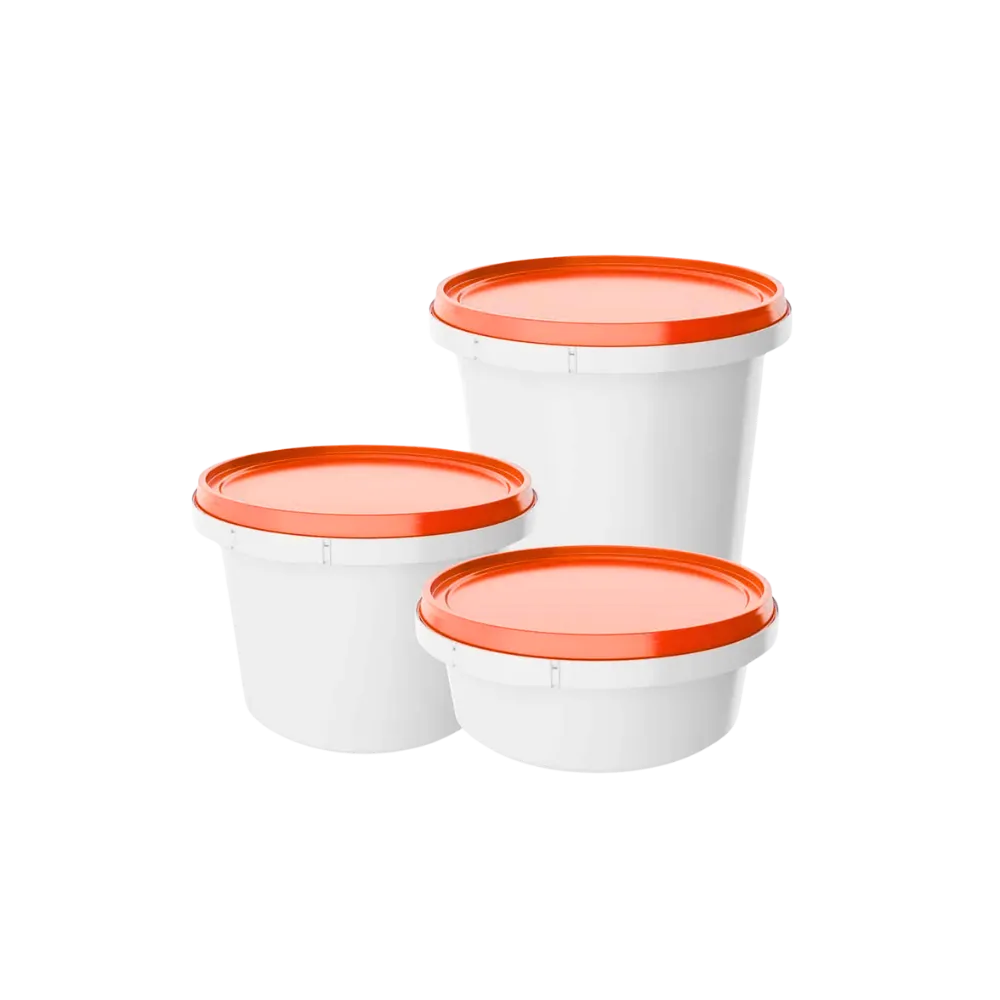
- Round Tamper-Evident: five formats from 8 oz (250 ml) to 32 oz (1 L), one IML-ready lid for all five. The tamper-evident rim shows at a glance whether a container has been opened.
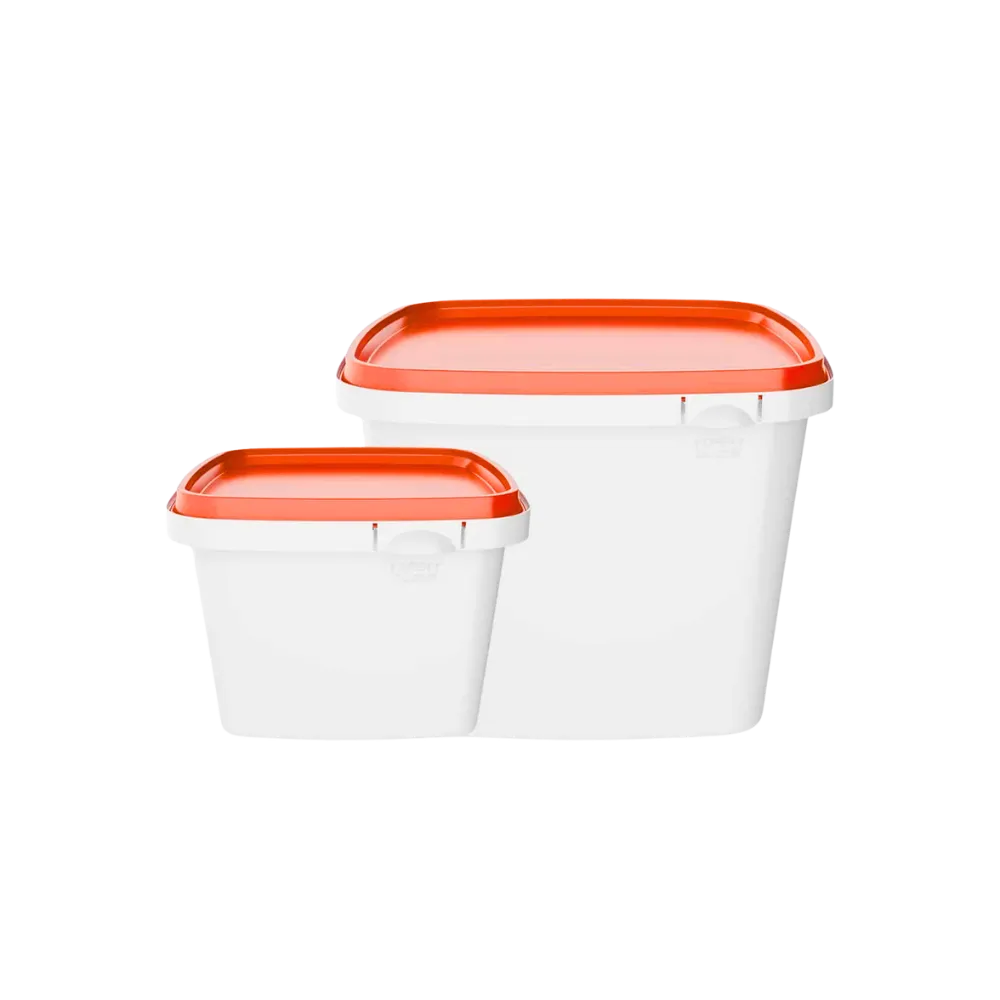
- Square Tamper-Evident: six formats, 8, 12, 16, 32, 40 and 48 oz (250 ml to 1.5 L), two lid sizes, IML on 1 to 5 sides.
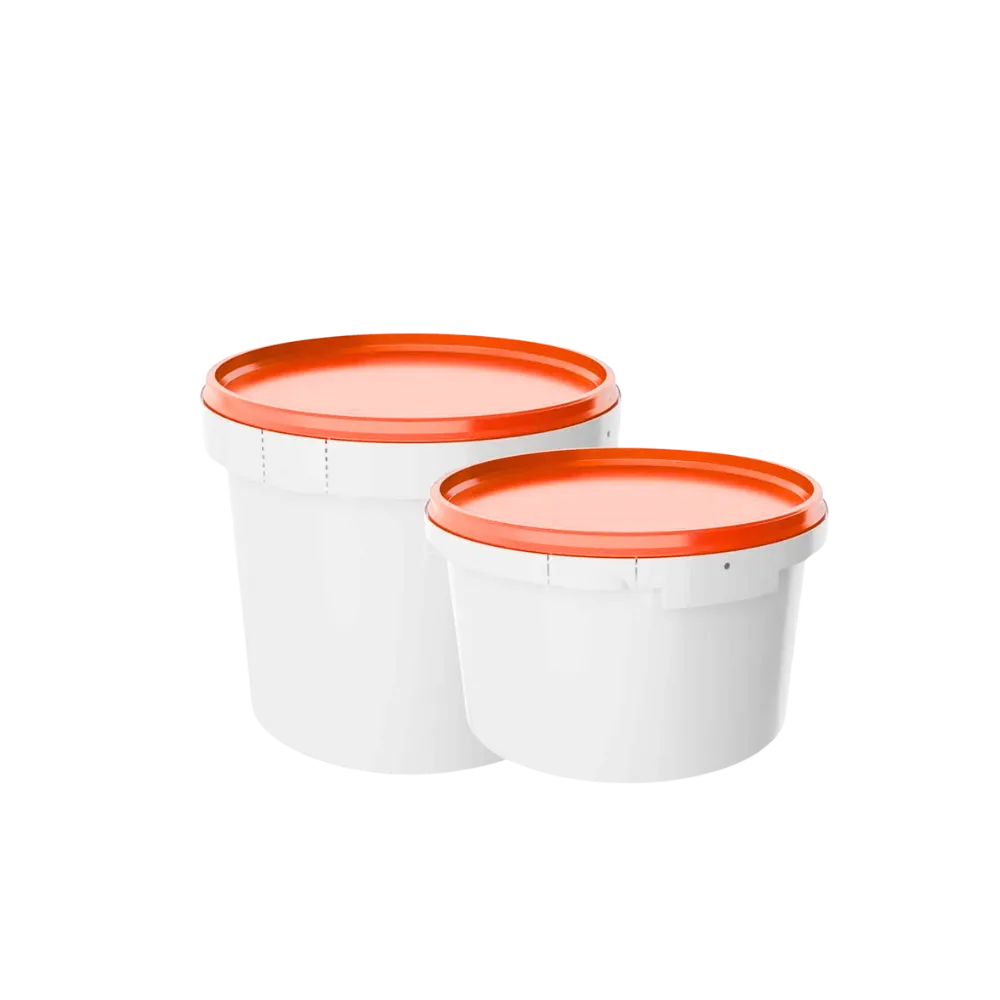
- Tamper-Evident Buckets: six formats from 2.6 L to 5.5 L with a tamper band, an airtight leakproof lid and a carry handle.
Every format is sold blank or decorated with in-mold labels. Plastiques Horizon provides samples on request so you can test the closure on your own line before you commit. Request a quote or samples or call 1-877-630-4095, Monday to Friday, 8:00 to 17:00 Eastern.
Frequently asked questions
Is tamper-evident the same as tamper-proof?
No. A tamper-evident container shows visible evidence once it has been opened, but it can still be opened. Tamper-proof implies a package that cannot be opened without authorization, which practical food packaging does not achieve. Food packagers aim for tamper-evident packaging and clear instructions so consumers can spot a package that has been opened.
Can a tamper-evident container be closed again after opening?
Usually yes. Most tamper-evident tubs and pails let the consumer put the lid back on after the first opening; only the tamper-evident feature, such as a band, tab or sealed film, stays visibly broken. That combination of one-time evidence and reclosability is why tamper-evident tubs are common for multi-serve foods.
Can tamper-evident containers be decorated with in-mold labels?
Yes. Injection-molded tamper-evident containers can carry an in-mold label (IML) fused to the container wall and, on some lines, the lid. At Plastiques Horizon, the Round Tamper-Evident line takes a full wrap-around label, the Square Tamper-Evident line takes labels on 1 to 5 sides, and the buckets take a full-wrap label.
What tamper-evident option suits bulk food service products?
Bulk products such as sauces, spreads and condiments are often packed in plastic pails with a tamper band, an airtight lid and a handle. The band shows whether the pail was opened between filling and use in the kitchen. Plastiques Horizon makes Tamper-Evident Buckets from 2.6 L to 5.5 L for this use.
Sources
External references consulted for this article. General information only, not legal or regulatory advice.
- Safe Food for Canadians Act (S.C. 2012, c. 24), section 7: Tampering · Justice Laws Website, Government of Canada
- Loi sur la salubrité des aliments au Canada (L.C. 2012, ch. 24), article 7 : Altération · Site Web de la législation (Justice), gouvernement du Canada
- 21 CFR 211.132: Tamper-evident packaging requirements for over-the-counter (OTC) human drug products · Legal Information Institute, Cornell Law School
- Food Tampering (archived fact sheet) · Canadian Food Inspection Agency, via Library and Archives Canada web archive