Short answer
Break-tab containers, also called tear-tab containers, are tamper-evident tubs, bowls or clamshells with a small tab or tear line that must be broken the first time the lid is opened. After the tab is torn, the lid can usually be closed again, but the missing, torn or raised tab shows anyone that the container has already been opened.
Key points
- A break tab or tear tab is a tamper-evident feature that must be torn on first opening and cannot be restored.
- Designs vary: some tabs detach completely, some stay attached but bend or lift, and some use a perforated tear line around the lid.
- Break-tab containers are common at deli counters, in grab-and-go cases and for prepared foods packed by hand without a sealing machine.
- Before choosing a design, test opening force, how visible the evidence is, and how lids are applied on your line.
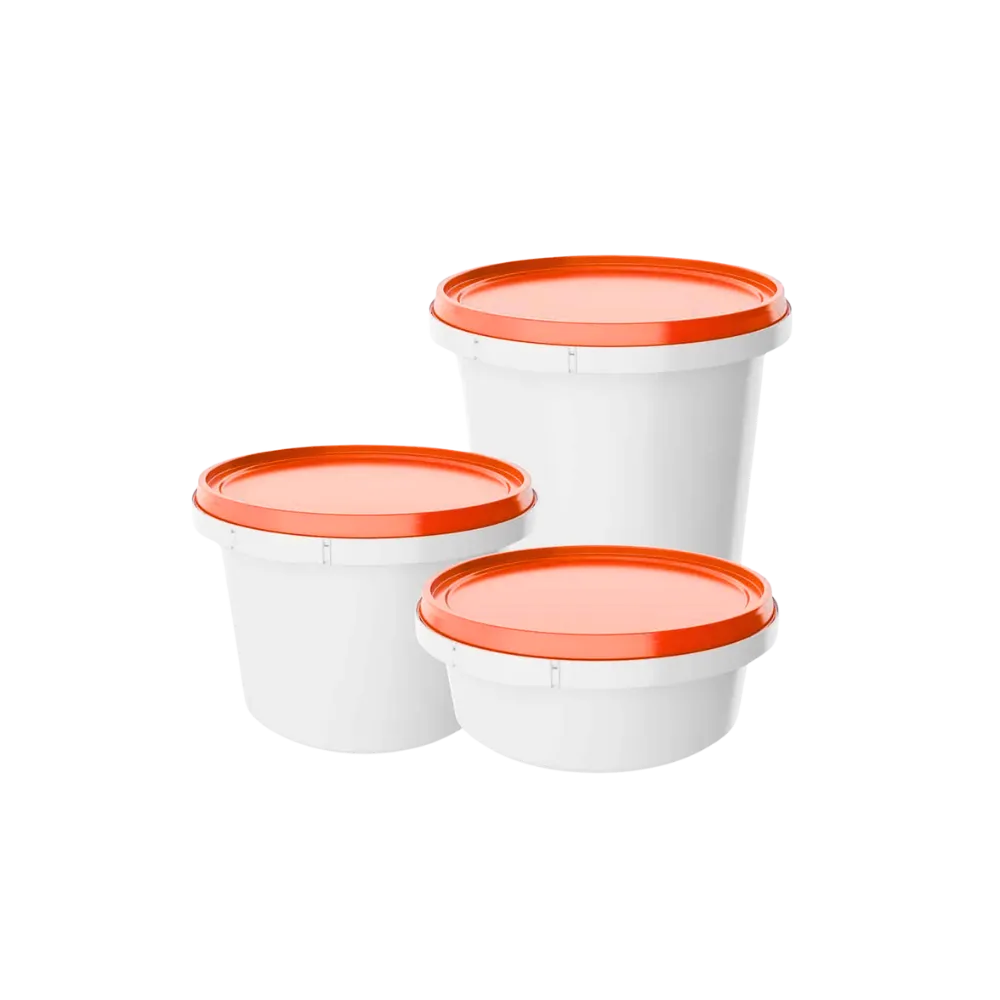
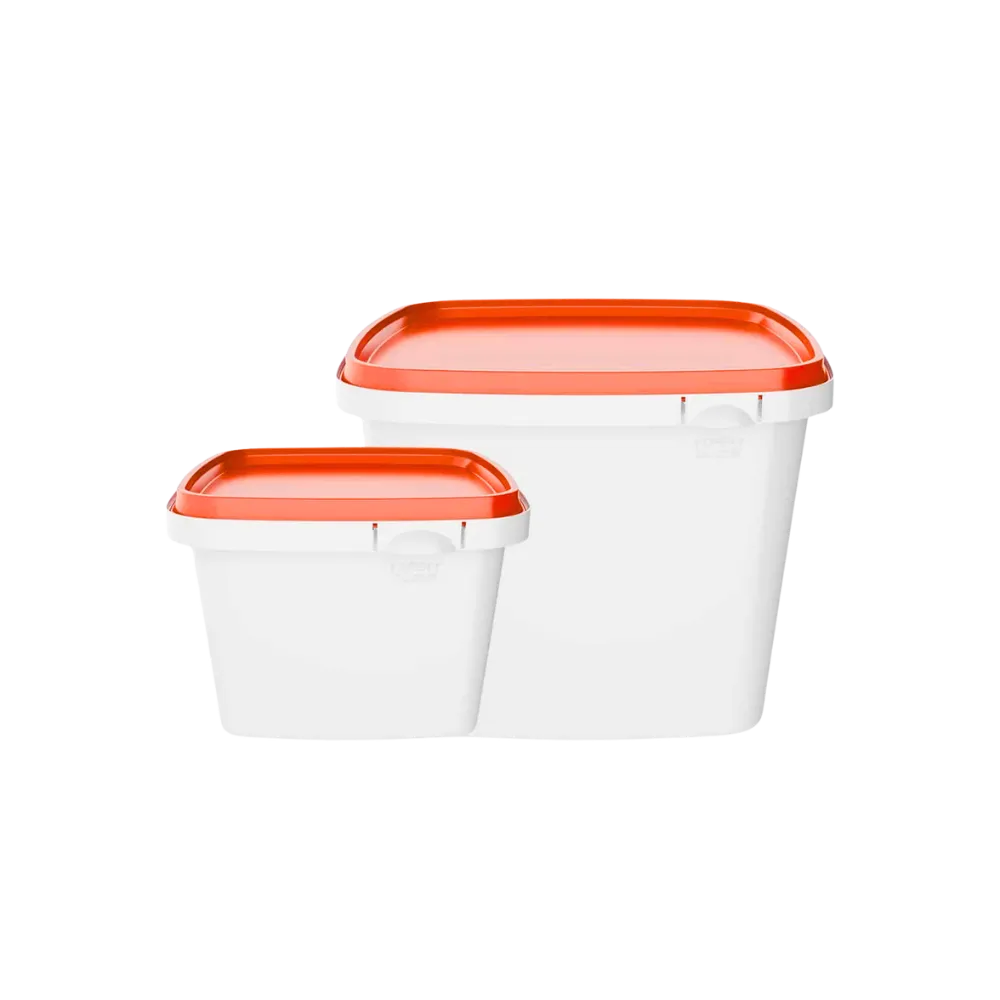
- Plastiques Horizon offers Round and Square Tamper-Evident containers whose rim shows at a glance whether a container has been opened; samples are available on request.
What is a break-tab container?
A break-tab container is a food container whose lid or rim includes a tab, strip or tear line designed to break the first time the container is opened. The broken feature is the evidence: a shopper or clerk who sees a missing or torn tab knows the lid has already been lifted. The same containers are sold as tear-tab, tear-strip or tamper-alert containers, depending on the manufacturer.
Break tabs are one family within the wider category of tamper-evident packaging. Others include tamper bands on pails, heat-sealed lidding film and shrink bands. For the full overview, see what tamper-evident food containers are.
How does a break tab or tear tab work?
The principle is simple: the lid and container are joined by a section of plastic that is deliberately weak in one place. That weak point can be a thin bridge, a row of perforations or a scored line. Opening the container the first time means tearing through it, and plastic that has been torn does not go back together.
Manufacturers execute the idea in different ways. In some designs a small tab on the lid edge is pulled off and discarded. In others the tab stays attached but is left bent or lifted after opening. Some designs run a perforated tear line around the lid so that the outer ring stays locked to the container. US patent US8028851B2, for example, describes a container in which a lift tab must be pulled to tear a perforated line before the lid comes free.
Break-tab features appear on both thermoformed containers (formed from heated plastic sheet) and injection-molded containers (formed by injecting molten plastic into a steel mold). Injection molding can shape thicker, more detailed rims and lids, while thermoforming is common for thin clear clamshells and takeout packs.
How do break tabs compare with other tamper-evident features?
| Feature | Equipment needed on the line | Reclosable after opening? | Typical use |
|---|---|---|---|
| Break tab or tear tab | None beyond closing the lid | Usually yes | Deli, salads, grab-and-go, bakery |
| Tear strip around the lid | None beyond closing the lid | Usually yes, once the strip is removed | Tubs and bowls |
| Tamper band (pails) | None beyond closing the lid | Yes | Bulk sauces, spreads, food service |
| Heat-sealed lidding film | Heat sealer | Only with an overcap | Yogurt, dips, portion cups |
| Shrink band | Shrink tunnel | Yes, once the band is removed | Jars and tubs |
Break-tab containers: advantages and limits
Pros
- No sealing machine, shrink tunnel or labeller needed; the evidence is built into the package.
- Works for products packed by hand at a deli counter or in a commissary kitchen.
- The lid usually stays reclosable for the consumer after the first opening.
- No extra material or film to buy, store and apply.
Cons
- Opening force must be balanced: too stiff frustrates consumers, too weak lets tabs break in shipping.
- A small tab can be easy to miss on a busy shelf unless the design makes it obvious.
- Broken tab pieces can end up loose in a store or kitchen.
- The tab design is set by the mold, so changing it means a tooling change, not a supplier swap.
Where are break-tab containers used?
Break-tab and tear-tab containers are common wherever food is packed into tubs without a sealing machine but still needs visible evidence of opening. Typical examples include deli salads and prepared foods at in-store counters, grab-and-go cases, commissary kitchens supplying several stores, bakery items and meal delivery.
Plants with a heat sealer often prefer a film seal for products like yogurt and dips, because the film adds a sealed layer under the lid. Our tamper-evident vs film seal comparison explains when each closure fits.
What should you check before choosing a break-tab design?
- Opening force. Have target consumers open the container. Note whether anyone needs a knife or scissors.
- Visibility of the evidence. Compare an opened and an unopened container on the shelf, under store lighting, at arm’s length.
- Lid application. Check that lids close fully, by hand or with a lidder, without breaking tabs during closing.
- Shipping. Send sample cases through your distribution and inspect tabs at the receiving end.
- Stacking and display. Confirm that tabs do not catch on neighbouring containers or shelf edges.
- Decoration. Make sure the tamper-evident feature does not cover space you need for branding, nutrition or bilingual labelling.
In Canada, section 7 of the Safe Food for Canadians Act prohibits tampering with a food commodity, its label or its package with intent to make it harmful or to cause fear that it is harmful. Packaging that makes tampering visible supports that protection; this article is general information, not legal advice.
Tamper-evident containers from Plastiques Horizon
Plastiques Horizon injection-molds two tamper-evident tub lines in polypropylene (PP, resin code 5) in Saint-Lazare-de-Bellechasse, Québec. On both lines, the tamper-evident rim shows at a glance whether a container has been opened.
- Round Tamper-Evident: 8, 12, 16, 24 and 32 oz (250 ml to 1 L), one airtight, leakproof, IML-ready lid for all five sizes.
- Square Tamper-Evident: 8, 12, 16, 32, 40 and 48 oz (250 ml to 1.5 L), a 4″ lid for the three smaller formats and a 5.5″ lid for the three larger ones, IML on 1 to 5 sides.
If your specification calls for a break-tab or tear-tab container, the simplest way to judge whether our rim meets it is to try it. Ask for samples and test them with your own product, lidding method and distribution. Both lines are sold blank from stock or decorated with in-mold labels. Request samples or a quote, or call 1-877-630-4095.
Frequently asked questions
What is the difference between a break tab and a tear strip?
A break tab is usually a small, localized tab that must be snapped or pulled to release the lid. A tear strip is a longer band, often running around the lid edge, that is torn away before the lid can be lifted. Both are tamper-evident features: once broken, they cannot be restored, so the opening stays visible.
Are break-tab containers recyclable?
That depends on the plastic and on your local program, not on the tab. A break-tab container made from a single resin, such as polypropylene (resin code 5), keeps the tab in the same material as the body. Acceptance of rigid plastic containers varies by municipality, so consumers should check their local recycling guidance.
Do break-tab containers need special filling equipment?
Generally no. Break-tab containers close by pressing the lid onto the container, by hand or with a lidding machine, so they suit deli counters and kitchens without a heat sealer. Test that your lidding method closes the lid fully without breaking the tab before you place a production order.
Can a break-tab lid be reused after opening?
In most designs, yes. The tab or strip is broken on first opening, but the rest of the lid still snaps back onto the container so consumers can store leftovers. The broken tab remains as evidence that the container has already been opened.
Sources
External references consulted for this article. General information only, not legal or regulatory advice.
- Safe Food for Canadians Act (S.C. 2012, c. 24), section 7: Tampering · Justice Laws Website, Government of Canada
- Loi sur la salubrité des aliments au Canada (L.C. 2012, ch. 24), article 7 : Altération · Site Web de la législation (Justice), gouvernement du Canada
- US8028851B2: Enhanced tamper evident container with tear-apart parts · Google Patents (United States Patent and Trademark Office record)