Short answer
To start a custom printed food container program with in-mold labeling (IML), choose a stock container format, confirm its decoration surface, get the label dielines from the molder, prepare bilingual artwork, approve a proof, then schedule label printing and molding. The cost of an IML program depends mainly on the format, the number of designs, the quantity per design and how often you reorder.
Key points
- An IML program puts your printed label on a stock container format, so you do not need to own a custom mold to get branded packaging.
- Lock the container format with test fills before artwork starts, because the dieline depends on the exact format.
- The main cost drivers are the format, the number of designs, the run length per design and the decorated surfaces, so send annual volumes with your quote request.
- Mandatory label information on consumer prepackaged food must be in English and French, and Québec adds French-language rules for products sold in the province.
- Every Plastiques Horizon format, across six product lines, can be ordered blank or with IML.
What is an IML program, and who is it for?
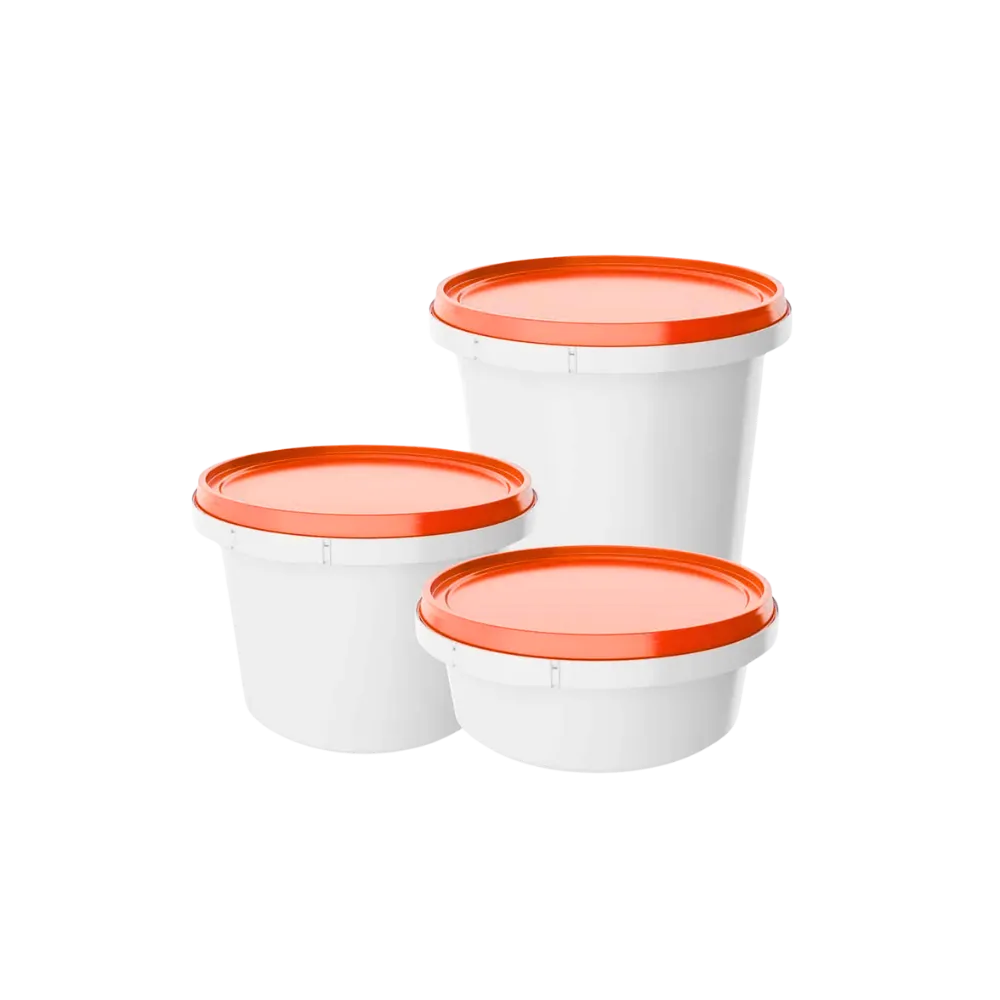
An IML program is an ongoing supply of food containers decorated by in-mold labeling: your printed polypropylene label is placed in the mold and fused into the container wall as it is molded. The containers arrive at your plant already decorated, ready to fill.
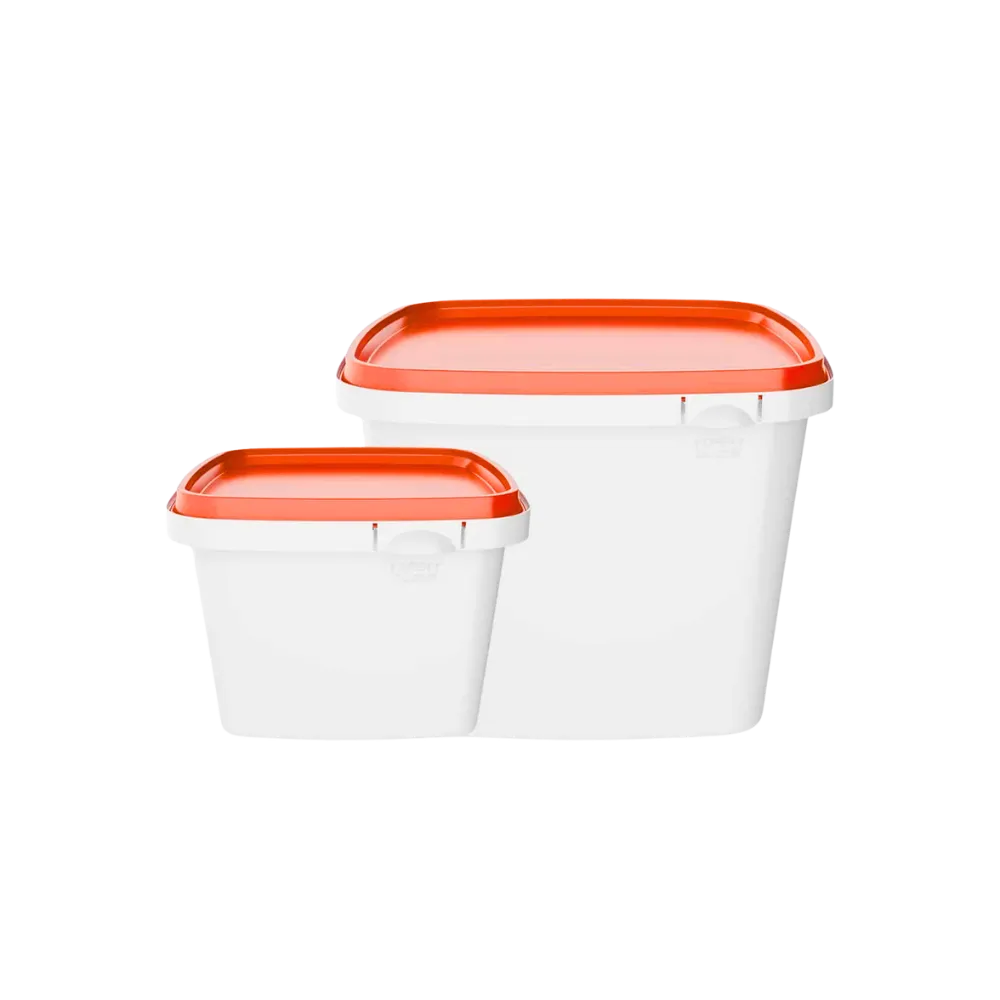
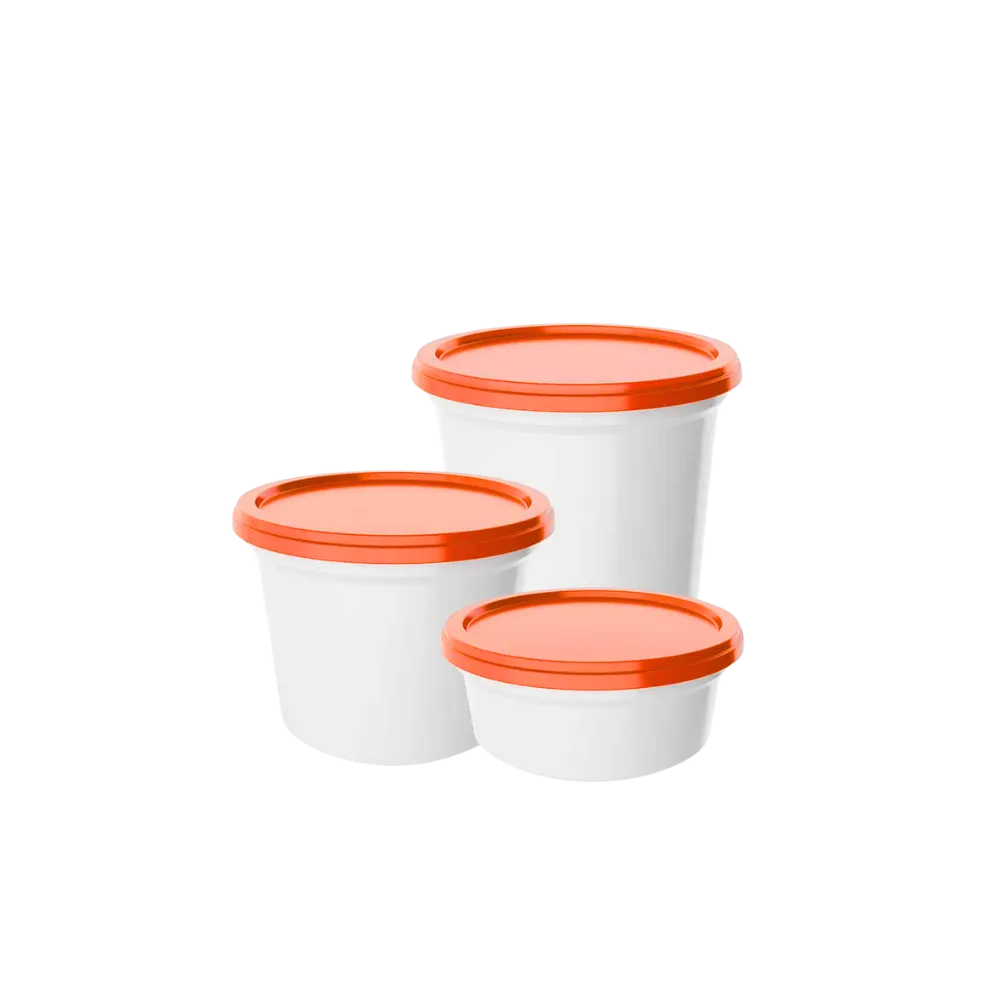
Most IML programs are built on stock formats, the standard containers a molder already produces. The format is shared, but the decoration is yours. That is why IML suits dairy processors, prepared-food makers, private-label grocers and distributors who want branded packaging without investing in a custom mold.
An IML program usually makes sense once a product has steady demand. Many brands keep new or seasonal products in blank containers with a pressure-sensitive label, then move their core products to IML.
What should you prepare before asking for a quote?
A complete request saves a round of questions and gives you a more accurate price. Gather the following before you contact a molder.
- Products and fill quantities: what goes in the container, the net quantity declared on the label and the product temperature at filling.
- Preferred format: shape (round, square, rectangle, pail), size in oz and ml, and the closure you need (tamper-evident, film seal, snap-fit lid).
- Number of designs: each flavour, variety or language version that needs its own label counts as a separate design.
- Annual volume per design: estimated yearly units for each design, plus expected order frequency.
- Decoration surfaces: body only, or body and lid, and on square formats how many sides.
- Filling and sealing equipment: for example an existing 409 fill-and-seal line, which narrows the format choice.
- Artwork status: whether you have a designer, existing brand files or labels from another supplier.
- Timing: the launch or changeover date you are working toward.
What are the steps of an IML program?
- Choose the format. Select the line and sizes, request samples and run test fills on your product and equipment.
- Confirm the decoration surfaces. The molder confirms what can be decorated on each format: full wrap, number of sides, lid.
- Receive the dielines. The molder supplies the label dieline (template) for each chosen format.
- Prepare the artwork. Your designer builds the artwork to the dieline, including mandatory bilingual information. See our IML artwork and dieline guide.
- Approve the proof. Check copy, colours, barcode placement and regulatory text on the proof before printing.
- Label production. The labels are printed and die-cut for each design before molding is scheduled.
- Molding. IML robotics place each label in the mold and the container is injected around it.
- Delivery and reorders. Decorated containers ship ready to fill. Reorders reuse the approved artwork unless you change it.
What drives the cost of an IML program?
There is no single price for IML, because the cost is built from several factors. Understanding them helps you design a program that fits your budget.
| Cost driver | Why it matters | How to manage it |
|---|---|---|
| Container format | Larger containers use more resin and larger labels. | Pick the smallest format that holds your fill with the headspace you need. |
| Number of designs | Each design is a separate label version to prepare, print and stock. | Group flavours on a shared design with a variable panel where it makes sense. |
| Quantity per design | Label printing and press changeovers are spread over the units of each run. | Consolidate orders into fewer, larger runs when demand allows. |
| Decorated surfaces | Decorating the lid as well as the body adds a second label. | Decide whether the lid needs branding or can stay blank. |
| Artwork changes | Every change after approval means new labels. | Finalize regulatory text and claims before the proof stage. |
| Freight and storage | Decorated containers are specific to you and need storage until used. | Plan release schedules and warehouse space with your supplier. |
Pricing, minimum quantities and lead times are confirmed with each quote, so send annual volumes per design rather than a single total.
Which labelling rules affect your IML artwork?
IML changes how a label is applied, not what it must say. The Canadian Food Inspection Agency (CFIA) states that mandatory information on consumer prepackaged food must be shown in both official languages, French and English, with a few defined exceptions.
Products sold in Québec must also meet the Charter of the French language. The Office québécois de la langue française (OQLF) explains that information on a product and its packaging must be in French, that another language cannot prevail over the French, and that since June 1, 2025 generic or descriptive terms in a trademark must also appear in French. Our guide to bilingual packaging requirements goes further.
This section is general information, not legal advice. Have your labelling reviewed by a regulatory specialist before the proof is approved.
What mistakes should you avoid?
- Starting artwork before the format is confirmed by test fills.
- Treating each flavour as an afterthought: every extra design adds label versions to print and stock.
- Leaving bilingual or Québec French copy to the proof stage.
- Forgetting the lid: decide early whether it is decorated or plain.
- Placing barcodes or key text across areas the dieline marks as unsafe.
- Sending only a total volume instead of annual volumes per design.
Starting an IML program with Plastiques Horizon
Plastiques Horizon molds polypropylene food containers in Saint-Lazare-de-Bellechasse, Québec, on Sumitomo injection presses with Wittmann IML robotics. Every format in our six product lines can be ordered blank or decorated, so you can start an IML program on a stock format without a custom mold.
| Product line | Formats | IML decoration |
|---|---|---|
| Round Tamper-Evident | 8 oz (250 ml) to 32 oz (1 L) | Full wrap-around body, IML-ready lid |
| Square Tamper-Evident | 8 oz (250 ml) to 48 oz (1.5 L) | 1 to 5 sides, IML-enabled lids |
| Round Film Seal | 8 oz (250 ml) to 32 oz (1 L), 409 diameter | Full wrap-around HD IML |
| Tamper-Evident Buckets | 2.6 L to 5.5 L | Full wrap-around IML |
| Rectangle Containers | 16 oz (500 ml) to 38 oz (1.12 L) | IML available |
| Heavy-Duty Deli | 8 oz (250 ml) to 32 oz (1 L) | Full wrap-around IML |
We supply the dielines for the formats you choose, samples on request, and bilingual service from the first call. Read more on our in-mold labeling page, see how custom branded containers work for private label, then request an IML quote or call 1-877-630-4095.
Frequently asked questions
Do I need my own mold to get custom printed food containers?
No. With in-mold labeling, your printed label is applied to a stock container format during molding, so the mold belongs to the format, not to your brand. A custom mold is only needed if you want a container shape that no stock format offers.
Can one IML program cover several flavours or products?
Yes. Each flavour or variety that needs different printed text is a separate label design, but all designs can run on the same container format. Grouping designs on one format keeps lids, cases and filling settings the same across your range.
Who prepares the artwork for an IML label?
Usually the brand’s own designer or agency prepares the artwork, working from the dieline the molder supplies for each format. The molder checks that the files fit the dieline and the decoration surface before the proof is approved and labels are printed.
Can I switch an existing product from pressure-sensitive labels to IML?
Yes, if the product already runs in a format that can be decorated with IML, or can move to one. Your existing artwork is adapted to the IML dieline, and the labelling step on your filling line is removed once decorated containers arrive.
Sources
External references consulted for this article. General information only, not legal or regulatory advice.
- Bilingual food labelling · Canadian Food Inspection Agency
- Étiquetage bilingue des aliments · Agence canadienne d’inspection des aliments
- Entreprises : marque de commerce sur les produits · Office québécois de la langue française