Short answer
In-mold labeling (IML) is a decoration process in which a printed label is placed inside the injection mold before the plastic is injected. The molten plastic bonds with the label, so the label becomes part of the container wall. With a polypropylene label on a polypropylene container, the decorated container leaves the press finished, with no separate labelling step.
Key points
- In-mold labeling places a pre-printed, die-cut label in the mold, and the injected plastic bonds it into the container wall.
- A polypropylene (PP) label on a PP container makes a single-material package that is recycled as PP.
- IML removes the labelling step from the filling line because containers arrive already decorated.
- IML suits steady, repeat products; frequent artwork changes or very short runs often fit pressure-sensitive labels better.
- Every Plastiques Horizon format can be sold blank or with IML, from full wrap-around labels to 1 to 5 sides on square containers.
How does in-mold labeling work?
In-mold labeling combines decoration and molding in one operation. Instead of molding a plain container and labelling it later, the molder puts the finished label into the mold first and injects the plastic behind it. IML is also used in blow molding and thermoforming, but this guide covers injection-molded food containers, the process used for tubs, pails and lids.
On an injection molding press equipped for IML, each cycle follows the same sequence. The description below matches the electrostatic method described by Plastics Technology, one of the common ways to hold a label in the mold.
- Label pick: a robot takes one pre-printed, die-cut label from a magazine next to the press, usually with suction cups.
- Charging or vacuum: the label receives a static charge (or the mold uses vacuum) so it will stay flat against the steel cavity wall.
- Placement: the robot places the label in the open mold and retracts.
- Injection: the mold closes and molten plastic is injected behind the label. Heat and pressure bond the label to the container wall.
- Ejection: the mold opens and the container comes out already decorated, ready to stack and pack.
What is an in-mold label made of?
An in-mold label for a polypropylene container is normally a thin, printed polypropylene film, cut to the exact shape of the decorated surface. That shape is called the dieline: the outline that tells the label printer where to cut and the designer where artwork, bleed and safe areas sit. Each container format has its own dieline.
Because the label and the container are made of the same plastic, the label does not need an adhesive. It bonds to the wall during injection. There is also no release liner (the silicone-coated backing that carries pressure-sensitive labels), so there is no liner waste at the filling plant.
Polypropylene carries resin identification code 5. When the label and container are both PP, the decorated container is a single-material package. The European recyclability body RecyClass tested printed PP in-mold labels and rates them fully compatible with coloured PP recycling when the ink stays below 1% of the total package weight (excluding dark colours and bleeding inks). Local acceptance of PP containers in recycling programs varies; our article on whether IML packaging is recyclable covers this in detail.
What are the benefits of IML for food containers?
- Durability: the label is part of the wall, so it does not peel at the edges or lift with condensation, refrigeration or freezing.
- No labelling step: containers arrive decorated. The filling line does not need a labeller, label inventory or the changeovers that come with them.
- Photo-quality graphics: the label is printed flat before molding, so artwork can use full-colour photography and fine detail.
- Large decoration area: a label can wrap the full side wall of a round container, and lids can carry their own label.
- Single material: a PP label on a PP container keeps the package mono-material for recycling.
- Clean look: the label sits flush with the container surface, with no visible label edge to catch on handling.
What are the limits of in-mold labeling?
IML is not the right choice for every product. The labels have to be printed and die-cut before molding starts, so each design is a planned production run rather than something you change at the filling line. The molder also needs IML robotics and molds set up for labels.
In-mold labeling at a glance
Pros
- Decoration is done in the same cycle as molding
- Label cannot peel or scuff off like a surface label
- Full-colour, photo-quality artwork on large surfaces
- Mono-material PP package, no adhesive and no liner
- No labelling equipment or label stock at the filling plant
Cons
- Labels must be produced before molding, so artwork changes need planning
- Each format needs its own dieline and label run
- Less practical for very short runs or many small product variations
- Variable data such as lot codes and best-before dates still need to be printed or applied at filling
Many brands use both methods: IML for their core, steady-selling products and a pressure-sensitive label on blank containers for limited editions and test products. Our comparison of IML vs pressure-sensitive labels goes through that decision.
Which containers can be decorated with IML?
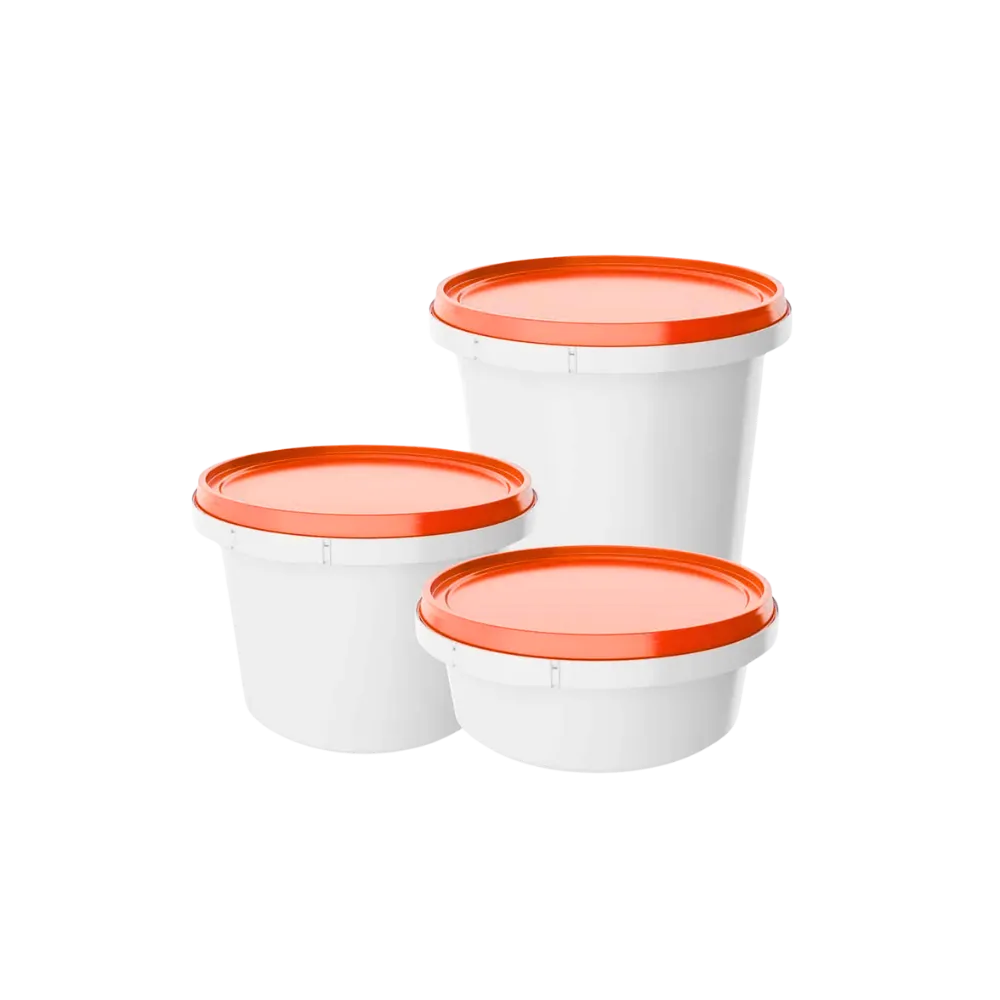
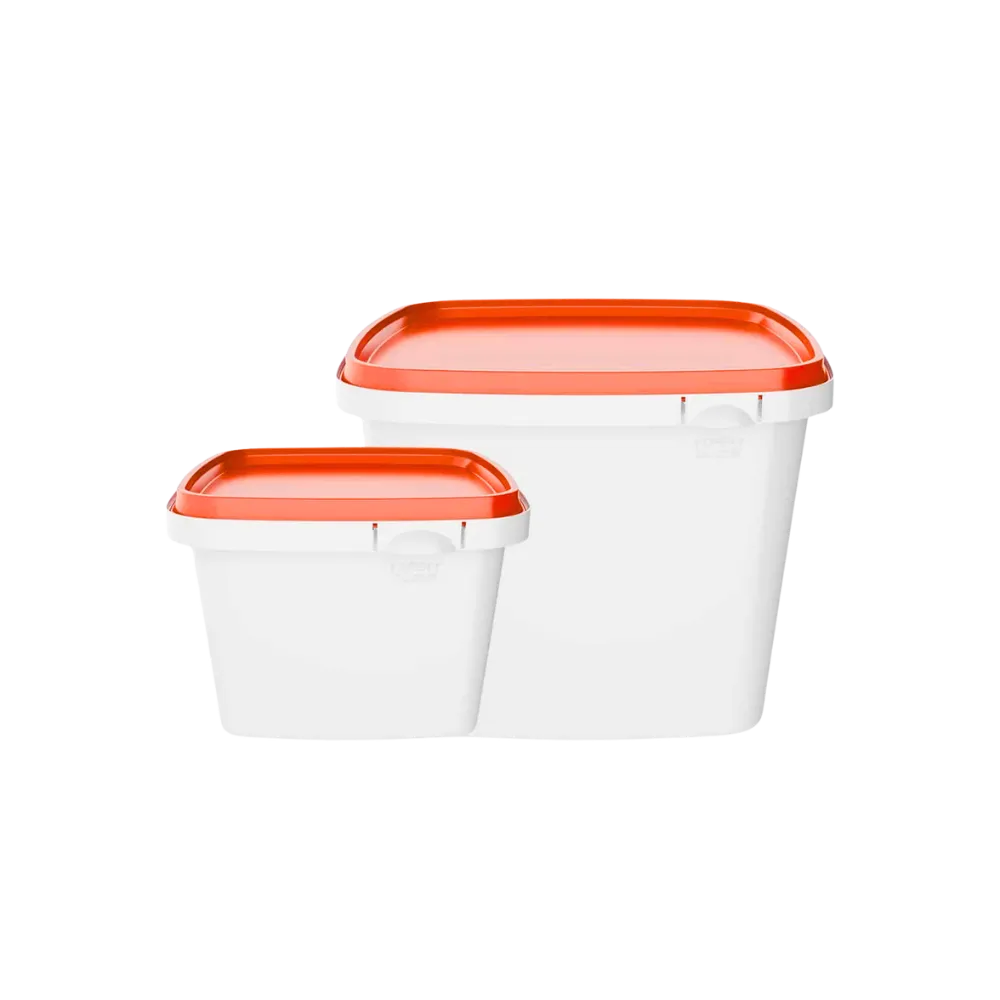
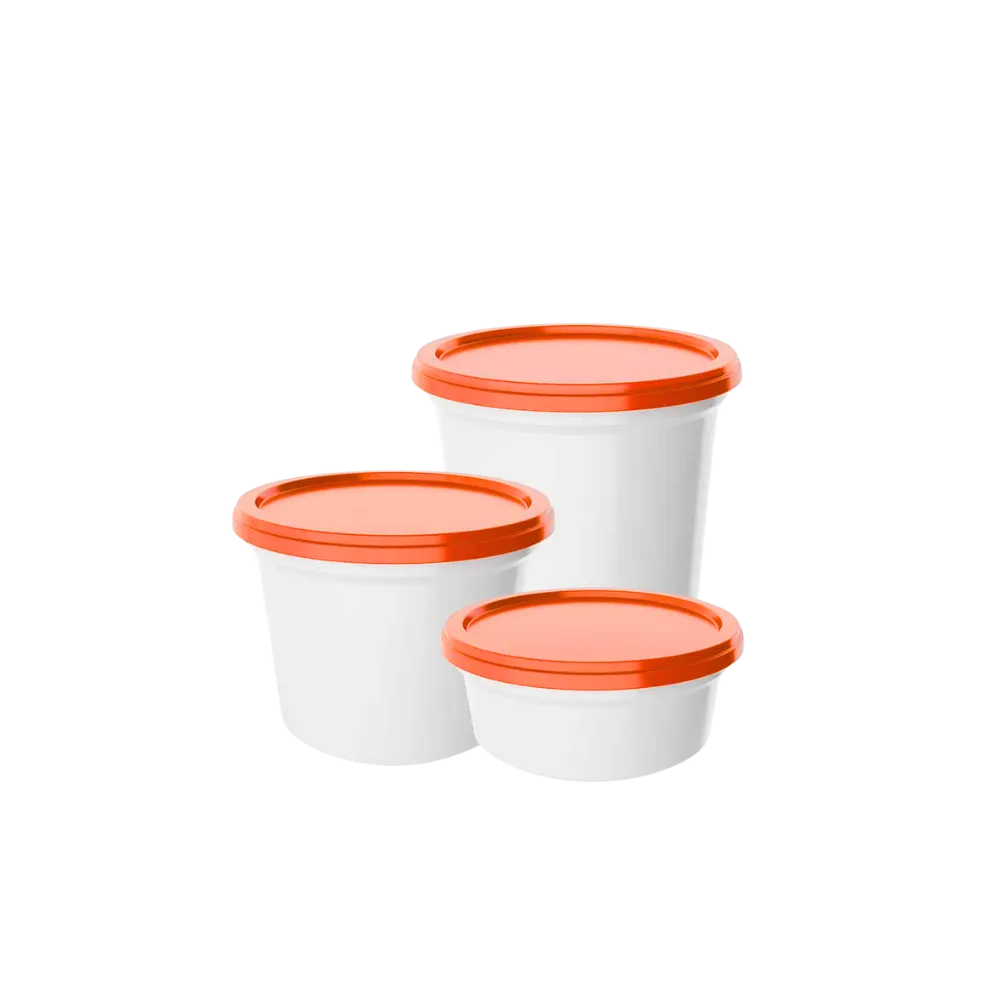
The shape of the container decides where the label goes. Round containers and pails usually take one label that wraps the side wall. Square containers have flat faces that can each take a label. At Plastiques Horizon, every format in the catalogue is sold blank or decorated with IML. The decorated surfaces by line are:
| Product line | Formats | IML decoration |
|---|---|---|
| Round Tamper-Evident | 8 to 32 oz (250 ml to 1 L) | Full wrap-around label; IML-ready lid |
| Square Tamper-Evident | 8 to 48 oz (250 ml to 1.5 L) | Labels on 1 to 5 sides; IML-enabled lids |
| Round Film Seal | 8 to 32 oz (250 ml to 1 L) | Full wrap-around HD label |
| Tamper-Evident Buckets | 2.6 L to 5.5 L | Full wrap-around label |
| Heavy-Duty Deli | 8 to 32 oz (250 ml to 1 L) | Full wrap-around label |
| Rectangle Containers | 16 to 38 oz (500 ml to 1.12 L) | IML available |
In-mold labeling at Plastiques Horizon
Plastiques Horizon molds polypropylene food containers in Saint-Lazare-de-Bellechasse, Québec, on Sumitomo injection molding presses with Wittmann IML robotics. An IML program starts with the format: you choose the line and sizes, we confirm the decoration surfaces and provide the dielines, and your designer prepares the artwork, including bilingual copy where required. Our IML label artwork guide explains what designers need to know.
Costs and schedules depend on the format, the number of designs and the quantities, so we confirm them with your quote. To see the decoration options in detail, visit the in-mold labeling page, browse the product lines, or request a quote. You can also call our sales team at 1-877-630-4095, Monday to Friday, 8:00 to 17:00 Eastern, and ask for samples of the formats you are considering.
Frequently asked questions
Is IML the same as in-mold decoration (IMD)?
Not exactly. In-mold labeling bonds a complete printed label into the part. In-mold decoration usually refers to transferring printed ink from a carrier film onto the part, after which the carrier film is removed. Food containers such as tubs, pails and lids are typically decorated with in-mold labels rather than transfer films.
Can an in-mold label be removed from the container?
Not in normal use. The label bonds to the container wall during injection, so it does not peel at the edges like an adhesive label. That is why IML suits refrigerated and frozen products, where condensation and handling can lift surface labels. Recycling facilities process the label and the PP container together.
Do IML containers still need a date or lot code?
Yes, if the product requires one. The in-mold label carries the fixed artwork, such as brand, product name, ingredients and nutrition information. Variable data such as lot numbers and best-before dates change with each production run, so food processors usually add them at filling, for example with a coder on the lid or container.
Can I start with blank containers and move to IML later?
Yes. At Plastiques Horizon, every format is sold blank or decorated with IML, so the container, lid and filling setup stay the same when you switch. Many brands launch on blank containers with a pressure-sensitive label, then move their steady-selling products to IML once volumes and artwork are stable.
Sources
External references consulted for this article. General information only, not legal or regulatory advice.
- In-Mold Labeling: Electrostatics Are the Way to Go · Plastics Technology (Gardner Business Media)
- PP Rigid Packaging with Printed In-Mould Labels tested by RecyClass · RecyClass (Plastics Recyclers Europe)
- Successful release liner recycling: great for the climate and for dwindling resources · FINAT