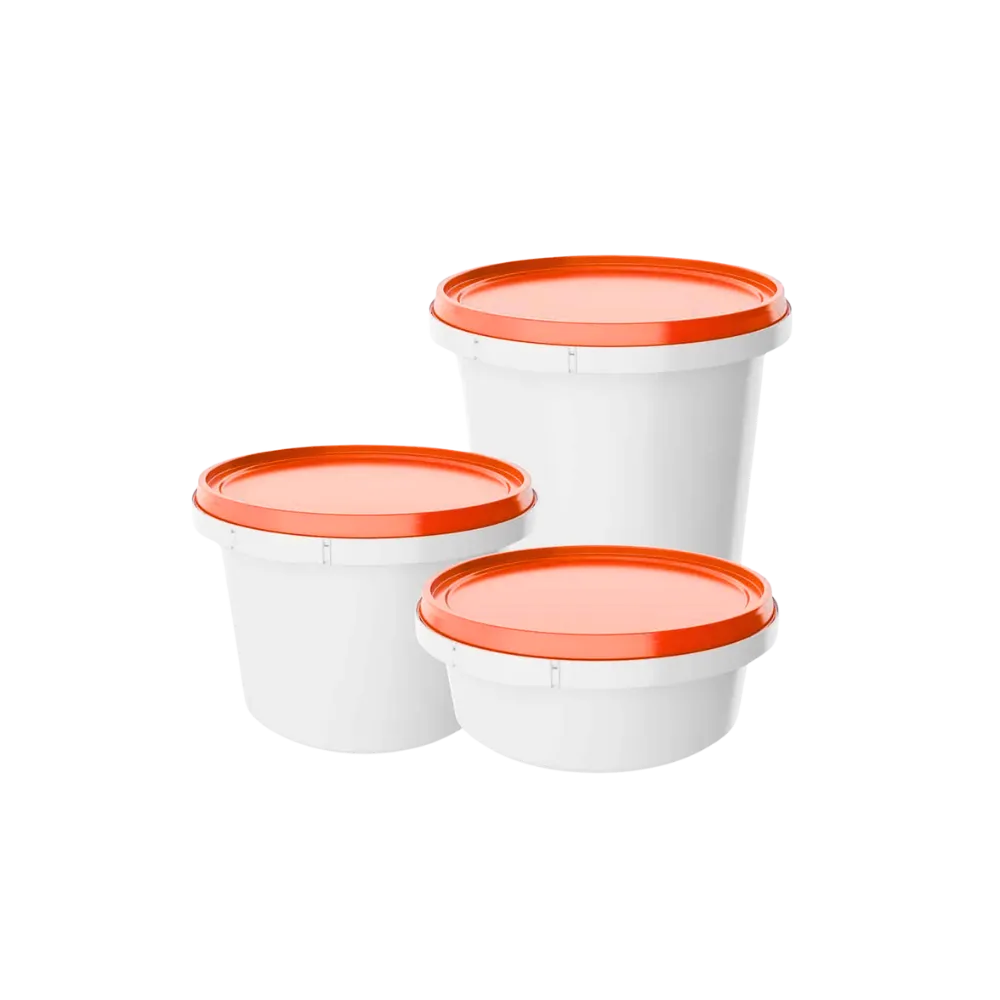
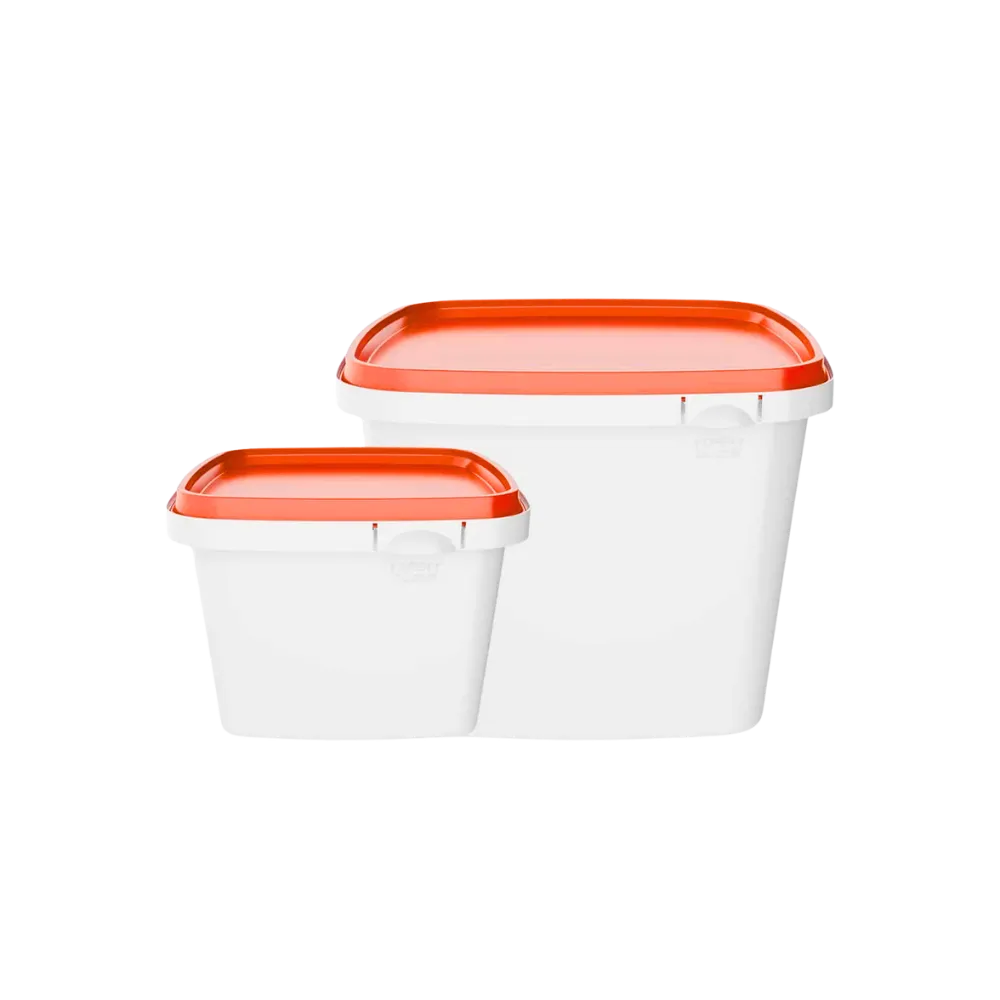
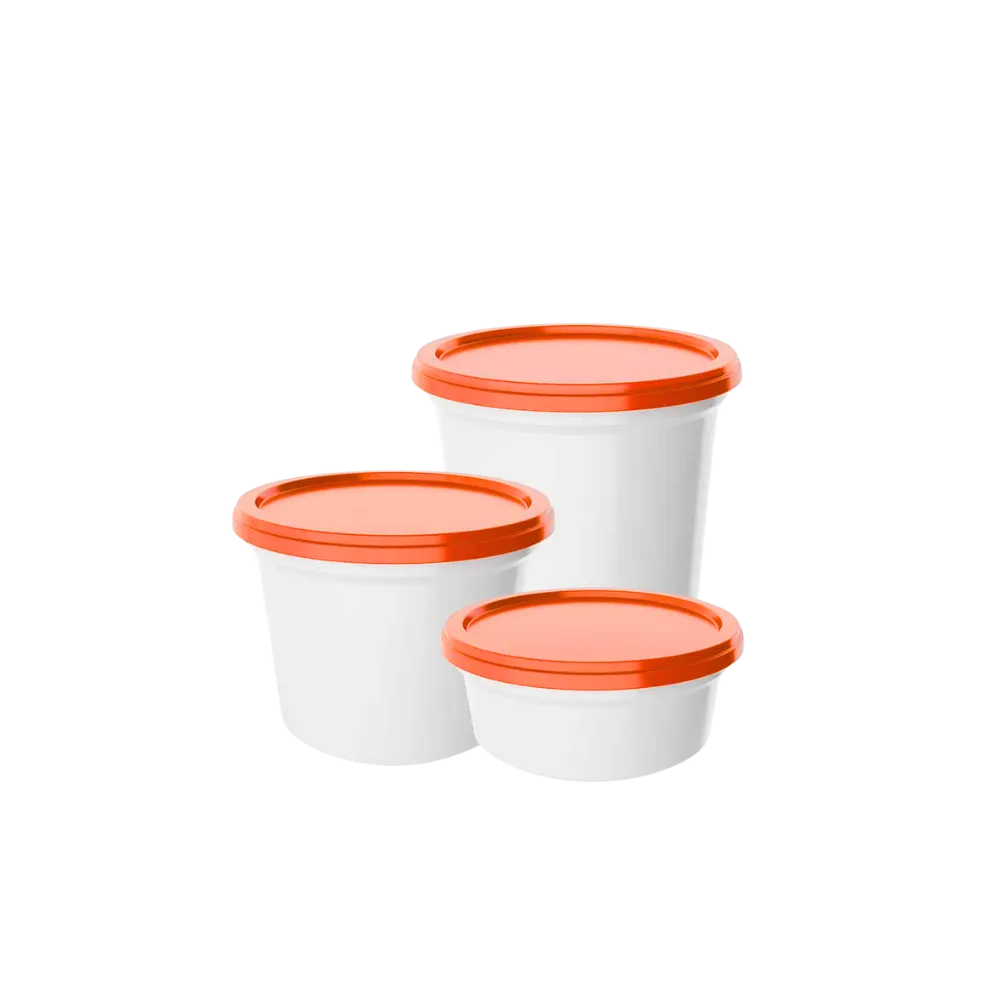
Short answer
Plastic food containers are made by selecting a food-contact resin such as polypropylene, designing the container and its mold from CAD drawings, and injection molding the resin: pellets are melted, injected into a cooled steel mold and ejected as finished containers. Containers are then either left blank or decorated in the mold with an in-mold label, inspected, stacked, bagged or boxed and palletized for shipping.
Key points
- Most rigid food tubs, deli containers and pails are injection molded from polypropylene pellets.
- Containers and lids are usually molded separately, in their own molds, and matched by rim design.
- Blank containers are labeled later by the food company; IML containers come out of the mold already decorated.
- In Canada, the food seller remains responsible for ensuring that packaging is safe under Section B.23.001 of the Food and Drug Regulations.
- Stacking, sleeving and palletizing are part of manufacturing, because they decide how containers arrive at your filling line.
What are plastic food containers made from?
Most rigid plastic food containers start as small resin pellets. For tubs, deli containers, pails and their lids, the usual resin is polypropylene (PP), which carries resin identification code 5. Other packages use other resins: clear clamshells and bottles are often PET, and some tubs use polyethylene.
The resin must be suitable for food contact. In Canada, Section B.23.001 of the Food and Drug Regulations prohibits selling food in a package that may transfer a harmful substance to it, and Health Canada reviews packaging materials voluntarily and issues "letters of no objection". In the US, polypropylene for food contact is covered by 21 CFR 177.1520. Colour, when needed, is added as a masterbatch (a concentrated colour pellet) mixed with the natural resin. This article is general information, not legal advice.
How are plastic food containers made, step by step?
- Design: the container, its lid and the rim that joins them are modelled in CAD. Capacity, stacking, lid fit, tamper evidence and compatibility with filling equipment are decided here.
- Mold making: a toolmaker machines a steel injection mold, usually with several cavities so each cycle produces several containers. Lids get their own mold.
- Material handling: resin pellets, and colour masterbatch if needed, are conveyed to the press hopper.
- Injection molding: the press melts the pellets, injects the melt into the closed mold, holds pressure, cools the part and ejects it. See what injection molding is for the full cycle.
- Decoration (optional): for IML containers, a robot places a printed label in the mold before each injection, so the label fuses with the wall.
- Inspection: containers and lids are checked for dimensions, lid fit, visual defects and, for decorated parts, label position.
- Stacking and packing: containers are nested in stacks, bagged or sleeved, boxed and palletized.
- Shipping: pallets go to the food processor’s warehouse and then to the filling line.
How are blank and IML containers made differently?
Every container leaves the press either blank (plain, undecorated) or decorated by in-mold labeling (IML). The molding process is the same; the difference is whether a label goes into the mold first.
| Step | Blank container | IML container |
|---|---|---|
| Before molding | Nothing extra | Labels are printed on polypropylene film and die-cut to shape |
| In the mold | Plastic fills the empty cavity | A robot places the label in the cavity; plastic fuses with it |
| After molding | Ready to ship; the food company labels it later | Ready to ship, already decorated |
| Branding changes | Change your own labels anytime | New label artwork; same mold |
| Material | PP | PP container and PP label: one material |
Blank containers suit companies that apply their own pressure-sensitive labels or that sell to several customers from one stock format. IML suits brands that want a photo-quality decoration that will not peel or scuff off. We compare the two in blank vs decorated containers.
Why are lids made separately?
Containers and lids are usually molded in separate molds, because each part needs its own cavity and core and the two are produced in different quantities. A single lid can be designed to fit several container sizes that share the same rim diameter. That reduces the number of lid SKUs a food company must stock and simplifies its capping equipment.
Rim design is where the container and lid meet, and it determines whether a lid snaps on, seals with a heat-sealed film or shows evidence of opening. These features need precise dimensions on both parts, which is one reason rigid food containers are injection molded rather than thermoformed (see injection molding vs thermoforming).
What happens after molding?
Once molded, containers are quality-checked, stacked and packed. Buyers should agree with their supplier on the details that affect their own operation:
- Stack count per sleeve or bag, and how stacks are protected from dust
- Case or bulk packaging, and the pallet pattern and height
- Labelling of cases and pallets, including lot or production date for traceability
- Samples and specifications to approve before the first order
- Any quality documentation your customers or auditors require
Food packaging also has to work at the end of its life. Polypropylene is technically recyclable, and a PP container with a PP in-mold label stays a single-material package; acceptance in curbside programs depends on the municipality.
Should you use a stock format or a custom mold?
Many food companies never commission a mold. They choose a stock format from a molder’s catalogue, which has already been designed, tooled and proven in production. A stock container can still carry your brand through an in-mold label, so the package on the shelf is yours even though the mold is shared across customers.
A custom mold makes sense when no stock format fits your product, filling line or brand shape, and when your volumes justify the investment in design, steel and trials. Companies that already own a custom mold can also move it from one molder to another; our guide to injection mold basics explains the terms involved, and the mold transfer page shows the steps. Before you decide, test samples of the closest stock formats on your own line.
How Plastiques Horizon makes food containers
Plastiques Horizon designs, molds, decorates and packs polypropylene food containers at its own plant at 311 Rte 279, Saint-Lazare-de-Bellechasse, Québec. Each container is modelled from CAD before it is molded on Sumitomo injection molding presses, and Wittmann IML robotics place the label in the mold for decorated orders, with no secondary labeling step.
Plastiques Horizon offers six lines from 8 oz (250 ml) to 5.5 L, from Round Tamper-Evident and Square Tamper-Evident containers to Rectangle and Heavy-Duty Deli containers. The Round Film Seal line shares one universal 409 lid across five sizes. Every format is sold blank or with in-mold labels, and ships across Canada. See the catalogue or our molding capabilities, and call 1-877-630-4095 to request samples or a quote.
Frequently asked questions
Are plastic food containers made from recycled plastic?
Many rigid food-contact containers are made from virgin resin. Recycled plastic can be used in food packaging when the recycling process can remove contaminants well enough for food contact, and Health Canada publishes guidelines for assessing recycled plastics in food packaging. Ask your supplier what resin your specific container uses.
Why do plastic containers have a number in a triangle on the bottom?
The number in a triangle is the resin identification code, which identifies the type of plastic. Code 5 means polypropylene (PP). The code identifies the material for sorting; it does not by itself mean that a container is accepted in every local recycling program.
How are colours added to plastic food containers?
Colour is usually added by mixing a small amount of colour masterbatch, a concentrated pellet of pigment in a carrier resin, with natural resin before it enters the press. The masterbatch must also be suitable for food contact. Many food containers are left natural or white and get their branding from a label.
How long does it take to make a new food container?
A completely new container requires design, a new steel mold, trials and approval, which takes considerably longer than ordering an existing format. Choosing a stock format, decorated with your own in-mold label if needed, avoids building a mold. Your supplier will confirm timing with your quote.
Sources
External references consulted for this article. General information only, not legal or regulatory advice.
- Packaging Materials · Health Canada
- Matériaux d’emballage · Santé Canada
- 21 CFR § 177.1520 Olefin polymers · Legal Information Institute, Cornell Law School
- Guidelines for using recycled plastics in food packaging: Overview · Health Canada
- 2.008 Injection Molding (lecture notes) · Massachusetts Institute of Technology