Short answer
Blank food containers are undecorated stock containers that you sell plain or label yourself; IML decorated containers carry a printed polypropylene label fused into the wall during molding. Blank containers suit low volumes, many short-run products and frequent changes. IML decorated containers suit steady, higher-volume products where shelf appeal, label durability and removing a labelling step from your line matter.
Key points
- Blank and IML decorated containers can be the same format; the difference is whether the decoration is added by you after molding or fused in during molding.
- Blank containers give the most flexibility for short runs, test products and frequent recipe or label changes.
- IML decorated containers remove the labelling step on your line and give a photo-quality label that resists condensation, refrigeration and handling.
- Many brands use both: blank containers with a pressure-sensitive label for new or seasonal products, IML for core products.
- Every Plastiques Horizon format is sold both blank and IML-decorated, so you can move a product from one to the other without changing its container.
What is the difference between blank and IML decorated containers?
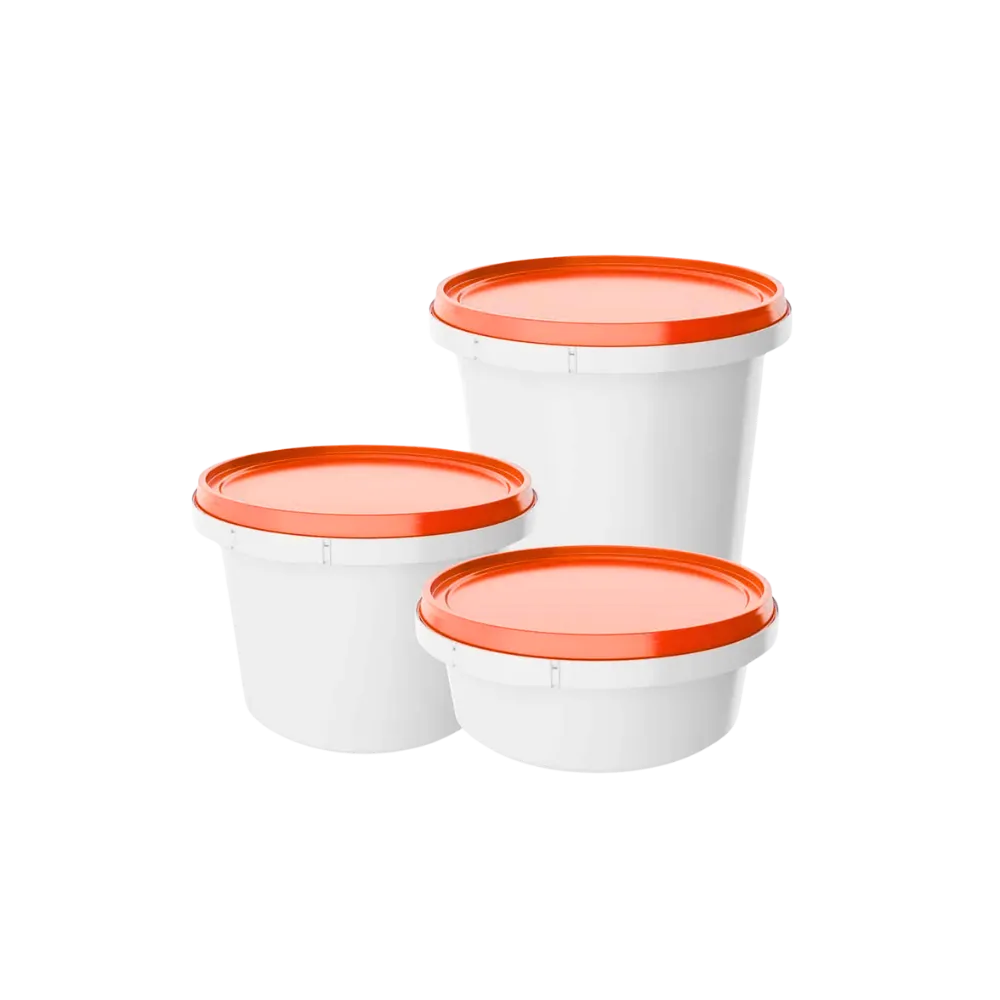
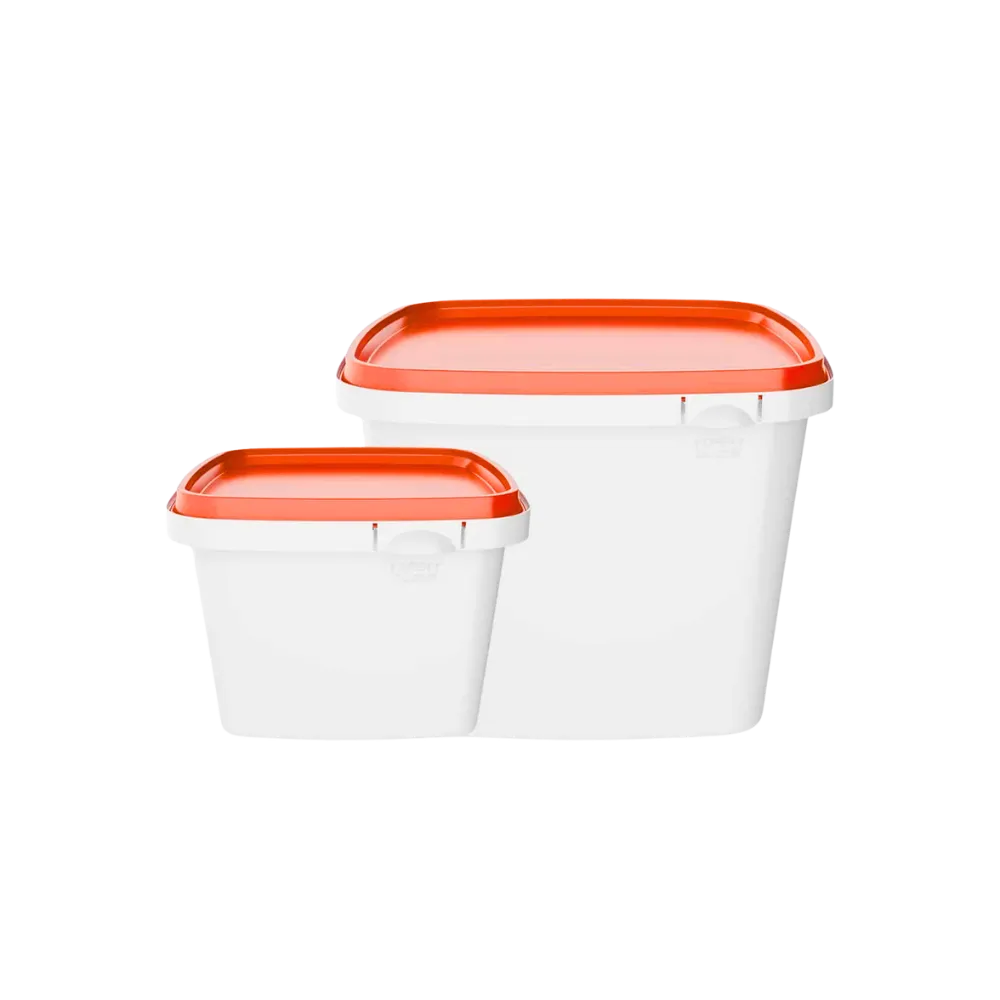
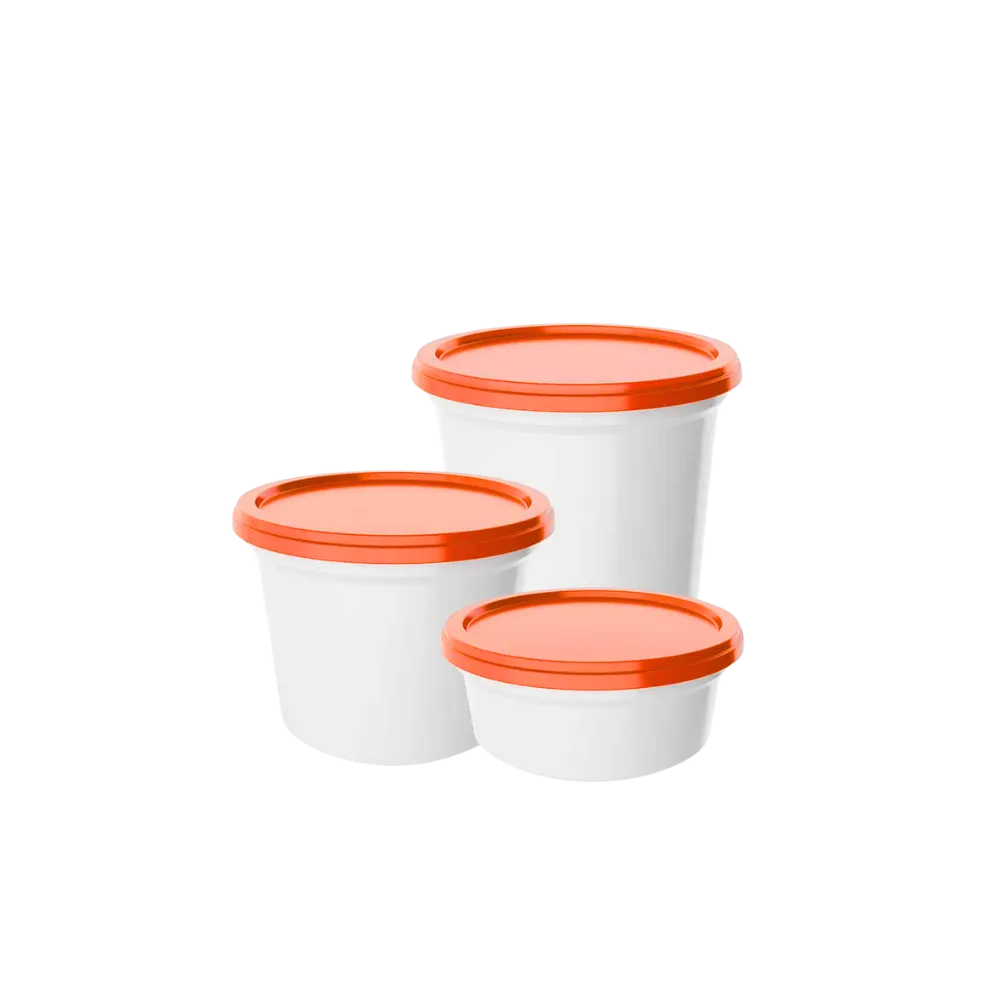
A blank container is a stock container that leaves the molder undecorated. You sell it plain, for example in food service, or you decorate it yourself with a pressure-sensitive (self-adhesive) label, a lid label or a printed sleeve, usually on or near your filling line.
An IML decorated container is decorated by in-mold labeling: a printed polypropylene label is placed in the mold before injection and fuses with the container wall. The container arrives at your plant already branded, ready to fill.
The container itself can be identical. A 16 oz (500 ml) round tamper-evident container, for instance, can be bought blank or with a full wrap-around IML label. The choice is about how, when and by whom the decoration is applied.
How do blank and IML containers compare?
| Criterion | Blank containers | IML decorated containers |
|---|---|---|
| Decoration | None from the molder; you add a label or sell plain | Printed PP label fused into the wall during molding |
| Labelling on your line | Needed if the product is labelled (labeller, label stock, operator time) | Not needed; containers arrive decorated |
| Upfront work | Minimal: choose the format and order | Dielines, artwork, proof approval and label printing before the first run |
| Best suited volume | Low or unpredictable volume, many short runs | Steady, recurring volume per design |
| Changing the design | Fast: change the label you apply | New labels must be printed for the next run |
| Print quality and coverage | Depends on your label; usually covers part of the wall | Photo-quality, up to full wrap-around or several sides |
| Resistance to cold chain | Depends on label and adhesive; some can lift or scuff | Label is part of the wall; holds up to condensation, freezing and handling |
| Inventory | One container SKU serves many products | One decorated SKU per design |
| Recycling | Paper labels are detrimental to PP recycling; PP film labels are compatible | PP label on PP container: recycled as one material |
What are the pros and cons of blank containers?
Blank containers
Pros
- No artwork, dieline or label printing needed before the first order.
- One container stock covers many products, flavours and private-label customers.
- Label changes for new recipes, promotions or regulations are quick and cheap.
- Suited to food service, where containers are often used plain.
- Easy to start with when a product’s volume is still unknown.
Cons
- A labelling step is needed on your line for retail products, with equipment, label stock and labour.
- Pressure-sensitive labels usually cover only part of the wall and can lift or scuff in humid or cold conditions, depending on the label and adhesive.
- Paper labels are classed as detrimental to recycling of PP rigid packaging.
- A plain or partly labelled container gives less shelf presence than a fully decorated one.
What are the pros and cons of IML decorated containers?
IML decorated containers
Pros
- Containers arrive decorated, so the labelling step disappears from your filling line.
- Photo-quality print that can cover the full wall, several sides and the lid.
- The label is part of the container wall, so it does not peel and holds up in refrigeration, freezing and handling.
- A polypropylene label on a polypropylene container keeps the package a single material for recycling.
- No custom mold needed: your artwork goes on a stock format.
Cons
- Artwork, dielines and proof approval take time before the first run.
- Each design is its own SKU, which adds inventory when you have many flavours.
- Changing the design means printing new labels for the next run.
- Best value comes with steady, recurring volume per design; quantities and pricing are confirmed with your quote.
When should you choose blank, IML or both?
- Choose blank for food service and deli counter use, test products, seasonal items, products with frequent label changes, and private-label programs too small for their own design.
- Choose IML for core retail products with steady sales, products kept cold or frozen where label durability matters, and brands that want the whole container to carry the design.
- Use both when your range mixes steady sellers and smaller products. Keep them on the same format so lids, cases and filling settings stay the same.
A common path is to launch a product in blank containers with a pressure-sensitive label, confirm demand, then move it to IML. Our guide on how to start an IML program covers that switch, and our comparison of IML and pressure-sensitive labels goes deeper on labels.
Do labelling rules differ between blank and IML containers?
No. The rules apply to the information on the package, not to the decoration method. The Canadian Food Inspection Agency states that mandatory information on consumer prepackaged food must be shown in both French and English, and Québec adds French-language requirements for products sold in the province.
The practical difference is timing. On a blank container, you can correct label text on your next label order. On an IML container, the text is fixed in the printed label, so regulatory copy must be final at the proof stage. This is general information, not legal advice.
For recycling, the Association of Plastic Recyclers considers polyolefin film labels compatible with the PP recycling stream and classes paper labels as detrimental. If you stay with blank containers and add your own labels, a PP film label is the closer match.
Blank and IML containers from Plastiques Horizon
Plastiques Horizon sells every format in its six polypropylene lines both blank and decorated with IML, molded in Saint-Lazare-de-Bellechasse, Québec. You can start a product in a blank Round Tamper-Evident or Square Tamper-Evident container and move it to IML later without changing the container, the lid or your filling settings.
Distributors and food-service buyers can order blank stock by the pallet; see our distributor page and the guide to buying blank containers wholesale. For decorated containers, visit our in-mold labeling page. Samples are available on request: request a quote or call 1-877-630-4095.
Frequently asked questions
Can I put my own labels on blank food containers?
Yes. Blank containers are made to be sold plain or labelled by the buyer, usually with a pressure-sensitive label applied by hand or by a labeller on the filling line. Check that the label and adhesive suit the container surface, the product temperature and refrigerated or frozen storage.
Do IML decorated containers cost more than blank containers?
An IML container includes the printed label and the decoration done during molding, so its unit price is higher than the same container blank. The comparison that matters is the total cost of a decorated product, including your own labels, labelling equipment and labour. Ask for both prices on the same format.
Can the lid be decorated if the container is blank?
It depends on the line. On Plastiques Horizon’s round and square tamper-evident lines the lids are IML-ready, so a decorated lid can be paired with a blank container, or the other way around. Confirm the combination you want with our sales team.
Are blank and IML containers the same size and shape?
At Plastiques Horizon, yes. Each format is the same container whether it is sold blank or with IML, so capacity, dimensions and lid fit stay the same. That is what lets a brand move a product from blank to IML while keeping the same container, lid and case. Run a short trial with the first decorated lot.
Sources
External references consulted for this article. General information only, not legal or regulatory advice.
- Bilingual food labelling · Canadian Food Inspection Agency
- Étiquetage bilingue des aliments · Agence canadienne d’inspection des aliments
- PP Rigid - Colored (APR Design Guide for Plastics Recyclability) · Association of Plastic Recyclers