Short answer
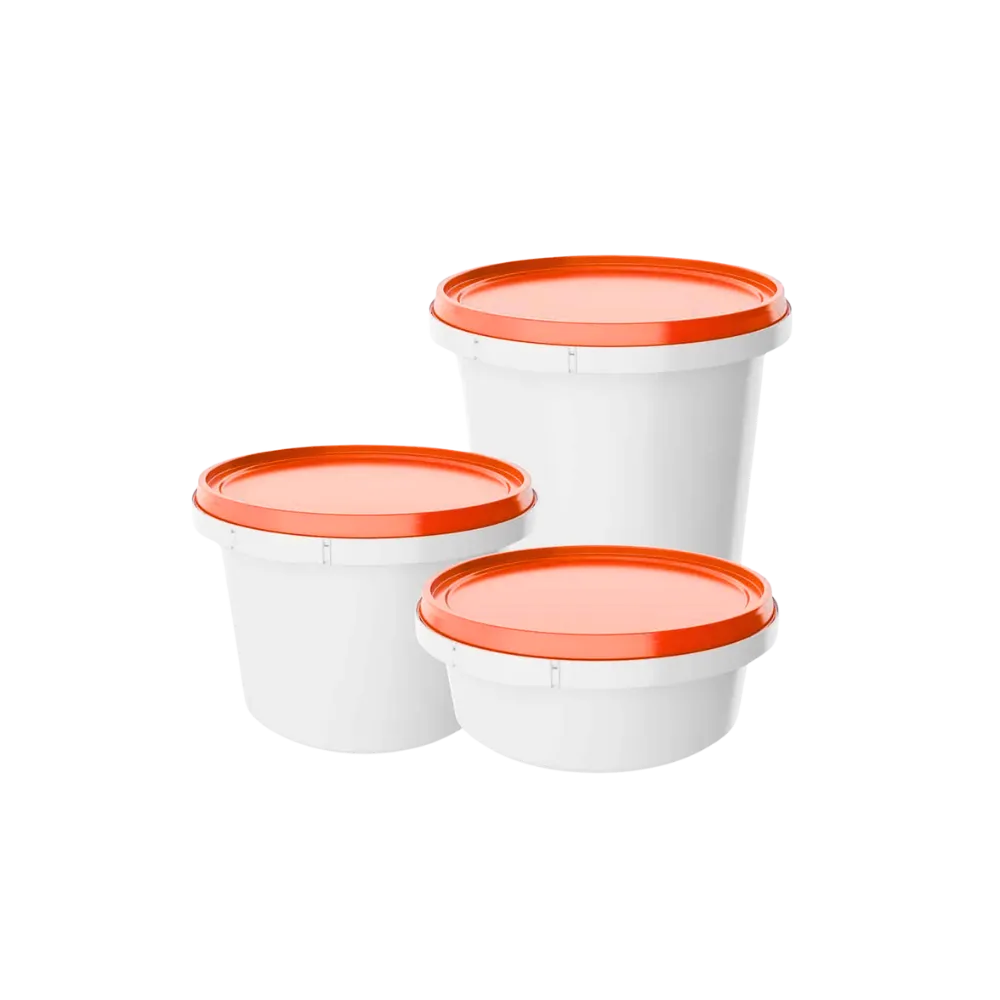
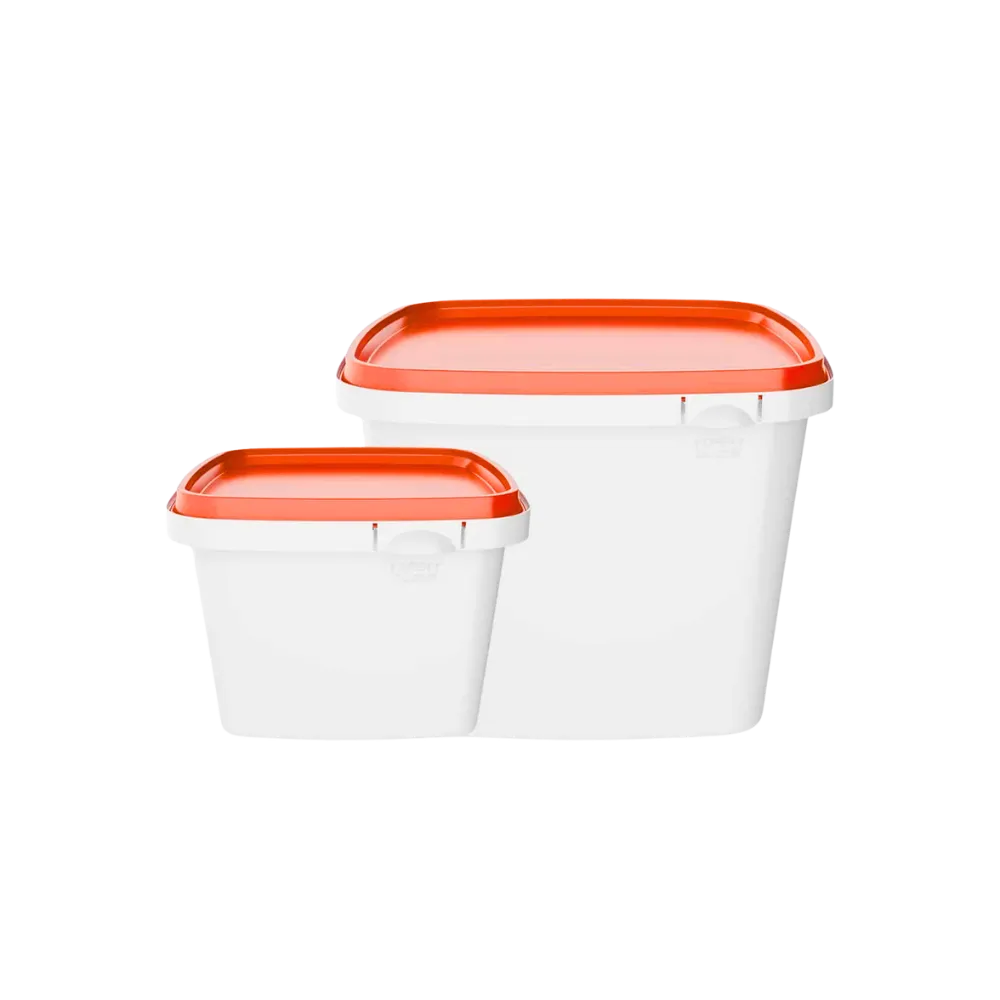
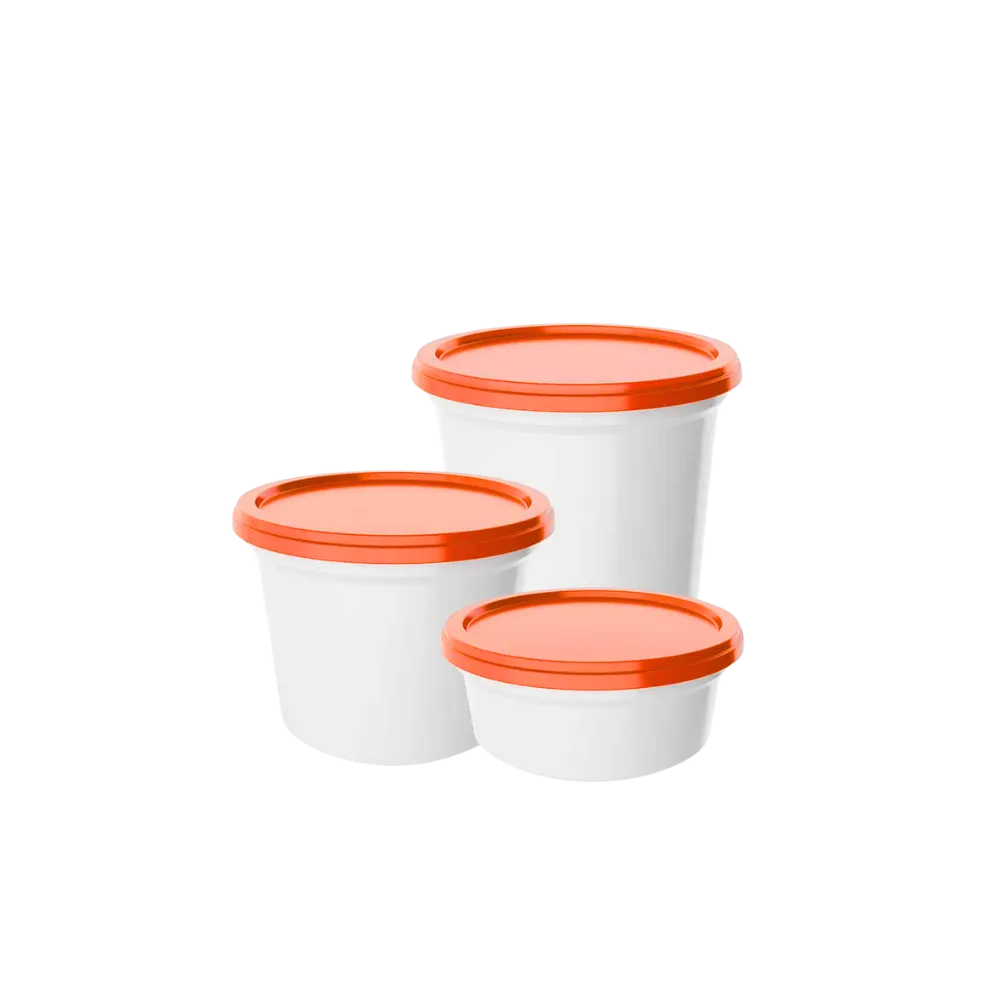
Injection molding is a manufacturing process that melts plastic pellets in a heated barrel and forces the melt under high pressure into a closed, cooled mold. The plastic solidifies in the shape of the mold cavity, then the mold opens and ejects the finished part. Injection molding produces identical, dimensionally precise parts in high volumes, such as polypropylene food containers and lids.
Key points
- Injection molding repeats one cycle: close the mold, inject molten plastic, pack and hold, cool, open and eject.
- Cooling is usually the longest step of the cycle, and the time needed rises sharply as walls get thicker.
- Polypropylene (PP, resin code 5) is the standard material for injection-molded food tubs, pails and lids.
- The mold is the main upfront investment; buying stock formats avoids that cost entirely.
- In-mold labeling (IML) decorates the container inside the mold during the same injection cycle.
How does injection molding work?
An injection molding machine (a "press") has two main units. The injection unit melts and meters the plastic. The clamping unit holds the two halves of the mold shut against the pressure of the incoming melt. The mold itself is a precision steel tool with one or more cavities in the exact shape of the part.
Every part comes from the same repeating cycle. The sequence below follows the standard description taught in university manufacturing courses such as MIT 2.008.
- Plasticizing: plastic pellets fall from a hopper into a heated barrel, where a rotating screw conveys, melts and mixes them into a uniform melt.
- Mold closing: the clamping unit closes the mold and applies enough clamp force to keep it from opening during injection.
- Injection (filling): the screw moves forward like a plunger and pushes a measured "shot" of melt through the nozzle, sprue, runners and gates into the cavities.
- Packing and holding: pressure is held after filling to add material as the plastic shrinks, until the gates freeze.
- Cooling: water circulates through channels in the mold and the part solidifies. Meanwhile, the screw prepares the next shot.
- Mold opening and ejection: the mold opens and ejector pins, stripper rings or air push the part out. The cycle starts again.
What is an injection mold made of?
An injection mold is usually built in two halves that meet at the parting line. The cavity side forms the outside of the part and the core side forms the inside. Channels called the sprue, runners and gates deliver the melt to each cavity, and cooling channels carry water through the steel.
Food container molds often have several cavities, so one cycle produces several containers at once. Many also use a hot runner, a heated manifold that keeps the plastic molten all the way to the gate. For a full glossary (cavities, cores, hot runners, stack molds), see our guide to injection mold basics.
Why is polypropylene used for injection-molded food containers?
Polypropylene (PP) is a lightweight thermoplastic that carries resin identification code 5. PP flows well into thin sections when molten, resists fats, acids and moisture once solid, and can be formulated for food contact. MIT course notes give PP a rule-of-thumb flow-path ratio (flow length divided by wall thickness) of 150 to 280, which helps explain why PP is the usual choice for thin-wall tubs, deli containers and pails.
Food-contact rules apply to the material and to the finished package. In Canada, Section B.23.001 of the Food and Drug Regulations prohibits selling food in a package that may transfer a harmful substance to the food, and Health Canada offers a voluntary pre-market assessment that leads to a "letter of no objection". In the United States, olefin polymers including polypropylene are covered by 21 CFR 177.1520. This article is general information, not legal advice.
How does injection molding compare with other plastic processes?
| Process | Starting material | Typical packaging parts | Wall control |
|---|---|---|---|
| Injection molding | Pellets, melted and injected into a closed mold | Tubs, containers, pails, lids, closures | Both sides of the wall are formed by steel; thickness is set by the mold |
| Thermoforming | Extruded sheet, heated and stretched over a one-sided mold | Trays, clamshells, cups, blister packs | One side touches the mold; the sheet thins where it stretches |
| Blow molding | A heated tube or preform, inflated inside a mold | Bottles, jugs, hollow containers | Outside shape is set by the mold; inside follows the inflation |
| Extrusion | Pellets pushed continuously through a shaped die | Film, sheet, profiles, pipe | Continuous cross-section only |
For rigid food containers, the practical choice is usually between injection molding and thermoforming. We compare the two in detail in injection molding vs thermoforming.
What are the advantages and limitations of injection molding?
Injection molding for food packaging
Pros
- Tight, repeatable dimensions, which matter for lid fit, sealing rims and filling lines
- Precise features such as tamper-evident rims, snap-fit lids, handles and stacking details
- Low cost per part at high volume, with multi-cavity molds producing several parts per cycle
- Decoration can be added in the same cycle with in-mold labeling (IML)
- Little process waste, especially with hot runner molds
Cons
- The mold is a significant upfront investment and takes time to build
- Design changes after the mold is built can be costly
- Best suited to steady, recurring volumes rather than very short runs
- Each mold must be matched to presses with the right clamp force, platen size and shot size
Buyers who do not want to invest in a mold can choose a stock format and still get a branded package by adding an in-mold label. Buyers who already own a mold can have it moved to a new molder through a mold transfer.
Injection molding at Plastiques Horizon
Plastiques Horizon injection molds polypropylene food containers at its own plant in Saint-Lazare-de-Bellechasse, Québec, southeast of Québec City. The molding floor runs Sumitomo injection molding presses and Wittmann IML robotics, which place the printed label in the mold before each injection.
Plastiques Horizon molds six product lines from 8 oz (250 ml) to 5.5 L, including Round Tamper-Evident containers, Round Film Seal containers with a universal 409 lid, and Tamper-Evident Buckets. Every format is sold blank or decorated with in-mold labels. See the full catalogue or our injection molding capabilities, and call 1-877-630-4095 to discuss a project or request a quote.
Frequently asked questions
How long does an injection molding cycle take?
An injection molding cycle can range from a few seconds to over a minute. Cycle time depends mostly on wall thickness, the plastic and the mold’s cooling design, because cooling is usually the longest step. Thin-wall polypropylene containers are designed for short cycles; ask your molder for the cycle confirmed for your specific part.
Is injection molding expensive?
Injection molding has a high upfront cost because the steel mold must be designed and built, but the cost per part is low once production runs at volume. Food brands can avoid the mold investment completely by choosing stock container formats from a molder’s catalogue and decorating them with in-mold labels.
What is the difference between injection molding and in-mold labeling?
Injection molding is the process that forms the plastic container. In-mold labeling (IML) is a decoration method used during injection molding: a robot places a printed polypropylene label in the mold, and the molten plastic fuses with it, so the label becomes part of the container wall.
Can injection-molded polypropylene containers be recycled?
Polypropylene carries resin identification code 5 and is technically recyclable. Whether a PP container is accepted in curbside recycling depends on the local municipal program, so check your municipality’s guidelines. A container decorated with a polypropylene in-mold label remains a single-material PP package.
Sources
External references consulted for this article. General information only, not legal or regulatory advice.
- 2.008 Injection Molding (lecture notes) · Massachusetts Institute of Technology
- Packaging Materials · Health Canada
- Matériaux d’emballage · Santé Canada
- 21 CFR § 177.1520 Olefin polymers · Legal Information Institute, Cornell Law School