Short answer
A food container RFQ checklist covers what a supplier needs to quote accurately: the container format and size (or a sample of what you buy now), the lid and closure, annual volume and order pattern, blank or decorated with in-mold labels (IML), artwork status, delivery location, food-contact documents you need, and your target start date. A complete request gets a firm quote faster.
Key points
- A food container quote depends on format, lid, decoration, volume, order pattern and delivery, so send all of them up front.
- If you are replacing a container, a physical sample or drawing is the fastest way to get a like-for-like quote.
- For IML, state the number of designs, the sides or surfaces to decorate and whether artwork is ready.
- Ask for the food-contact documents your preventive control plan needs, such as a supplier letter of guarantee, in the RFQ itself.
- If you own a mold, include cavities, mold size and the press it runs on today.
Why does a complete RFQ matter?
A request for quote (RFQ) that says only "price for 16 oz containers" forces the supplier to guess: which lid, how many, blank or printed, delivered where. Guesses turn into assumptions in the quote, and assumptions turn into surprises at the first order. A complete RFQ gets you a quote you can compare line by line with your current supplier.
The checklist below is written for buyers of injection-molded polypropylene food containers, but most of it applies to any rigid food packaging.
What product information should you include?
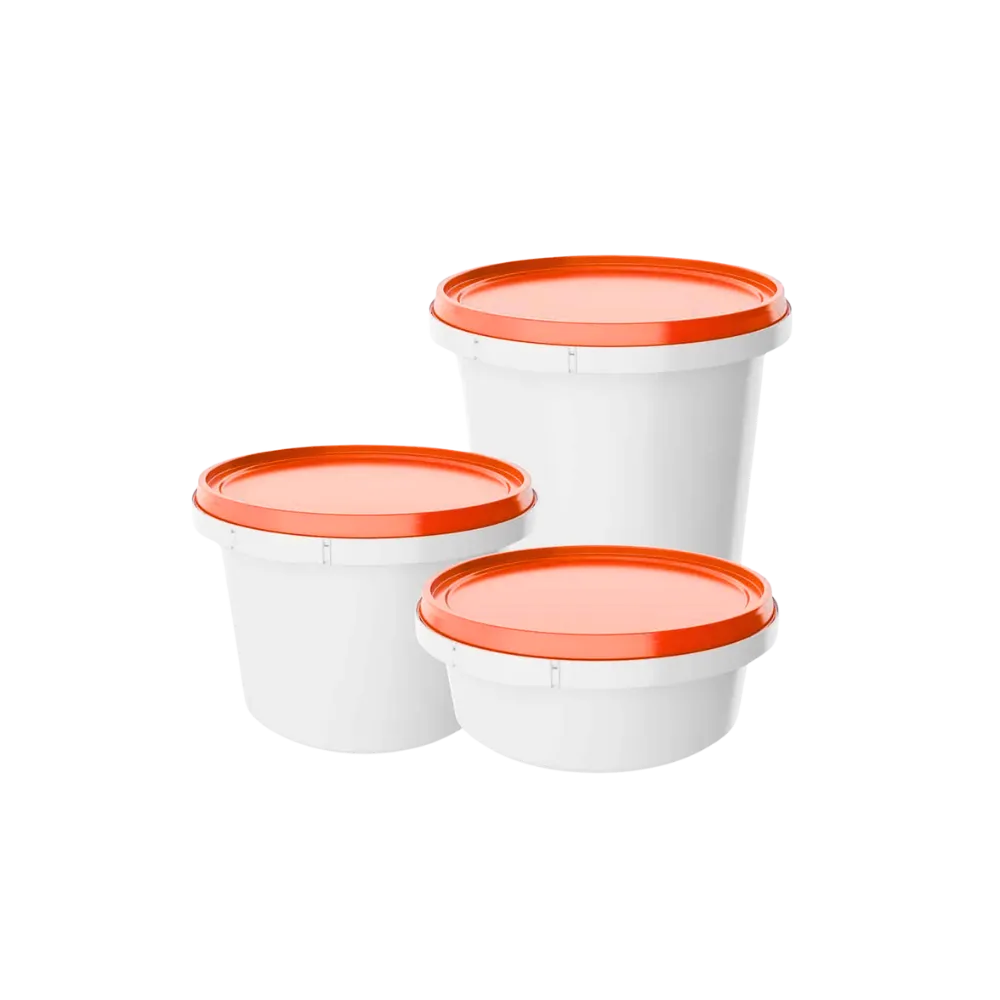
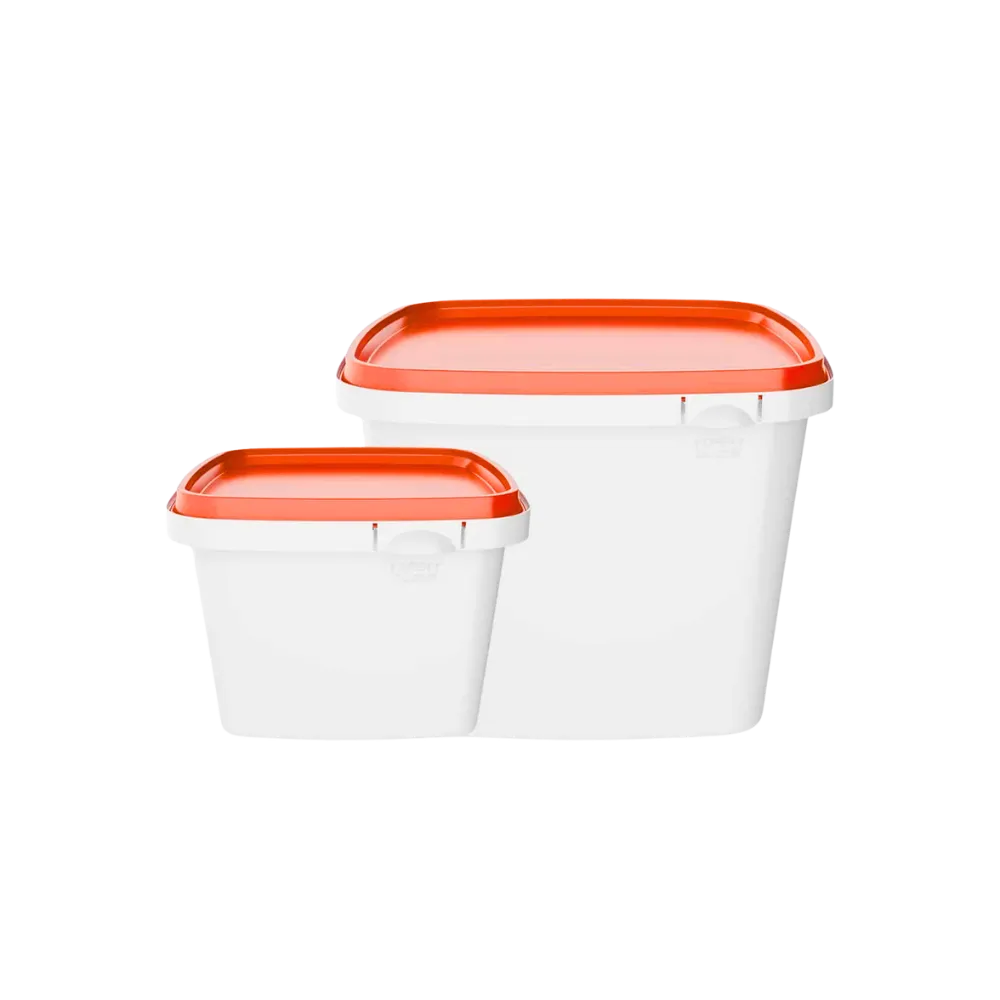
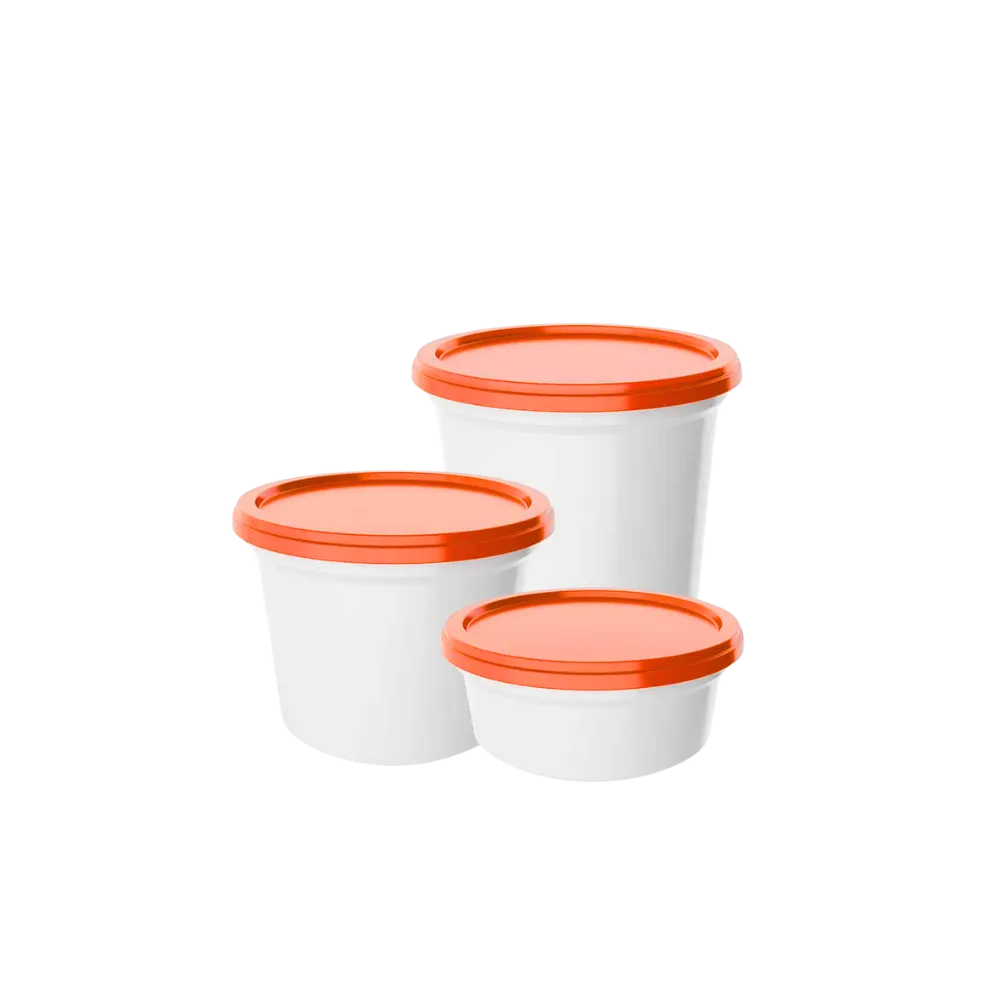
- Format and size. Shape (round, square, rectangle, bucket) and size in oz and ml or L. If you know the supplier’s item number, include it.
- A sample or drawing of your current container if you are switching suppliers. This is the most useful single item in a replacement RFQ.
- Lid and closure. Tamper-evident, film seal (and your sealing equipment, for example a 409 fill-and-seal line), snap-fit or standard lid. Say whether you need the lid at all for a film-sealed product.
- The product you will pack and how: filling temperature, refrigerated or frozen storage, microwave reheating by the consumer.
- Net quantity and target fill, so the supplier can confirm the size fits. See how to choose a food container size.
- Appearance requirements, such as colour or clarity. Ask what is available rather than assuming.
What volume and delivery information does a supplier need?
- Annual volume per item, even as a range. Unit price depends heavily on volume.
- Order pattern: typical order quantity and how often you order, or whether you want scheduled releases.
- Delivery address(es) and any receiving constraints (dock hours, pallet height or weight limits).
- Packing requirements: sleeves, case or pallet configuration, labelling of cases for your warehouse.
- Target start date and whether the first order is a trial or a full run.
Blank or decorated: what to send for IML
Blank containers are sold undecorated, for your own labels. In-mold labeling (IML) places a printed polypropylene label in the mold so the container comes out already decorated. If you want IML, add:
- Number of designs (SKUs) and the volume per design. Several flavours on one container size count as several designs.
- Surfaces to decorate: full wrap, specific sides, lid.
- Artwork status: ready, in progress or not started. The supplier provides the dielines; your designer fits the artwork, including bilingual copy for Canada.
- Approval process: who signs proofs, and whether you need a pre-production sample.
Our guide on how to start an IML packaging program explains the steps in more detail.
Which compliance documents should you request?
Ask for documents in the RFQ, not after the order. Food businesses licensed under the Safe Food for Canadians Regulations need to show in their preventive control plan that packaging is safe and suitable. CFIA guidance describes a supplier letter of guarantee that names the supplier, the date, the product and its code, states that the packaging is food grade and meets Division 23 of the Food and Drug Regulations, and is signed.
- A letter of guarantee per item number.
- Material and resin identification code (polypropylene is code 5).
- Any US food-contact documentation if you export.
- Any certification your customers require. Ask the supplier which ones they hold rather than assuming.
Our guide to food packaging regulations in Canada explains where these requirements come from.
What if you are switching suppliers or own the mold?
If you are moving an existing container from another supplier, include your current monthly usage and inventory on hand, so the new supplier can plan parallel supply while you qualify the new parts. If you own the injection mold, add:
- Part description and drawings, and a few parts from the current production.
- Number of cavities, mold dimensions and weight.
- The press it runs on today, and whether it uses a hot runner and IML automation.
- Proof of ownership and the current location of the mold.
Our mold transfer checklist covers the transfer itself.
Food container RFQ checklist at a glance
| Item | Why it matters | Example |
|---|---|---|
| Format and size | Defines the part being quoted | Square container, 16 oz (500 ml) |
| Current sample or drawing | Allows a like-for-like match | Two samples mailed with the RFQ |
| Lid and closure | Lids are separate items with their own price | Tamper-evident lid, IML-ready |
| Product and conditions | Confirms suitability and size | Hummus, cold fill, refrigerated |
| Annual volume per item | Drives unit price and scheduling | 200,000 units a year (your figure) |
| Order pattern and delivery | Affects freight, packing and inventory | Monthly releases to one warehouse |
| Blank or IML, designs, artwork status | Defines decoration cost and timeline | IML, 3 flavours, artwork in progress |
| Documents | Needed for your preventive control plan | Letter of guarantee per item |
| Mold details (if owned) | Determines whether a transfer is feasible | 4 cavities, hot runner |
| Start date | Lets the supplier confirm timing | First delivery in Q2 |
Send your RFQ to Plastiques Horizon
Plastiques Horizon makes six lines of polypropylene food containers in Saint-Lazare-de-Bellechasse, Québec, from 8 oz (250 ml) containers to 5.5 L buckets, each available blank or with IML. Minimums, pricing and lead times depend on your formats and decoration, so we confirm them with your quote.
Send the items above through our quote request form, by email to [email protected], or call 1-877-630-4095, Monday to Friday, 8:00 to 17:00 Eastern. Plastiques Horizon answers in English or French and sends samples on request. Browse the products first, or read about moving production to Canada and mold transfer if you are switching suppliers.
Frequently asked questions
Can I get a food container quote without exact annual volumes?
Yes, but give a range. A supplier can quote several volume tiers, for example a first order and an annual estimate, so you can see how price changes with quantity. A quote based on no volume at all usually assumes a small run and will not reflect what you would pay at full production.
Should I ask for samples before or after the quote?
Ask in the same request. Samples let you run a test fill and check lid fit on your own line while the supplier prepares pricing. If you are replacing an existing container, send your current container to the supplier as well, so both sides compare the same thing.
What is the difference between an RFQ and an RFP for packaging?
A request for quote (RFQ) asks for price and terms on a defined item, such as a specific container and lid. A request for proposal (RFP) asks suppliers to propose a solution to a broader need, such as redesigning a product range. For container sourcing, most buyers use an RFQ once the format is known.
How do I compare quotes from different container suppliers fairly?
Make every supplier quote the same scope: same formats and lids, same volumes, same decoration, same delivery terms. Then compare the delivered cost per unit, including freight, any duties and brokerage on imports, and the inventory you must hold. Ask each supplier to list its assumptions.
Sources
External references consulted for this article. General information only, not legal or regulatory advice.
- Incoming ingredients, materials and non-food chemicals · Canadian Food Inspection Agency
- Packaging Materials · Health Canada