Short answer
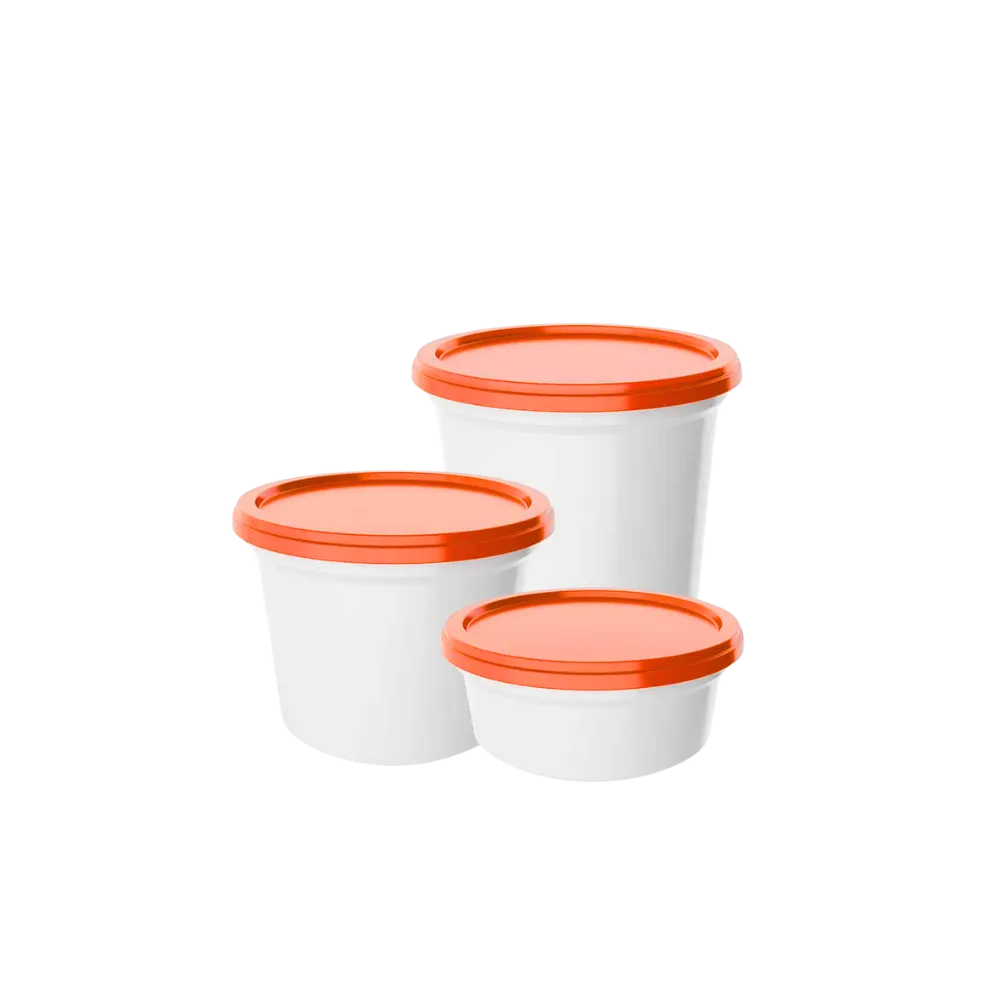
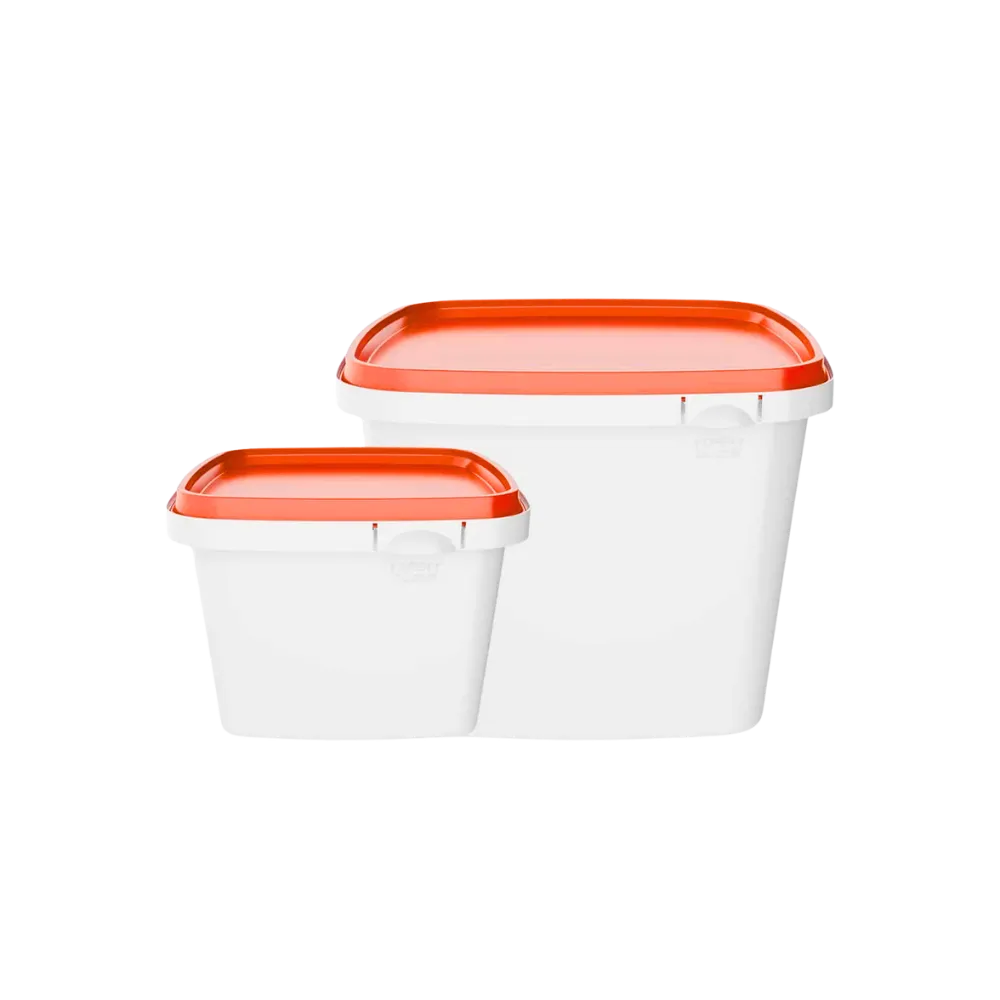
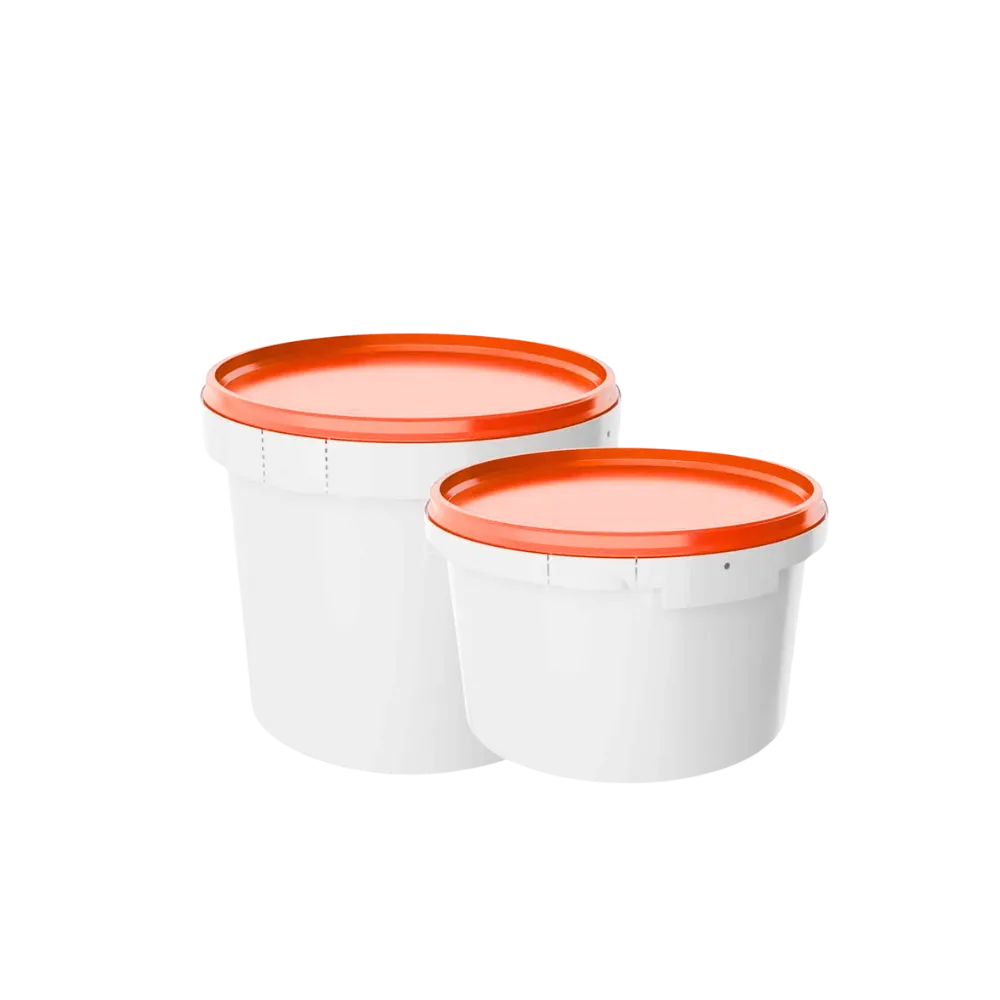
Containers for dips, sauces and spreads such as hummus, salsa, tzatziki and pesto are usually polypropylene (PP) tubs closed with a heat-sealed film and overcap, a tamper-evident lid, or, for food service, a pail with a tamper band. Plastiques Horizon molds all three in Québec: Round Film Seal (409), Square Tamper-Evident and Tamper-Evident Buckets from 2.6 L to 5.5 L.
Key points
- Retail dips such as hummus are commonly packed in sealed polypropylene tubs, while food service sauces and spreads move in pails.
- The Plastiques Horizon Round Film Seal line shares one 409 diameter, so a single overcap fits all five sizes from 8 oz (250 ml) to 32 oz (1 L).
- The Square Tamper-Evident line accepts in-mold labels on 1 to 5 sides and uses two lids for six formats from 8 oz to 48 oz (250 ml to 1.5 L).
- Plastiques Horizon Tamper-Evident Buckets run from 2.6 L to 5.5 L, with a tamper band, an airtight lid and a carry handle.
- Every format is sold blank or decorated with in-mold labels (IML), which do not peel off in humid coolers or commercial kitchens.
What do dips, sauces and spreads need from a container?
Dips, sauces and spreads are semi-liquid, often oily and usually refrigerated. A good container keeps them sealed from the plant to the fridge, does not leak in a tipped shopping bag, shows the shopper the product has not been opened, and keeps the label intact through condensation. Spreads add one more need: a wide opening so the consumer can reach the last portion with a knife or spoon.
Polypropylene (PP), resin identification code 5, is the common material for these containers. It resists the oils and acids found in many dips and dressings, stays rigid in the refrigerator, and can carry an in-mold label made from the same material.
Which container fits which product?
The right container depends less on the recipe than on the channel. A hummus sold at retail, a garlic spread sold at a deli counter and a pizza sauce delivered to restaurants need three different packages. The table below maps common products to our lines.
| Product and channel | Suggested line | Why |
|---|---|---|
| Hummus, salsa, tzatziki, dips at retail on an automated line | Round Film Seal, 8 to 16 oz (250 to 500 ml) | Heat-sealed film under a reclosable 409 overcap; runs on 409 fill-and-seal equipment |
| Family-size dips and sauces at retail | Round Film Seal, 24 or 32 oz (750 ml or 1 L) | Same 409 overcap as the smaller sizes |
| Spreads, pesto, cream cheese spreads, premium dips | Square Tamper-Evident, 8 to 48 oz (250 ml to 1.5 L) | Square footprint saves shelf space; IML on 1 to 5 sides |
| Sauces, spreads and condiments for food service | Tamper-Evident Buckets, 2.6 to 5.5 L | Tamper band, airtight lid, handle for lifting and pouring |
Film seal or tamper-evident tub for retail dips?
Most retail dip programs choose between a film seal container and a tamper-evident container. A film seal container is closed by a heat-sealed lidding film on its rim; an overcap then protects the film and lets the consumer reclose the tub. A tamper-evident container closes with a lid and a rim that shows at a glance whether the container has been opened. Our comparison of tamper-evident and film seal containers goes deeper.
Round Film Seal (409)
Pros
- Fully sealed under the overcap until the consumer peels the film
- Designed to adapt to existing 409 fill lines, with flange or shoulder support
- Wide rim gives extra seal grip
- One universal 409 overcap (item 90251) for 8, 12, 16, 24 and 32 oz
Cons
- Needs sealing equipment and a compatible lidding film
- Seal temperature, pressure and dwell must be validated with your film
Square Tamper-Evident
Pros
- Closes in one step without sealing equipment
- Square footprint helps optimize shelf space and stacks securely
- IML on 1 to 5 sides plus IML-enabled lids for more brand and bilingual copy
- Two lids cover six formats: 4″ (80151) for 8 to 16 oz, 5.5″ (80152) for 32 to 48 oz
Cons
- No separate inner seal under the lid
- Square corners are slightly harder to scrape clean than a round tub
If your current dip cups come from a US supplier and are described as "409", the number refers to the container diameter used across the industry. Our article on what 409 means explains the convention and how to check whether a Canadian-made 409 container will fit your line.
When do sauces and spreads need a pail?
Restaurants, caterers, bakeries and institutional kitchens buy sauces, dressings, spreads and fillings in bulk. A pail (called a "chaudière" in Québec) with a tamper band and a handle is the usual package. Our Tamper-Evident Buckets come in six formats, with two lid sizes.
| Capacity | Nominal oz | Bucket item | Lid item |
|---|---|---|---|
| 2.6 L | 85 oz | 85226 | 85251 |
| 3.2 L | 108 oz | 85232 | 85251 |
| 3.8 L | 128 oz | 85238 | 85251 |
| 4.5 L | 152 oz | 85245 | 85252 |
| 5 L | 169 oz | 85250 | 85252 |
| 5.5 L | 186 oz | 85255 | 85252 |
The tamper band gives clear evidence of opening from filling to final use, the airtight, leakproof lid protects the product in transport and storage, and the handle makes larger volumes easy to lift and pour. See our tamper-evident bucket guide for format details.
What should you check on food contact and labelling?
In Canada, Health Canada explains on its packaging materials page that section B.23.001 of the Food and Drug Regulations prohibits selling food in packages that may impart any substance to the contents, and that the food seller is responsible for packaging safety. If you also export to the United States, polypropylene for food contact is covered by 21 CFR 177.1520, Olefin polymers. Plastiques Horizon containers are made from FDA, USDA and CFIA compliant materials.
On the label side, the Canadian Food Inspection Agency states that mandatory information on consumer prepackaged food must appear in both English and French (bilingual food labelling), and Québec adds its own French-language requirements. This article is general information, not legal advice.
Should dip and sauce containers be in-mold labeled?
Dips and spreads sit in humid coolers and get handled with oily fingers. An in-mold label is printed polypropylene fused into the wall during molding, so it does not peel, wrinkle or scuff, and the decorated container is recycled as one material. On a pail, a full wrap-around in-mold label stays readable after months of use in a commercial kitchen.
Plastiques Horizon decorates the Round Film Seal line and the buckets with full wrap-around in-mold labeling, and the Square Tamper-Evident line on 1 to 5 sides. Many producers keep blank stock with pressure-sensitive labels for new flavours and move proven recipes to IML.
Dip, sauce and spread containers from Plastiques Horizon
Plastiques Horizon molds these lines at its plant in Saint-Lazare-de-Bellechasse, Québec, on Sumitomo presses with Wittmann IML robotics, and ships across Canada with service in English and French. Samples are available on request, and pricing, minimum quantities and lead times are confirmed with your quote. Buying from a US molder today? See how our Made in Canada program handles the switch with parallel supply.
Request a quote with your products, formats and annual volumes, or call 1-877-630-4095, Monday to Friday, 8:00 to 17:00 Eastern.
Frequently asked questions
What size container is used for hummus?
Retail hummus and similar dips are often sold in small and medium tubs, and food service packs in larger pails. Plastiques Horizon offers Round Film Seal tubs in 8, 12, 16, 24 and 32 oz (250 ml to 1 L) and buckets from 2.6 L to 5.5 L. Fill samples with your product to confirm the net quantity you want to declare.
Can one lid fit several dip container sizes?
Yes, on the Plastiques Horizon Round Film Seal line. All five sizes, 8 to 32 oz (250 ml to 1 L), share the 409 diameter, so one universal overcap fits all of them. On the Square Tamper-Evident line, two lids cover six sizes, and buckets use two lids for six sizes.
Are polypropylene containers suitable for oily or acidic dips?
Polypropylene is widely used for oily and acidic foods such as dips, dressings and tomato sauces because it resists many oils and food acids. You should still confirm suitability for your specific recipe and storage conditions with your packaging supplier and run a shelf-life test in the actual container.
What is the difference between a pail and a chaudière?
There is no difference in the product. "Chaudière" is the common Québec French word for a pail or bucket, while "seau" is the standard French term. Plastiques Horizon calls its line "Seaux Sécure" in French and Tamper-Evident Buckets in English, from 2.6 L to 5.5 L.
Sources
External references consulted for this article. General information only, not legal or regulatory advice.
- Packaging materials · Health Canada
- Matériaux d’emballage · Santé Canada
- 21 CFR § 177.1520 Olefin polymers · Legal Information Institute, Cornell Law School
- Bilingual food labelling · Canadian Food Inspection Agency