Short answer
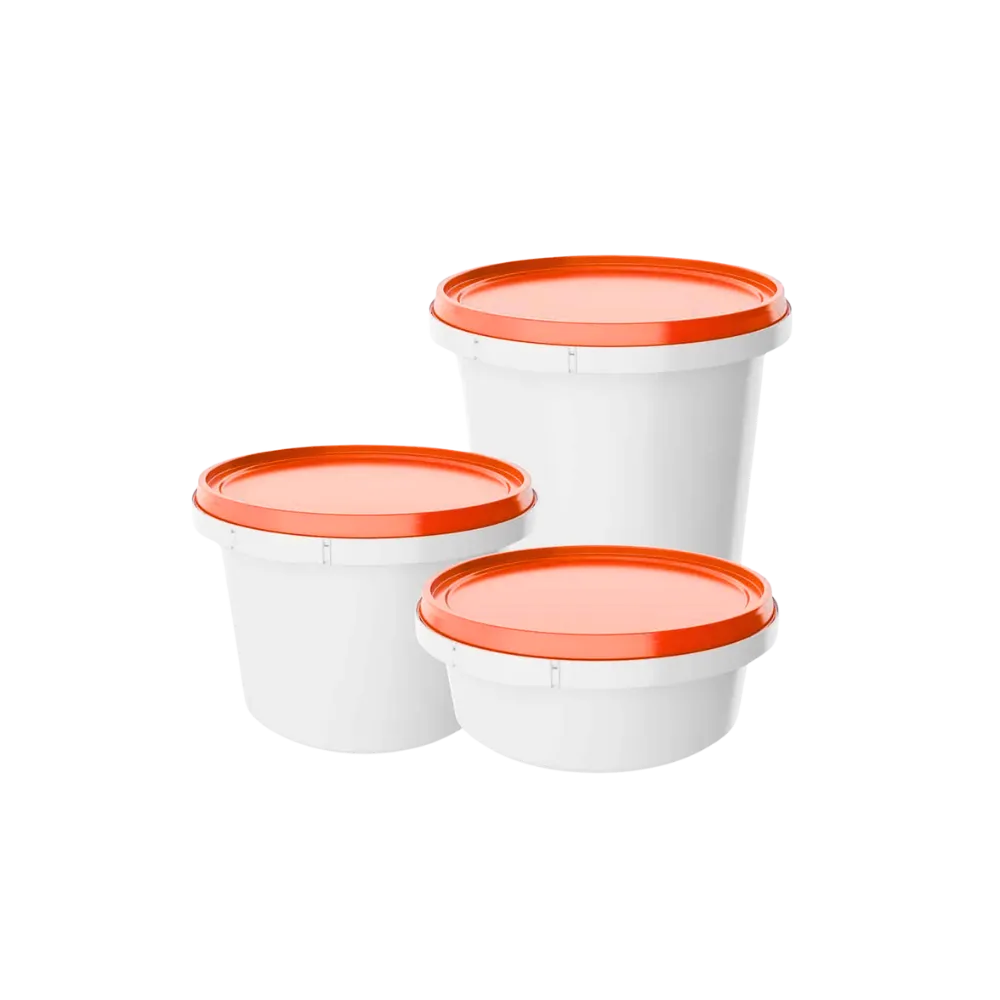
Yogurt containers and other dairy packaging containers are usually injection-molded polypropylene (PP) tubs closed either by a tamper-evident lid or by a heat-sealed film under a reclosable overcap. Plastiques Horizon molds three suitable lines in Québec: Round Tamper-Evident, Round Film Seal (409 diameter) and Square Tamper-Evident, from 8 oz (250 ml) to 48 oz (1.5 L), blank or with in-mold labels (IML).
Key points
- Dairy products such as yogurt, cottage cheese, sour cream and soft cheese are commonly packed in polypropylene tubs with either a tamper-evident lid or a heat-sealed film and overcap.
- Film seal containers suit high-speed fill-and-seal lines; tamper-evident containers close with a lid that shows at a glance whether the container has been opened.
- All five Plastiques Horizon Round Film Seal sizes share the 409 diameter, so one universal overcap fits 8 oz to 32 oz (250 ml to 1 L).
- In-mold labels are fused into the polypropylene wall, so they hold up to condensation in refrigerated dairy cases.
- CFIA requires the net quantity of consumer prepackaged dairy products to be declared in metric units on the principal display panel.
What does a dairy product need from its container?
Yogurt, cottage cheese, sour cream, cream cheese spreads and dairy desserts share the same packaging needs. The container must keep the product sealed and clean from the dairy to the consumer’s refrigerator, show the shopper that nobody has opened it, survive cold and humid display cases, and carry a label that stays readable until the last spoonful.
Polypropylene (PP) is the most common material for injection-molded dairy tubs. PP is a food-contact thermoplastic with resin identification code 5. It holds its shape in the refrigerator, takes a heat-sealed film well on a properly designed rim, and can be decorated with an in-mold label made of the same material.
For producers, the container also has to run on the filling line. A dairy that fills and seals at high speed needs a rim profile and diameter its equipment already handles. A smaller producer filling by hand or on a semi-automatic line often prefers a snap-on tamper-evident lid that needs no sealing equipment.
Which container types are used for yogurt and dairy products?
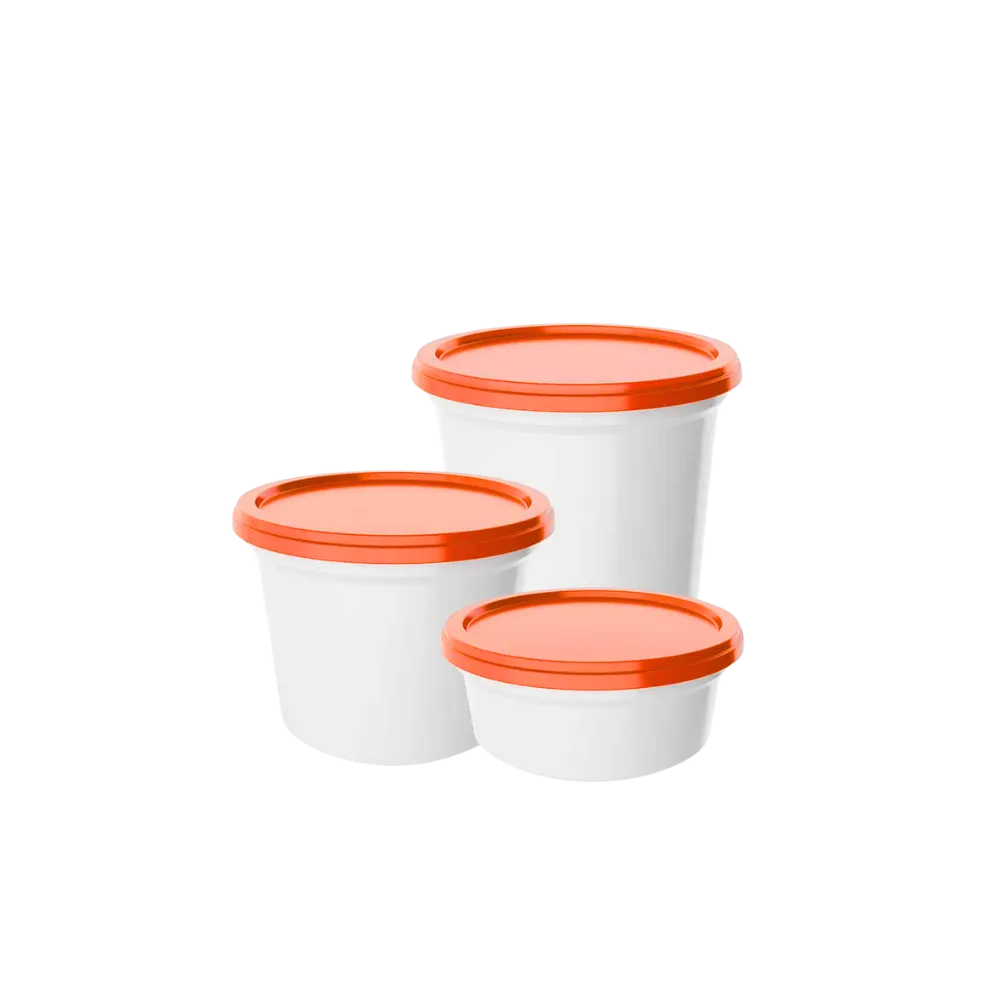
Three closure approaches cover most dairy tubs sold in Canadian grocery stores. Plastiques Horizon makes one line for each, and every format is sold blank or decorated with in-mold labeling (IML).
| Line | Closure | Sizes | Lids | Decoration |
|---|---|---|---|---|
| Round Film Seal | Heat-seal film + universal 409 overcap | 8, 12, 16, 24, 32 oz (250 ml to 1 L) | One 409 lid (90251) for all 5 sizes | Full wrap-around HD IML |
| Round Tamper-Evident | Tamper-evident rim, airtight and leakproof lid | 8, 12, 16, 24, 32 oz (250 ml to 1 L) | One lid (80251) for all 5 sizes | Full wrap-around IML, IML-ready lid |
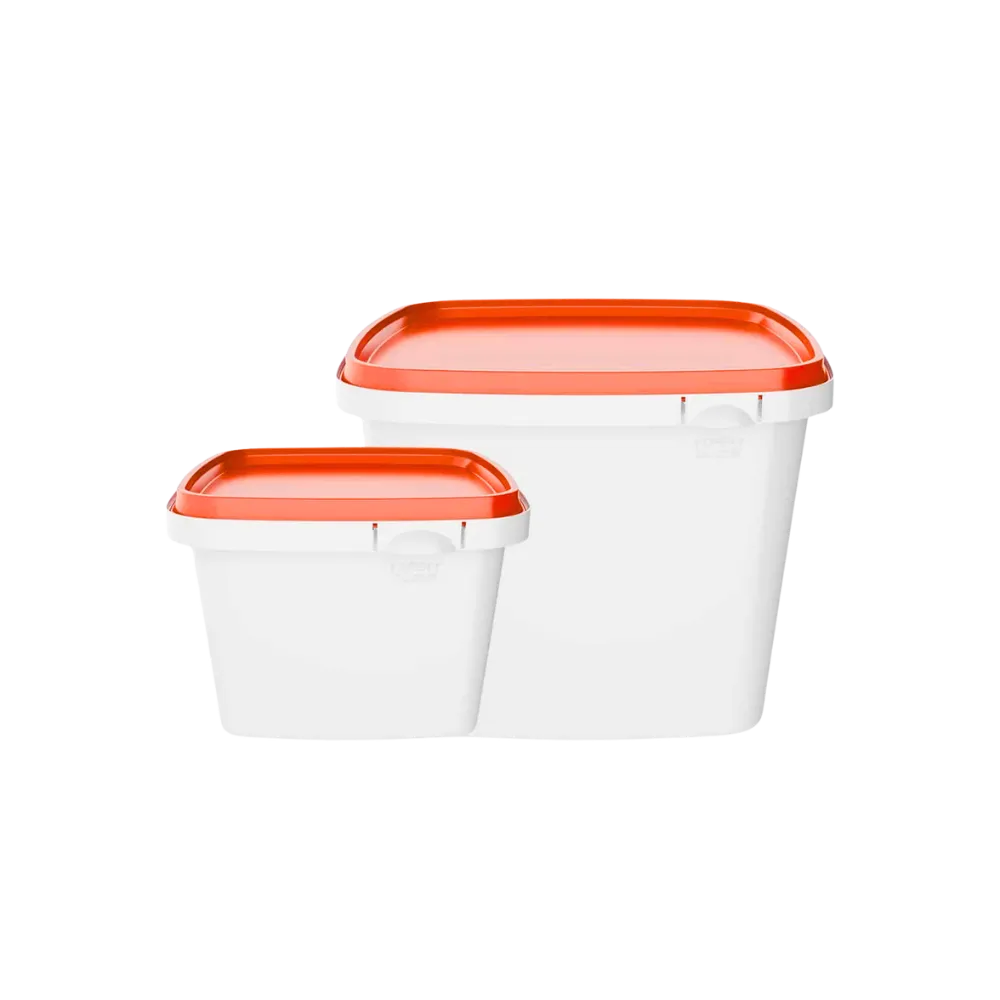
| Square Tamper-Evident | Tamper-evident rim | 8, 12, 16, 32, 40, 48 oz (250 ml to 1.5 L) | 4″ lid (80151) for 8 to 16 oz; 5.5″ lid (80152) for 32 to 48 oz | IML on 1 to 5 sides, IML-enabled lids |
The Round Film Seal line has a wide sealing rim with flange or shoulder support, designed to adapt to existing 409 fill lines. The term 409 is a can-industry diameter code; our article on what 409 means explains it. On the tamper-evident lines, the rim shows at a glance whether a container has been opened.
Film seal or tamper-evident lid: which suits your dairy product?
The choice usually follows your filling equipment and your product. A heat-sealed film gives a fully closed package under the overcap and is standard on automated fill-and-seal lines. A tamper-evident lid closes the container in one step and is simpler for operations without sealing equipment. Our film seal container guide covers the sealing process in more detail.
Film seal container with 409 overcap
Pros
- Heat-sealed film closes the container completely before the overcap goes on
- Fits existing 409 fill-and-seal equipment
- One universal overcap for all five sizes reduces lid inventory
- Overcap lets the consumer reclose the tub after the film is removed
Cons
- Requires sealing equipment and a compatible lidding film
- Seal settings have to be validated for each film and container combination
Tamper-evident container
Pros
- Closes in one step, no sealing equipment needed
- Rim shows at a glance whether the container has been opened
- Round Tamper-Evident lid is airtight, leakproof and IML-ready
- Round Tamper-Evident line is stated dishwasher, microwave and freezer safe, which suits reuse at home
Cons
- No separate inner seal under the lid
- Lid application has to be checked on your capping method or line
Round or square tubs for dairy?
Round tubs dominate yogurt and cottage cheese because they fill and empty easily and run on round fill-and-seal equipment. Square tubs earn their place on the shelf: the square footprint uses refrigerated display space efficiently, and our Square Tamper-Evident line accepts in-mold labels on 1 to 5 sides, which gives a brand more surfaces for photography, nutrition information and bilingual copy.
Square formats are often used for spreads, cream cheese, butter-style products and premium dairy desserts. The 32, 40 and 48 oz (1 L, 1.2 L and 1.5 L) square formats also suit family-size and food service dairy packs.
Which labelling rules affect your dairy container?
The container is where your mandatory label information lives, so plan the decorated surface around it. The Canadian Food Inspection Agency (CFIA) page on labelling requirements for dairy products lists the elements, including the common name, list of ingredients, net quantity, name and principal place of business, milk fat and moisture declarations, date markings and nutrition labelling.
- Net quantity: on consumer prepackaged dairy products, the net quantity must be declared on the principal display panel in metric units, according to the CFIA.
- Two languages: the CFIA states that mandatory information on consumer prepackaged food must be shown in both English and French, and Québec has additional French-language requirements.
- Packaging safety: Health Canada explains that section B.23.001 of the Food and Drug Regulations prohibits selling food in packages that may impart any substance to the contents, and that the food seller is responsible for packaging safety.
This article is general information, not legal advice. Confirm your label with the CFIA guidance or a labelling specialist before printing.
Why do dairy brands use in-mold labeling?
Refrigerated dairy cases are humid, and containers sweat when they leave the cold room. A paper or pressure-sensitive label can wrinkle, lift or scuff. An in-mold label is printed polypropylene placed in the mold before injection, so it fuses with the container wall and the decorated tub is recycled as one material. On the Round Tamper-Evident line, the lid is IML-ready too, which gives a flavour or brand mark on the top of the stack.
Many dairies start with blank tubs and pressure-sensitive labels for new flavours, then move steady sellers to in-mold labeling once the artwork and volumes are stable. Our explainer on what IML is covers the process step by step.
Dairy containers made in Québec by Plastiques Horizon
Plastiques Horizon molds its round and square dairy-ready lines on Sumitomo injection molding presses with Wittmann IML robotics at its plant in Saint-Lazare-de-Bellechasse, Québec, and ships across Canada. If you buy 409 film seal cups or tamper-evident tubs from a US supplier today, our Made in Canada program can match them to a Canadian format and supply in parallel while you qualify.
Samples are available on request; pricing, minimum quantities and lead times are confirmed with your quote. Send us your product, formats and annual volumes, or call 1-877-630-4095, Monday to Friday, 8:00 to 17:00 Eastern.
Frequently asked questions
What plastic are yogurt containers made of?
Many yogurt containers sold in Canada are made of polypropylene (PP), resin identification code 5, either injection molded or thermoformed. Plastiques Horizon dairy-ready containers are injection-molded polypropylene, lid and body, from FDA, USDA and CFIA compliant materials, and the in-mold label is also polypropylene.
What size yogurt container should I use?
Choose the size from your target net quantity, the density of your product and the headspace your filling or sealing step needs. Plastiques Horizon offers round formats of 8, 12, 16, 24 and 32 oz (250 ml to 1 L) and square formats from 8 oz (250 ml) to 48 oz (1.5 L). Test-fill samples with your product before deciding.
Can a 409 film seal cup run on my existing yogurt filling line?
If your line is set up for a 409 diameter, the Plastiques Horizon Round Film Seal containers were designed to adapt to existing 409 fill lines, with flange or shoulder support. Rim profile and sealing settings still need a line trial, so ask for samples to run on your equipment.
Do dairy containers need bilingual labels in Canada?
The CFIA states that mandatory information on consumer prepackaged food must appear in both English and French, with some exemptions, and Québec has additional French-language requirements. An in-mold label can carry both languages across the full wrap or across several sides of a square container. This is general information, not legal advice.
Sources
External references consulted for this article. General information only, not legal or regulatory advice.
- Labelling requirements for dairy products · Canadian Food Inspection Agency
- Bilingual food labelling · Canadian Food Inspection Agency
- Net quantity on food labels · Canadian Food Inspection Agency
- Packaging materials · Health Canada