Short answer
409 is a container diameter code from the can industry’s three-digit sizing convention, where the first digit is whole inches and the last two digits are sixteenths of an inch. A 409 container is therefore about 4 9/16 inches (roughly 116 mm) in diameter, so 409 cups of different heights can share one lid, one film size and the same sealing tooling.
Key points
- In the three-digit container code, the first digit is whole inches and the next two digits are sixteenths of an inch.
- 409 means 4 9/16 inches, about 116 mm; the code describes diameter, not volume.
- Containers on the same 409 diameter can share an overcap, a lidding film size and sealing tooling across several heights and volumes.
- The exact measuring point and rim profile vary by manufacturer, so fit on your line should be confirmed with drawings and samples.
- All five Plastiques Horizon Round Film Seal formats, 8 to 32 oz (250 ml to 1 L), share the 409 diameter and one universal lid.
What does 409 mean on a food container?
When a packaging buyer asks for a "409 container" or a "409 lid", the number is a diameter code. It comes from the sizing convention the metal can industry has long used to describe can dimensions, and it has been carried over to round plastic cups and tubs, especially film seal containers for dairy, dips and sauces.
Read as a dimension, 409 means 4 and 9/16 inches, or 4.5625 inches. That is about 116 mm, which is the metric value the US Food and Drug Administration gives for the code 0409 in its container dimension conversion chart for canned food registration.
Using the same codes for plastic cups gives packaging buyers, film suppliers and sealing machine builders a shared vocabulary. A buyer who orders 409 lidding film, a 409 overcap and 409 cups is describing parts meant to work together on one line, even when they come from different suppliers.
How do you read three-digit container codes?
Each dimension is written as three digits. The first digit is whole inches and the last two digits are sixteenths of an inch. A can described as 303 x 406, for example, is 3 3/16 inches in diameter and 4 6/16 inches tall, as explained in this can size guide. By convention the diameter comes first and the height second.
| Code | Inches | Decimal inches | Approx. mm |
|---|---|---|---|
| 303 | 3 3/16 | 3.1875 | 81 |
| 307 | 3 7/16 | 3.4375 | 87 |
| 401 | 4 1/16 | 4.0625 | 103 |
| 409 | 4 9/16 | 4.5625 | 116 |
| 603 | 6 3/16 | 6.1875 | 157 |
Because the last two digits count sixteenths, they never go above 15. A code like 416 does not exist in this system; the next size up from 415 would be written 500.
Does 409 tell you the volume of a container?
No. 409 describes only the diameter. Volume depends on the height and wall shape of the cup. A family of 409 containers can range from a small single-serve cup to a large multi-serve tub, all with the same rim diameter. That is the whole point: one diameter, many capacities.
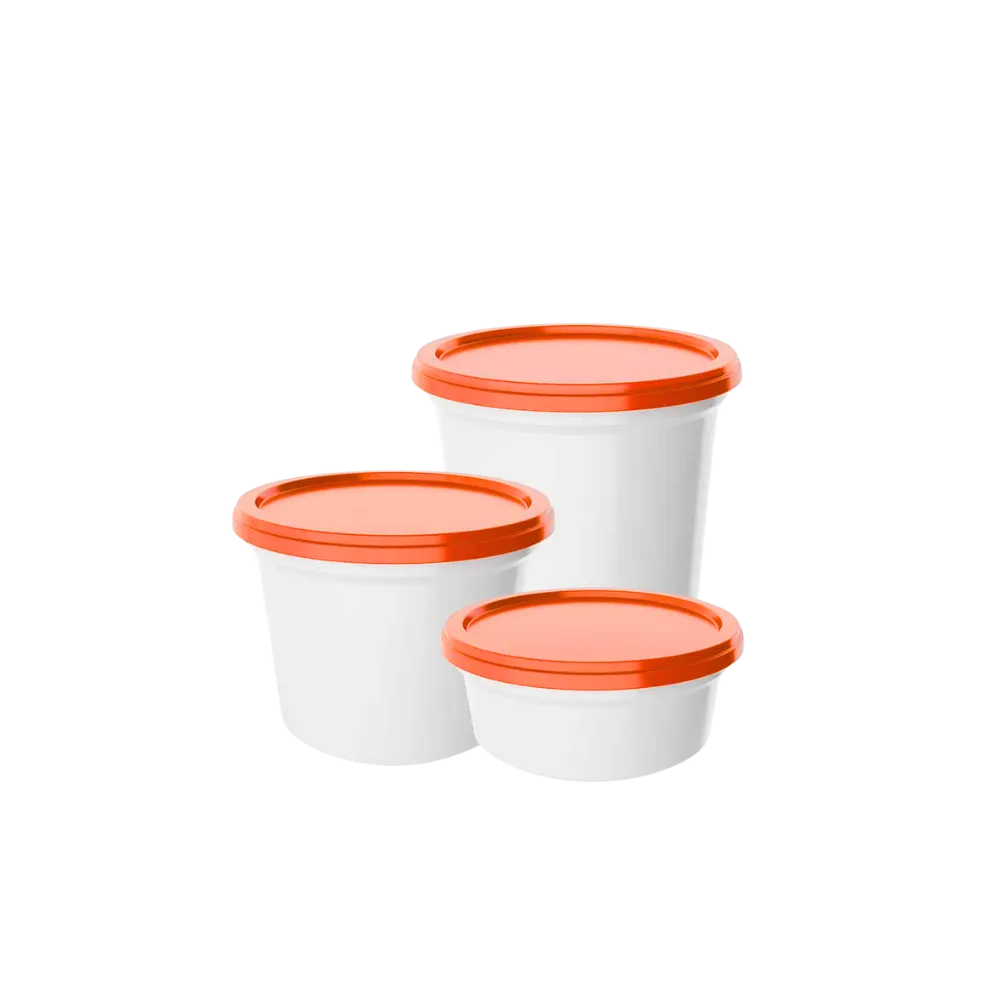
The Plastiques Horizon Round Film Seal line is a good example. All five formats share the 409 diameter and the same universal overcap.
| Nominal size | Capacity | Diameter | Lid |
|---|---|---|---|
| 8 oz | 250 ml | 409 | Universal 409 overcap |
| 12 oz | 375 ml | 409 | Universal 409 overcap |
| 16 oz | 500 ml | 409 | Universal 409 overcap |
| 24 oz | 750 ml | 409 | Universal 409 overcap |
| 32 oz | 1 L | 409 | Universal 409 overcap |
Why does a common 409 diameter matter?
- One lid for many sizes. A single overcap fits every height, which cuts the number of lid items you buy, store and track.
- One film size. Die-cut lidding film or rollstock is sized to the rim, so one film can serve the whole family.
- Shared sealing tooling. A fill-and-seal line set up for 409 can usually change cup height without changing the sealing head diameter. Height changes may still need adjustments to guides, dispensers and supports.
- Easier supplier changes. Because 409 is a widely used diameter, a processor can often qualify a 409 container from another molder without rebuilding the line around a new rim size.
That last point matters for buyers who want to move container supply from the United States to Canada. For the full picture of how film seal closures work, see what a film seal container is.
Will any 409 container fit my 409 line?
Not automatically. The code gives a nominal diameter. For metal cans, the guide above notes that the diameter is measured across the outside of the seamed end. Plastic container makers each define their own reference point, rim width, flange profile and stack height on their drawings. Two cups both called 409 can still differ in ways that matter to your sealer, dispenser or overcap.
To find the actual diameter of the cup you buy today, measure the outside of the rim at several points with a caliper and compare the average with the supplier’s drawing. Measure the sealing land width and the flange thickness too, and note whether the cup rests on its flange or on a shoulder when it sits in the sealer’s pockets. Those few numbers, with a sample of the cup and of the overcap, are usually enough for a new molder to tell you whether a replacement will fit.
- Compare the drawings of your current cup and the proposed cup: rim outside diameter, sealing land width, flange thickness and stack height.
- Check how your sealer supports the container: under the flange or on a shoulder.
- Confirm that your current lidding film and overcap fit the new rim.
- Run samples on your own line at production speed, then check seal strength and leaks.
- Approve the container only after a successful line trial.
409 film seal containers made in Québec
Plastiques Horizon injection-molds its Round Film Seal containers in polypropylene (PP, resin code 5) in Saint-Lazare-de-Bellechasse, Québec. The line is designed to run on existing 409 fill-and-seal lines, with a wide sealing rim and a choice of flange or shoulder support. Every format is sold blank or decorated with full wrap-around in-mold labels.
If you currently buy 409 cups from a US molder, send us a sample or drawing and we will compare it with our format, then send samples for a trial on your sealer. Learn more about moving container supply to Canada, browse all product lines, or request a quote at 1-877-630-4095.
Frequently asked questions
Is a 409 lid the same as a 4.5 inch lid?
Not exactly. A 409 code means 4 9/16 inches, which is 4.5625 inches or about 116 mm, slightly more than 4.5 inches. A lid sold for a 409 container is designed for that nominal diameter and for a particular rim profile, so check fit with samples rather than relying on a rounded inch value.
What does 409 x 300 mean?
In the three-digit convention, the first number is the diameter and the second is the height. 409 x 300 would describe a container 4 9/16 inches across and 3 inches tall. Each group is read the same way: whole inches first, then sixteenths of an inch in the last two digits.
Are 409 containers only used for film seal?
No, but film seal is where the code matters most, because the sealing head, the lidding film and the overcap are all sized to the rim diameter. The same code can describe the rim of any round container, but on any line the code tells you the nominal diameter, not whether a container will fit your equipment.
How many millimetres is a 409 container?
A 409 container has a nominal diameter of 4 9/16 inches, which converts to 115.9 mm, usually rounded to 116 mm. The exact measured diameter depends on where each manufacturer takes the measurement on the rim, so confirm the dimension on the supplier’s drawing.
Sources
External references consulted for this article. General information only, not legal or regulatory advice.
- Acidified and Low-Acid Canned Foods (LACF): Metric (mm) to English (inches and sixteenths) Container Dimension Conversion Chart · US Food and Drug Administration
- Types of Food Cans and Food Can Sizes Guide · WebstaurantStore