Short answer
Wholesale plastic food containers in Canada are bought blank (undecorated) by the case or by the pallet, either directly from a molder or through a packaging distributor. Before ordering, a buyer should confirm the format and capacity, the matching lid, the closure type, food-contact documentation, the resin code and consistent dimensions from lot to lot. Quantities, pricing and lead times are confirmed with each supplier’s quote.
Key points
- Wholesale blank food containers are sold undecorated by the case or the pallet, directly from molders or through packaging distributors.
- Always order the lid with the container and confirm which lid fits which sizes.
- Ask for written food-contact documentation; in Canada the food seller is responsible for the safety of its packaging.
- Blank containers can be labelled by the buyer, and the same formats can later move to in-mold labels (IML) without a new mold.
- Plastiques Horizon sells every format in its six polypropylene product lines blank by the pallet, directly and through distributors.
What does buying blank food containers wholesale mean?
A blank container is a food container sold without printing or labels. Buying wholesale means buying in trade quantities, usually full cases or full pallets, rather than retail packs. The buyer then fills the container and applies its own label, or resells it to food businesses that do.
Blank stock is the standard choice for deli counters, caterers, food service, small and mid-size processors, and any product that changes often. It lets you keep one container across many products and put the branding on a label instead of on the container.
Should you buy direct from a molder or through a distributor?
Both routes are common in Canada, and many buyers use both: a distributor for smaller, mixed orders and a molder for high-volume formats. The table below shows the usual trade-offs.
| Factor | Direct from the molder | Through a packaging distributor |
|---|---|---|
| Order size | Typically full pallets or larger | Often smaller quantities and mixed pallets |
| Product range | The molder’s own lines | Many manufacturers in one catalogue |
| Technical support | Direct access to the plant on dimensions, lids and fit | Distributor staff, with the molder behind them |
| Decoration options | Blank or decorated (for example IML) from the same supplier | Mostly blank stock |
| Delivery | Scheduled production and freight | Local warehouse stock in many regions |
| Best for | High, steady volume of one or a few formats | Variety, small runs, one-stop shopping |
Buying direct from a molder
Pros
- Direct technical answers from the people who make the container
- Consistent specification on high-volume formats
- An easy path to decoration later
Cons
- Larger order quantities
- Only that molder’s range
- Production scheduling to plan around
Buying through a distributor
Pros
- Smaller orders and mixed products
- Local stock and delivery
- Several brands from one account
Cons
- Less direct contact with the plant
- Decoration usually needs to go back to a molder
- Range limited to what the distributor carries
What should you check before ordering wholesale containers?
- Format and capacity: nominal size in oz and ml, and whether your fill volume leaves the headspace you need. Test-fill a sample with your actual product.
- Lid compatibility: which lid fits which body. Some lines use one lid across several sizes, which simplifies inventory.
- Closure: snap lid, tamper-evident rim, heat-seal film or a tamper band on pails. Pick the one your product and customers need.
- Material and resin code: for example polypropylene (PP), resin identification code 5.
- Use conditions: refrigerated, frozen, hot fill or microwave. Ask what each specific line is rated for; do not assume it from the material alone.
- Consistency: the same dimensions from lot to lot, so labels, cappers and stacking keep working.
- Pack-out: units per case or sleeve and the pallet pattern, which affect storage and freight.
What food safety documents should a wholesale buyer ask for?
In Canada, Division 23 of the Food and Drug Regulations (section B.23.001) prohibits selling food in packaging that could transfer a harmful substance to it. Health Canada states that the food seller, meaning the manufacturer or distributor of the food, is responsible for packaging safety.
The Canadian Food Inspection Agency’s guidance on incoming materials recommends a signed supplier letter of guarantee stating that the packaging is food grade and complies with Division 23, plus material specifications. Distributors who resell containers should be able to pass this documentation on to their customers. This is general information, not regulatory advice.
How should you receive and store containers bought by the pallet?
Buying by the pallet lowers handling per unit, but it means storing packaging for weeks or months. The same CFIA guidance says packaging should arrive in packages that are not damaged or opened and show no signs of tampering or contamination. Inspect pallets on receipt, keep containers in their closed cases in a clean, dry area away from chemicals and dust, and use stock first in, first out. Record lot numbers so you can trace any container back to its delivery.
When does it make sense to move from blank to decorated containers?
Blank containers with a paper or film label are flexible, but the label is applied in a separate step and can scuff or peel. When a product sells in steady volume, many brands move the same container to in-mold labeling (IML), where a printed label is fused into the container wall during molding. Because IML is applied in the mold, it can often be added to an existing stock format without a custom mold. Our comparison of blank vs decorated containers covers the trade-offs, and the IML page explains the process.
Where can you buy blank food containers wholesale from Plastiques Horizon?
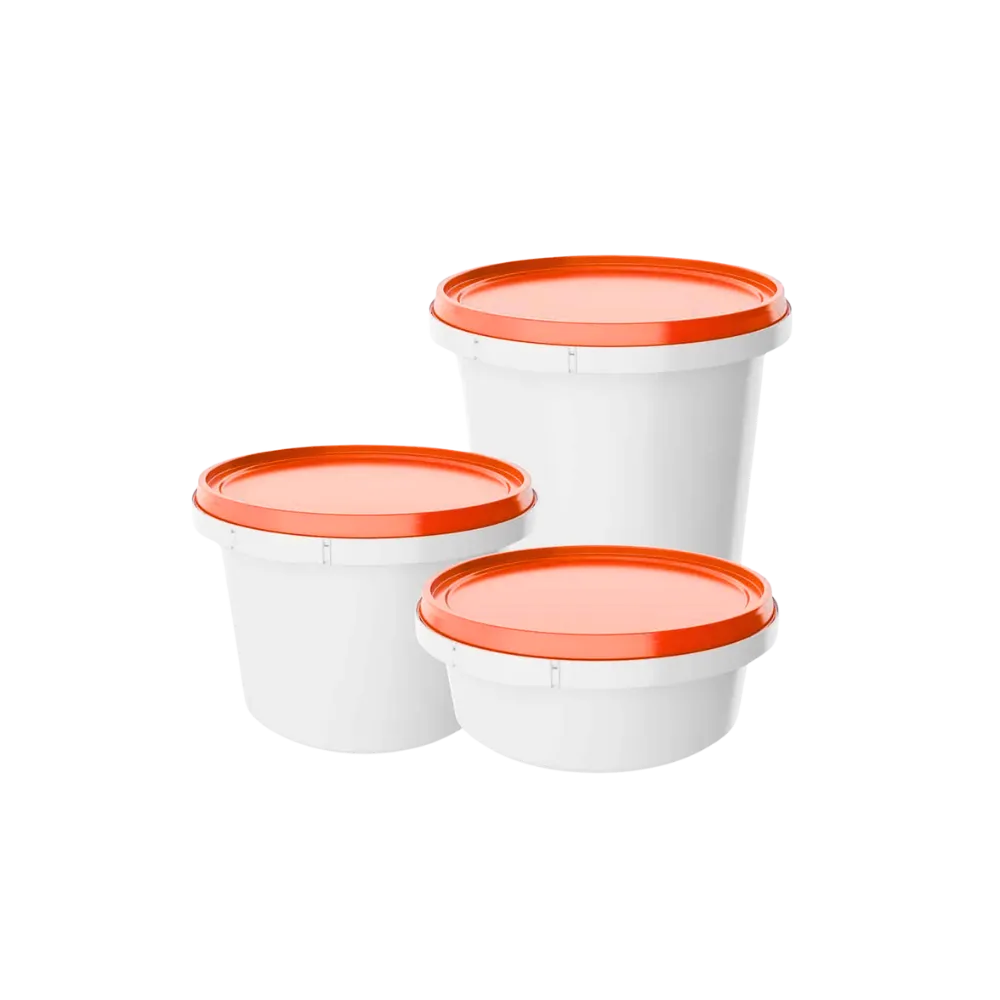
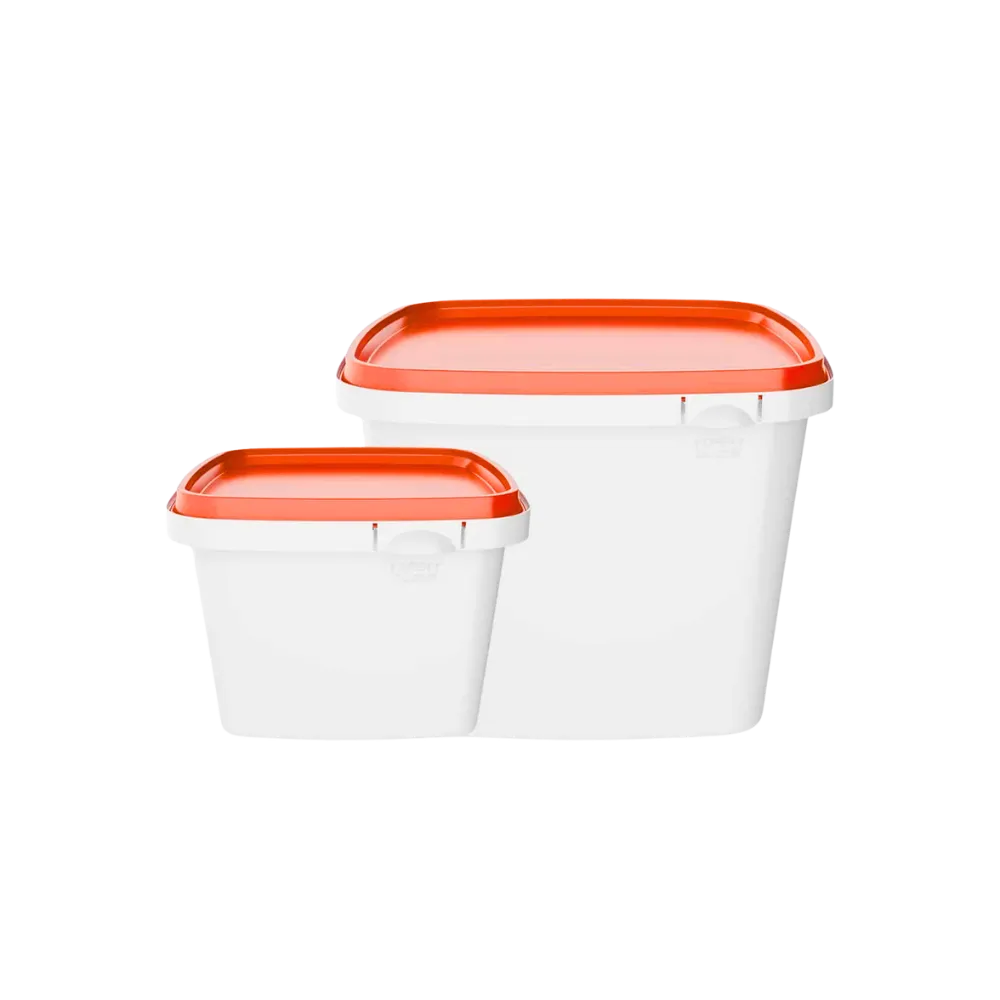
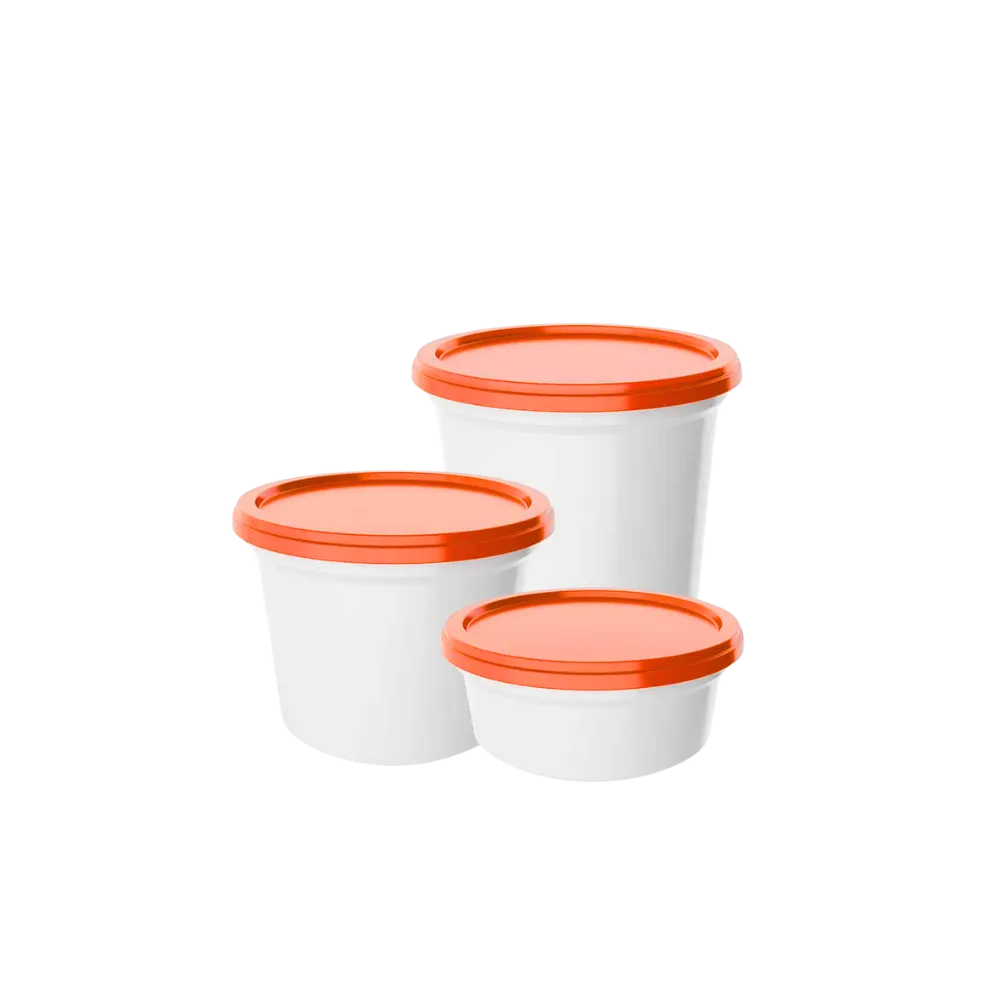
Plastiques Horizon sells every format in its six product lines blank by the pallet, molded in polypropylene at its plant in Saint-Lazare-de-Bellechasse, Québec. The range includes Round Tamper-Evident containers from 8 oz (250 ml) to 32 oz (1 L), Heavy-Duty Deli containers from 8 to 32 oz, Rectangle containers from 16 oz (500 ml) up, and Tamper-Evident Buckets from 2.6 L to 5.5 L.
Packaging distributors and wholesalers can carry the line through our distributor program, with bilingual product data and render images. Food processors can buy direct. Use the container size chart to compare formats, then request samples and a quote or call 1-877-630-4095. Quantities per pallet, pricing and lead times are confirmed with your quote.
Frequently asked questions
Can a small food business buy plastic containers wholesale?
Yes. Smaller businesses often buy through a packaging distributor, which can sell smaller quantities and mixed products from local stock. Larger, steady volumes of one format are often bought directly from the molder by the pallet. Ask each supplier for its order quantities with the quote.
Are blank food containers the same quality as printed ones?
Usually the container itself is the same. A molder that offers both typically molds the same format blank or with an in-mold label; only the decoration differs. Check that the blank and decorated versions share the same dimensions and lid if you plan to switch between them.
Which recycling symbol appears on polypropylene food containers?
Polypropylene carries resin identification code 5, usually shown as the number 5 inside a triangle. The code identifies the resin; whether a container is accepted in curbside recycling depends on the local program, so check with your municipality.
Do wholesale containers come with lids?
It depends on the supplier. Lids are often listed and sold as separate items with their own item numbers, and one lid can fit several container sizes. Confirm the matching lid for each container on your order so the quantities line up.
Sources
External references consulted for this article. General information only, not legal or regulatory advice.
- Packaging materials · Health Canada
- Matériaux d’emballage · Santé Canada
- Incoming ingredients, materials and non-food chemicals · Canadian Food Inspection Agency