Short answer
Reshoring food packaging production to Canada means buying containers molded in a Canadian plant instead of importing them, either by matching your current container to a Canadian stock format or by transferring the mold you own. Reshoring removes the cross-border steps for that packaging (customs brokerage, border crossings, US-dollar invoices and any duties that apply) and works best with a parallel-supply period.
Key points
- There are two ways to reshore a food container: match it to a Canadian molder’s stock format, or transfer the mold you already own.
- Cross-border packaging carries cost components beyond the unit price: freight, customs brokerage, exchange rate, duties or surtaxes where they apply, border delays and safety stock.
- Whether a border measure applies to a specific product is a question for your customs broker; CBSA customs notices list the goods covered by each surtax order.
- For food labels, the CFIA says origin claims apply to the food and not to its packaging, so Canadian-made containers do not change a food’s origin claim.
- Running the current supplier and the Canadian molder in parallel until approval avoids any gap on the filling line.
What does reshoring food packaging mean?
Reshoring is the move of production back to the home country after it has been sourced abroad. For a Canadian food processor, distributor or brand, reshoring food packaging usually means replacing containers bought from a US molder with containers molded in Canada. The packaging itself, and the product it holds, stay the same; what changes is where the container is made and how it reaches your plant.
There are two paths. If your container is a standard shape, a Canadian molder can match it with a format from its own catalogue. If your container is custom and you own the mold, the mold itself can be moved to a Canadian plant. Plastiques Horizon, a Québec molder of polypropylene (PP) food containers, offers both: container matching across six product lines and a mold transfer service.
Why are Canadian food companies reconsidering US-made packaging?
The unit price on a US invoice is only part of the cost. Every shipment of imported containers adds components that a domestic purchase does not have:
- Cross-border freight, often on longer routes than a domestic delivery.
- Customs brokerage and the paperwork of a commercial import.
- Exchange rate: a US-dollar invoice moves with the exchange rate, which the Bank of Canada publishes daily.
- Duties or surtaxes, where they apply. Canada has used surtax orders on certain US-origin goods, and the CBSA customs notice for the 2026 order states that its schedules list the goods covered. Whether your containers are covered is for your customs broker to confirm.
- Border delays, which can turn into a delay on your filling line.
- Safety stock: a longer, less predictable supply chain pushes most buyers to hold more inventory.
Should you match your container or transfer your mold?
| Question | Match to a stock format | Transfer your mold |
|---|---|---|
| Best for | Standard shapes: round, square, rectangle, deli, film seal, pails | Custom containers you own the mold for |
| What you send | A sample, drawing or spec sheet, plus annual volume | Mold drawings, part samples, resin, cycle time, cavities, press tonnage |
| Main check | Fit on your filling, sealing and capping equipment | Press compatibility of the mold, then fit on your line |
| Decoration | Blank or IML on every Plastiques Horizon format | IML if the mold’s label interface is compatible |
| What can change | Small dimensional or design differences from your current container | Nothing in the part, if the mold runs as before |
Matching to a stock format
Pros
- No mold to move, crate or clear through customs.
- Samples from regular production can be tested right away.
- Shared lids can simplify inventory, as with the single 409 lid on the Round Film Seal line.
Cons
- The stock format may differ slightly from your current container.
- Artwork and labels may need adjusting to the new dimensions.
- A truly custom shape may have no stock equivalent.
Transferring your mold
Pros
- The container stays identical for your customers and your line.
- No new tooling cost if the mold is compatible and in good condition.
- Custom and decorated containers can move as well as standard ones.
Cons
- The mold must pass a compatibility review and may need changes.
- Transport, customs paperwork and a stock build must be planned.
- Ownership must be clear and the current molder must release the mold.
Does Canadian-made packaging change your food’s origin claim?
No, and it is worth being precise about this. The Canadian Food Inspection Agency (CFIA) explains in its guidance on origin claims on food labels that the “Product of Canada” and “Made in Canada” guidelines apply to the Canadian content and processing of the food, not to the packaging. Imported packaging does not disqualify a food claim, and Canadian-made packaging does not create one.
Where Canadian-made packaging can matter is in your own sourcing story and in conversations with retailers that ask about suppliers. If you want to say anything about the origin of the packaging itself on a label or in advertising, check the Competition Bureau’s March 2025 enforcement guidelines on “Product of Canada” and “Made in Canada” claims and get legal advice. This article is general information, not legal advice.
How do you switch without a gap in supply?
- Send what you buy today: a sample, drawing or spec sheet, annual volume, and whether you need it blank or with in-mold labels.
- Match or transfer: the container is matched to the closest stock format, or a mold transfer is planned if you own a custom mold.
- Samples and trial run: you receive production samples, or first-article parts from the transferred mold, to test on your own filling and sealing line.
- Run both suppliers in parallel: your current supplier keeps running while the new containers are approved.
- Full switch: once you approve, the Canadian molder takes over the volume and schedules production to your forecast.
What should you still compare honestly?
Reshoring is not automatically cheaper or better. Some US suppliers have broader catalogues and larger scale, and a stock format from a Canadian molder may not match every detail of a custom US container. Resin is bought on wider markets wherever it is molded. Compare landed cost, the fit on your line, decoration options and service, and ask each supplier to confirm lead times and minimum quantities in writing. Our comparison of Canadian vs US food container suppliers covers the trade-offs on both sides.
Reshoring your containers with Plastiques Horizon
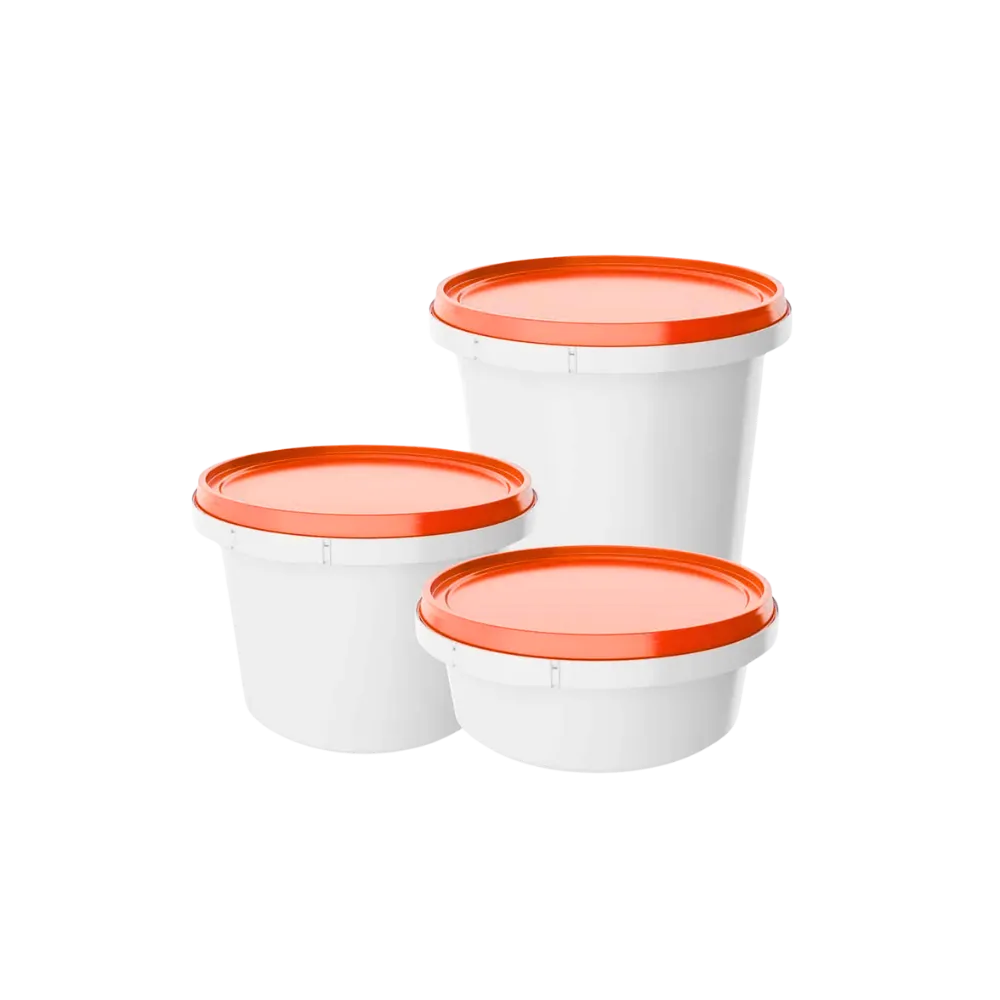
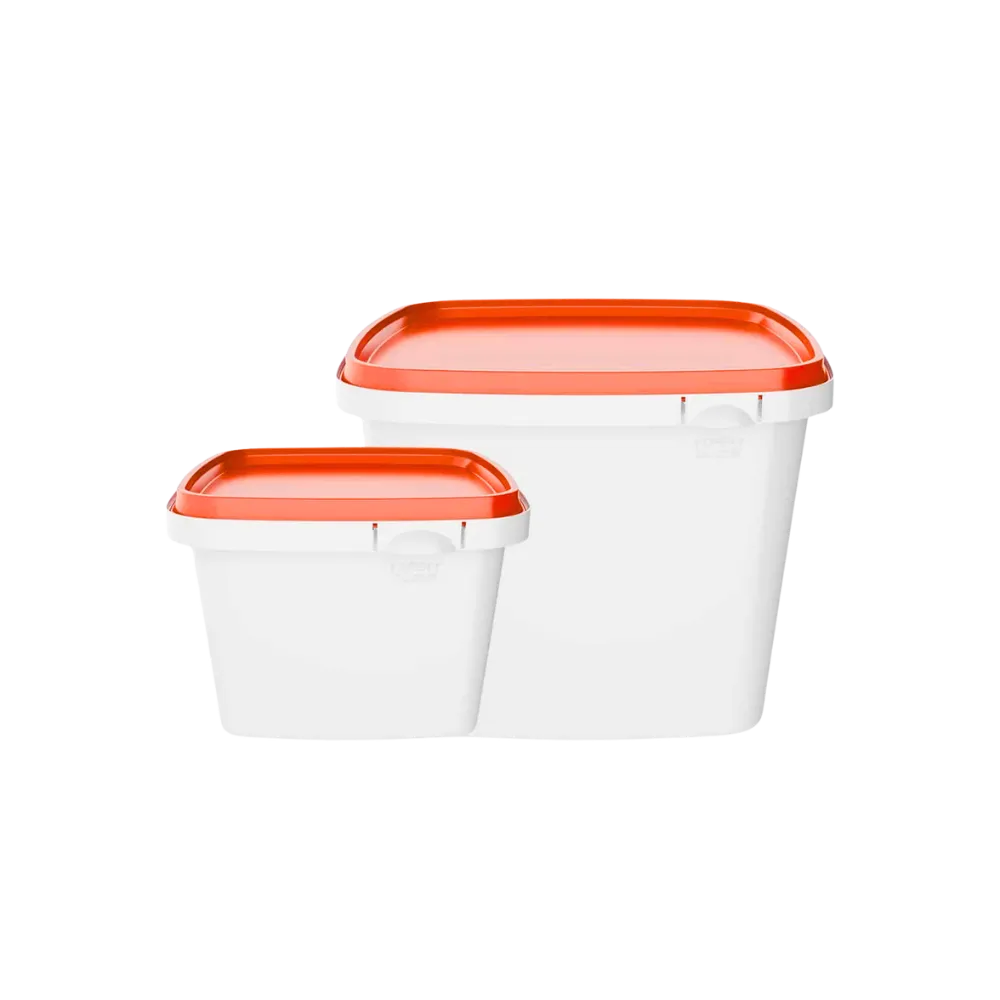
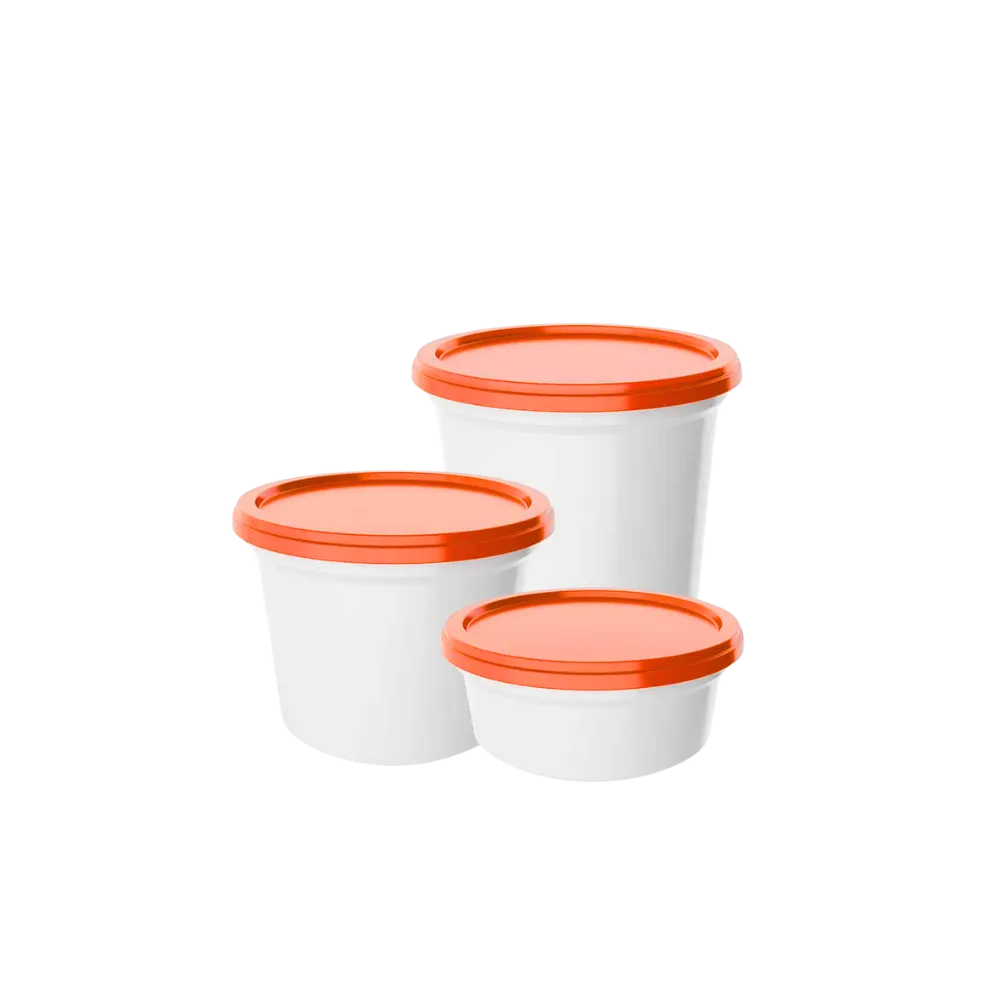
Plastiques Horizon molds polypropylene food containers at its plant in Saint-Lazare-de-Bellechasse, Québec, on Sumitomo presses with Wittmann IML robotics, and ships across Canada. The six lines cover Round Tamper-Evident containers, Square Tamper-Evident containers, Round Film Seal containers with one universal 409 lid, Tamper-Evident Buckets from 2.6 L to 5.5 L, Rectangle containers and Heavy-Duty Deli containers. Every format is sold blank or decorated with in-mold labels, and samples are available on request.
Pricing, lead times and minimums are confirmed with your quote. To start, see Made in Canada, send a sample or drawing through the contact page, or call 1-877-630-4095.
Frequently asked questions
Does buying Canadian-made containers mean I can label my food “Product of Canada”?
No. According to the Canadian Food Inspection Agency, “Product of Canada” and “Made in Canada” claims on food depend on the Canadian content and processing of the food itself, not on its packaging. Canadian-made containers neither create nor remove a food origin claim.
Can a Canadian molder replace a container I import from the United States?
Often, yes. A Canadian molder can match a standard container with a format from its catalogue, or run your existing mold if you own it and it fits the molder’s presses. Send a sample or drawing with your annual volume to find out which path applies.
Is reshoring packaging only worth it for large volumes?
Not necessarily. The fixed costs of cross-border supply, such as brokerage per shipment and safety stock, weigh more heavily on smaller programs. A landed cost comparison at your actual volume is the only reliable way to tell, and the Made in Canada page has a calculator for it.
Will my in-mold labeled containers look the same after reshoring?
If you transfer the mold and keep the same label artwork and label material, the container should look the same once first articles are approved. If you switch to a stock format, the label artwork will usually need to be adapted to the new dielines.
Sources
External references consulted for this article. General information only, not legal or regulatory advice.
- Origin claims on food labels · Canadian Food Inspection Agency
- Les allégations concernant l’origine sur les étiquettes des aliments · Agence canadienne d’inspection des aliments
- "Product of Canada" and "Made in Canada" claims: enforcement guidelines (2025) · Competition Bureau Canada
- Customs Notice 26-23: United States Surtax Order (2026) · Canada Border Services Agency
- Select the duties and taxes that apply · Canada Border Services Agency
- Daily exchange rates · Bank of Canada