Short answer
A microwave safe plastic container is one its manufacturer has designed and labelled for microwave use. Polypropylene (PP, resin code 5) is the usual material because it has a higher melting point than polyethylene or polystyrene. Microwave, freezer and dishwasher suitability is a claim made product by product, so check the label rather than assuming every PP container qualifies.
Key points
- Health Canada advises using only containers, lids and wraps that are microwave safe, and warns that some plastic containers can melt or warp when heated.
- Polypropylene is the most common plastic for microwavable food containers because of its relatively high melting point.
- Freezer and dishwasher suitability depend on the resin grade and the container design, so they are stated per product.
- Plastiques Horizon’s Round Tamper-Evident line is stated dishwasher, microwave and freezer safe; the Rectangle line is stated freezer safe.
- Food brands should test their actual product, fill level and heating instructions before printing microwave directions on a label.
What does "microwave safe" mean on a plastic container?
A "microwave safe" mark means the manufacturer designed the container for heating food in a microwave oven and stands behind that use. It is a product claim, not a property of plastic in general. Two containers made of the same resin can behave differently because of wall thickness, shape, resin grade and lid design.
Health Canada’s food safety advice is direct: use only containers, lids and wraps that are microwave safe. It warns that foam trays and some plastic containers can melt or warp, potentially causing harmful chemicals to leach into food, that trays and containers from microwave dinners or takeout are usually designed for one-time use, and it recommends covering food with a microwave-safe lid or wrap that does not touch the food, leaving a small gap so steam can escape (Health Canada).
The same page advises reheating leftovers to an internal temperature of 74 °C (165 °F). Health Canada also notes that substances added to plastics, such as colourants and plasticizers, are most likely to transfer into food at high temperatures such as microwaving (Health Canada, cookware), and advises avoiding plastic containers that are visibly damaged, stained or have an unpleasant smell (Health Canada, BPA).
Why is polypropylene used for microwave containers?
Polypropylene (PP) handles heat better than the other common packaging plastics. The US FDA specification for basic polypropylene in 21 CFR 177.1520 requires a melting point of 160 to 180 °C (21 CFR 177.1520). The American Chemistry Council’s resin guide describes PP as having a high melting point that makes it good for hot-fill liquids, while it describes general-purpose polystyrene as having a relatively low melting point (ACC resin guide).
That does not mean every PP tub can be reheated. Thin single-use tubs can still warp under the heat of fatty or sugary foods, which reach higher temperatures than water. A container intended for reheating is designed and tested for it. See is polypropylene food safe for the regulatory side.
| Plastic (code) | Typical food use | Microwave reheating |
|---|---|---|
| Polypropylene, PP (5) | Tubs, deli and takeout containers, closures | Common material for microwave-safe containers when the product is labelled for it |
| PET (1) | Bottles, clear jars and clamshells | Generally for cold or ambient products; special grades are made for ovenable trays |
| Polystyrene, PS (6) | Cups, foam trays, clamshells | Relatively low melting point; remove food before heating unless labelled otherwise |
| HDPE (2) | Milk jugs, pails, bottles | Lower melting point than PP; follow the product label |
Are polypropylene containers freezer safe?
Many PP containers are used in freezers, but freezer suitability is still a product-level claim. Polypropylene gets stiffer and less impact resistant as temperature drops, and standard homopolymer grades are the most affected. Copolymer grades are formulated for better toughness at low temperatures. A container that is stated freezer safe has been designed with that use in mind.
- Leave headspace. Water-based foods expand as they freeze, so do not fill to the brim.
- Handle frozen containers gently. Any rigid plastic is more likely to crack if dropped while frozen.
- Thaw safely. If the container is also microwave safe, open or vent the lid before heating.
What makes a plastic container dishwasher safe?
Dishwashers combine hot water, detergent and drying heat over many cycles. A dishwasher-safe container keeps its shape and its lid fit after repeated washing. Single-use packaging is not designed for that, even when it is made of the same resin. If reuse is part of your product’s story, choose a container whose manufacturer states dishwasher suitability.
Which Plastiques Horizon containers are microwave, freezer or dishwasher safe?
Plastiques Horizon states use conditions line by line. Only the claims listed in the product catalogue are made; for any other use, ask our sales team and we will confirm with your quote.
| Product line | Formats | Stated use conditions |
|---|---|---|
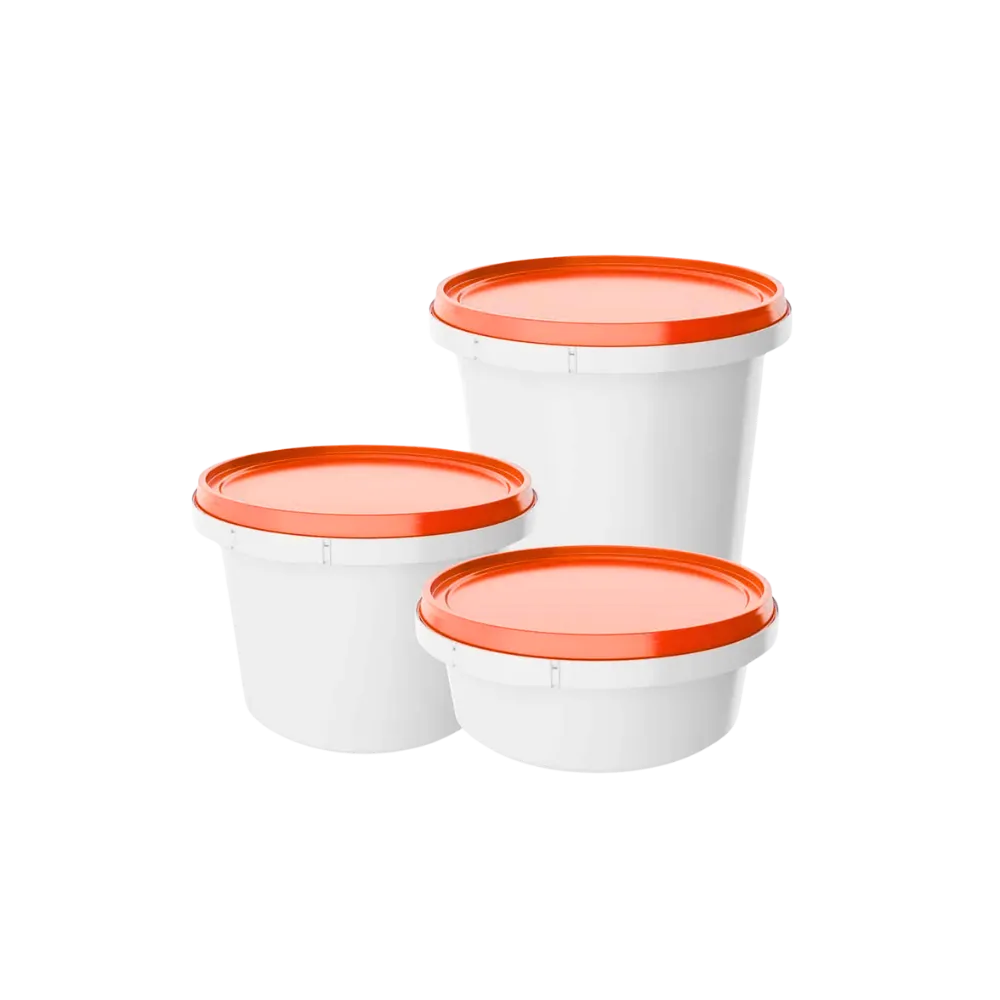
| Round Tamper-Evident | 8, 12, 16, 24, 32 oz (250 ml to 1 L) | Dishwasher, microwave and freezer safe |
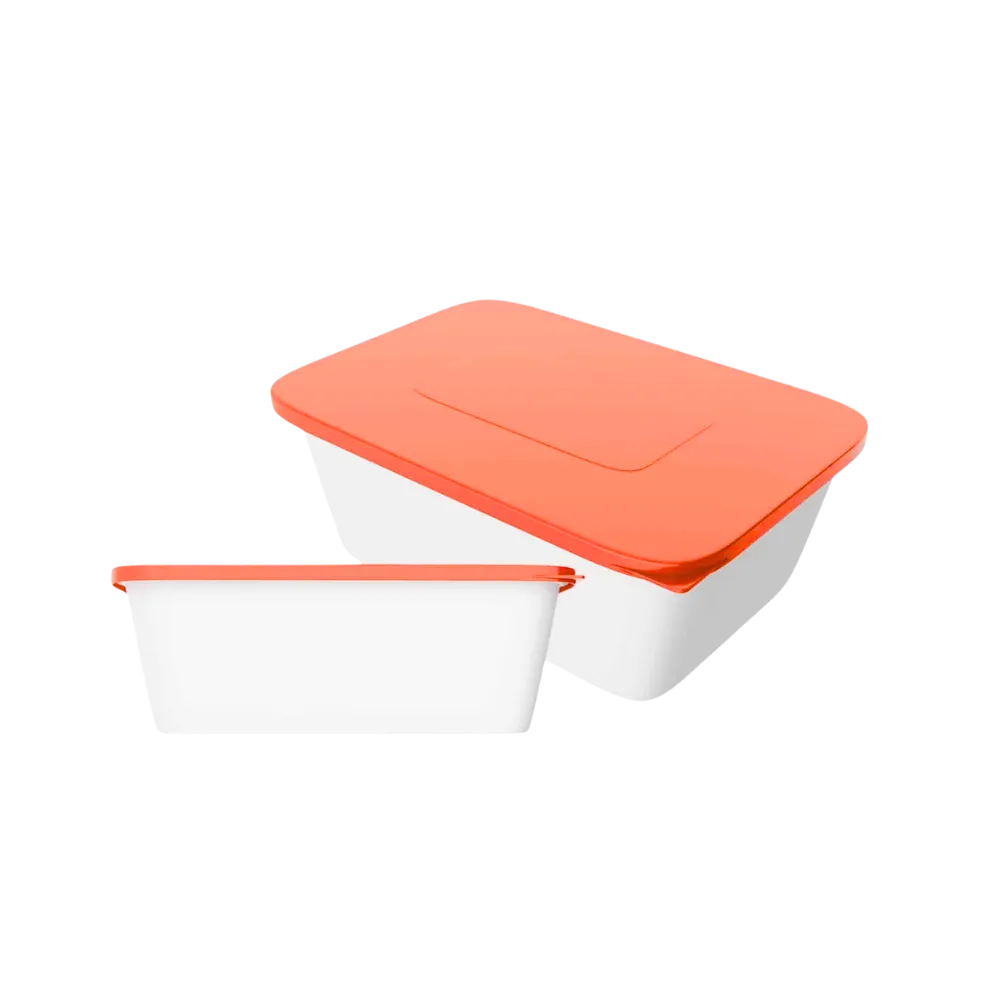
| Rectangle | 16 to 38 oz (500 ml to 1.12 L) | Freezer safe; ask about other uses |
| Square Tamper-Evident, Round Film Seal, Heavy-Duty Deli, Tamper-Evident Buckets | See each product page | Not stated in the catalogue; ask our sales team |
The Round Tamper-Evident line comes in five formats from 8 oz (250 ml) to 32 oz (1 L), all sharing one airtight, leakproof lid. Its tamper-evident rim shows at a glance whether a container has been opened, and the body and lid can carry in-mold labels. It suits soups, sauces and prepared foods that customers reheat. See containers for soups and prepared meals.
How should a food brand choose and label a reheatable container?
- Start from a container whose manufacturer states the uses you need (microwave, freezer, dishwasher).
- Request samples and test with your real product, fill level and the heating time you plan to print.
- Write heating instructions that tell consumers to vent or remove the lid, and to remove any film or packaging not labelled microwave safe.
- Keep the supplier’s written use statement on file with your packaging documentation.
Plastiques Horizon molds all six lines in polypropylene in Saint-Lazare-de-Bellechasse, Québec, and sells every format blank or decorated with in-mold labels. For samples of the Round Tamper-Evident or Rectangle lines, contact us or call 1-877-630-4095. More answers are on our FAQ page.
Frequently asked questions
Can you microwave a yogurt or margarine tub?
It is not recommended unless the tub is labelled microwave safe. Most yogurt and margarine tubs are single-use packaging designed for cold storage, and Health Canada warns that some plastic containers can melt or warp when heated. Transfer the food to a container labelled microwave safe, and cover it with a microwave-safe lid or wrap that does not touch the food.
How do I know if a plastic container is microwave safe?
Look for a microwave-safe statement or symbol from the manufacturer on the container, the lid or the packaging. The resin code alone is not enough: a number 5 shows the container is polypropylene, but not that it was designed for reheating. If there is no statement, transfer the food to a container labelled microwave safe.
Can I put a hot-filled polypropylene container straight into the freezer?
Food safety guidance usually recommends cooling hot food quickly before freezing, and the container should be stated freezer safe. Leave headspace for expansion and let the lid seat properly. For production lines that hot-fill and then chill or freeze, validate the full cycle with samples and confirm the use conditions with the container supplier.
Is the lid microwave safe as well as the container?
Not always. Lids and containers can be different designs, and some are meant only for storage. Health Canada recommends covering food with a microwave-safe lid that does not touch the food and leaving a small gap for steam. Check the manufacturer’s statement for both parts, and vent the lid before heating.
Sources
External references consulted for this article. General information only, not legal or regulatory advice.
- Food safety tips for microwaves · Health Canada
- The safe use of cookware and bakeware · Health Canada
- Bisphenol A (BPA) · Health Canada
- 21 CFR § 177.1520 Olefin polymers · Legal Information Institute, Cornell Law School
- Plastic Packaging Resins (resin identification code guide) · American Chemistry Council (copy hosted by Carroll County Government, Maryland)